


The production and application of cermet-tipped circular saw blades are experiencing steady growth, gradually capturing a larger market share traditionally held by conventional carbide tools. While cermet has a long-standing history in metalworking, many modern manufacturing facilities are only just beginning to fully grasp its immense advantages for circular sawing metal, particularly low-carbon steel.
As a manufacturer dedicated to precision machining solutions, Nakamura Cutting Tools understands that grasping the metallurgical properties and the rigorous manufacturing processes behind these blades is crucial. This deep understanding directly drives the engineering of the Nakamura High-Performance Circular Saw Blade Series, providing a versatile and temperature-stable solution built to maximize blade lifespan, achieve high squareness, and maintain process reliability in demanding industrial environments.

Understanding Cermet: The Material Science
Cermet is an advanced composite material that bridges the gap between cemented carbide and pure ceramics. It is primarily composed of robust ceramic phases-such as titanium carbide, titanium nitride, and titanium carbonitride-combined with metallic elements like molybdenum carbide and tungsten carbide. These hard particles are meticulously bonded together primarily using nickel and molybdenum as binders.
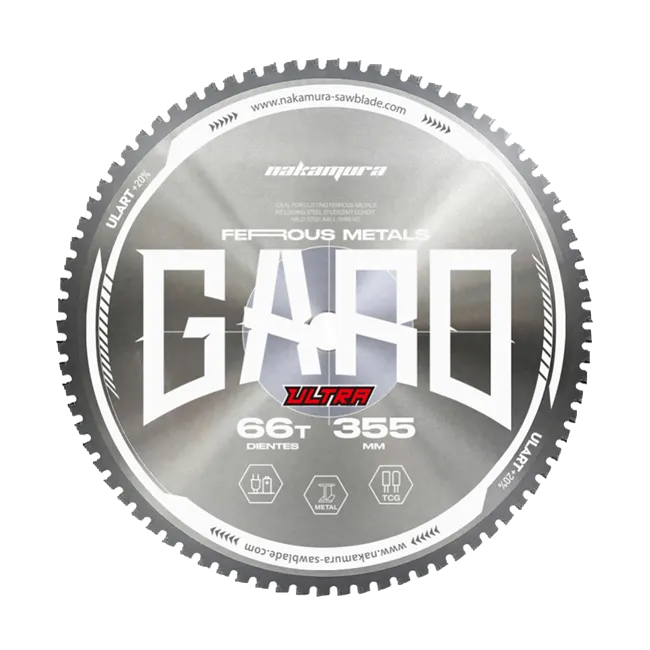
This unique formulation yields a cutting tip that possesses the extreme heat resistance and hardness of ceramics, coupled with the structural toughness of metal. While traditional carbide can suffer from oxidation or degradation under the immense heat of cutting steel, cermet maintains its chemical stability and abrasion resistance. For heavy-duty industrial applications where this level of heat resistance is non-negotiable, professionals rely on tools like the Nakamura Cermet Cold Cut Saw Blade. Engineered specifically to deliver burr-free cuts in solid steel bars and heavy-walled tubes, it takes full advantage of cermet's ability to provide significantly longer blade life and finer surface finishes.
The Grinding Bottleneck: Precision Over Speed
Manufacturing a premium cermet blade is far more complex than producing a standard carbide saw. Because cermet is significantly harder and more brittle, the grinding process must be heavily modified.
To prevent micro-cracking and ensure a flawless cutting edge, manufacturers must utilize ultra-fine diamond grinding wheels running at strictly reduced feed rates. In practice, grinding a cermet saw requires 30% to 100% more time than grinding a comparable carbide blade. This meticulous, slow-paced grinding process is what guarantees the structural integrity of the cermet insert. These exacting manufacturing standards are especially critical for highly specialized tools, such as the Nakamura Thin-Kerf Metal Cutting Blade, where rigorous grinding discipline is required to maintain extremely tight tolerances and minimize material waste without sacrificing stability.

The Density Dilemma and Fine Filtration
One of the most profound, yet rarely discussed, challenges in manufacturing cermet blades lies in the material's density. A conventional carbide grade has a density ranging from 14 to 15 g/cm³, meaning its grinding dust settles relatively quickly. Cermet, however, is much lighter, with a density of just 6 to 7 g/cm³.
During the manufacturing process, this lower density causes cermet fines to suspend and float in the grinding oil. If these micro-particles are not properly filtered, they are recycled through the coolant system and load back onto the grinding wheel, causing severe friction and heat buildup. To prevent this, premium blade manufacturing requires advanced 1-micron to 3-micron filtration systems to ensure the grinding oil remains perfectly clean, resulting in razor-sharp, heat-free edges.
Mastering Brazing and Wheel Dressing
Cermet's unique composition also makes the grinding wheels highly susceptible to clogging. Under grinding temperatures, the nickel binder becomes highly ductile and "gummy", causing it to easily smear between the diamond particles of the grinding wheel. If the wheel is not dressed frequently and accurately, the diamond loses its free-cutting ability. The wheel begins to rub rather than grind, generating extreme heat that produces invisible microcracks within the saw tip.
To mitigate this, industry experts press cermet tips to a "near-net shape" prior to brazing, minimizing the amount of heavy material removal required post-installation. Furthermore, specialized high-silver braze alloys with a low melting temperature (670°C to 690°C) are utilized to avoid heat damage during the joining process.
Conclusion
Understanding the science and manufacturing discipline behind cermet allows modern machine shops to make informed tooling decisions. By investing in premium, properly engineered cutting tools, metalworking facilities can dramatically reduce cycle times, improve cut quality, and significantly lower long-term operational costs.