


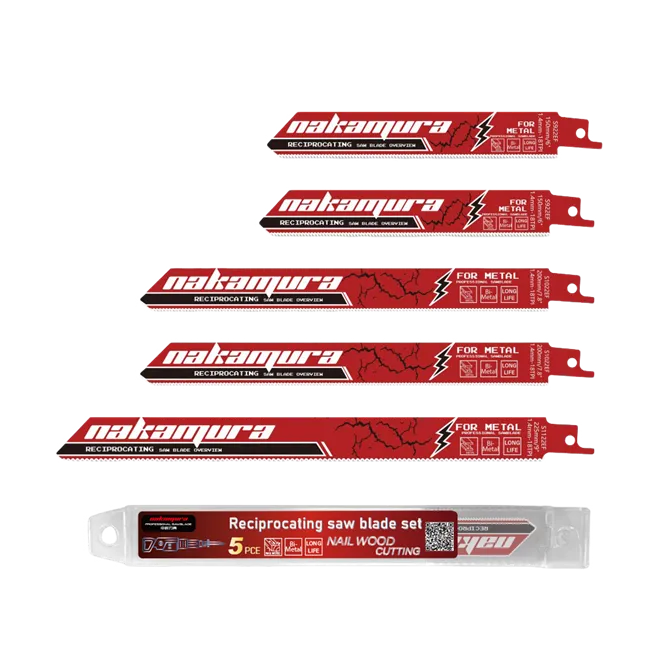
Reciprocating Saw Blade

Reciprocating Saw Blades Manufacturer for OEM & Wholesale
We manufacture straight and curved-profile reciprocating saw blades for wood cutting, metal cutting, pruning, demolition and multi-material applications. Our range includes HCS, bi-metal and carbide-tooth blades with fixed, variable and application-specific tooth patterns. For tool brands, importers and distributors, we also support OEM blade specifications, private-label printing, custom colors, retail packaging and assorted sets.
Our curved-profile series is developed to keep more teeth engaged with the workpiece, create a natural downward cutting action and improve chip clearance through high-low or alternating tooth designs. Rather than recommending one blade for every job, we match the TPI, blade profile, width, thickness and length to
the material and cutting depth.
Tell us what material you need to cut, its thickness or diameter and your target market. We will help you select a suitable blade specification before preparing a quotation.
We manufacture straight and curved-profile reciprocating saw blades for wood cutting, metal cutting, pruning, demolition and multi-material applications. Our range includes HCS, bi-metal and carbide-tooth blades with fixed, variable and application-specific tooth patterns. For tool brands, importers and distributors, we also support OEM blade specifications, private-label printing, custom colors, retail packaging and assorted sets.
Our curved-profile series is developed to keep more teeth engaged with the workpiece, create a natural downward cutting action and improve chip clearance through high-low or alternating tooth designs. Rather than recommending one blade for every job, we match the TPI, blade profile, width, thickness and length to
the material and cutting depth.
Tell us what material you need to cut, its thickness or diameter and your target market. We will help you select a suitable blade specification before preparing a quotation.

-
![9inch Demolition Reciprocating Saw Blades]() 9inch Demolition Reciprocating Saw BladesBuilt for nail-embedded wood, timber beams, pallets, metal pipes, and mixed jobsite materials. Designed to reduce tooth chipping, blade snapping, and early dulling in aggressive demolition...read more
9inch Demolition Reciprocating Saw BladesBuilt for nail-embedded wood, timber beams, pallets, metal pipes, and mixed jobsite materials. Designed to reduce tooth chipping, blade snapping, and early dulling in aggressive demolition...read more -
![Arc Edge 6 TPI Reciprocating Saw Blade]() Arc Edge 6 TPI Reciprocating Saw BladeModel Material: High Carbon Steel (HCS) — Optimized for flexible and smooth wood cuttingread more
Arc Edge 6 TPI Reciprocating Saw BladeModel Material: High Carbon Steel (HCS) — Optimized for flexible and smooth wood cuttingread more
Available Lengths: 177mm (7") / 228mm (9") / 305mm (12")
Tooth Configuration: 6 TPI (Teeth... -
![OEM ODM Reciprocating Saw Blade Set]() OEM ODM Reciprocating Saw Blade SetLength: 225mm,300mm, etcread more
OEM ODM Reciprocating Saw Blade SetLength: 225mm,300mm, etcread more
Material: BIM
OEM/ODM: Support
Certification: CE, ISO, etc
Application: Wood, Wood & Nails, Plastic, etc -
![Carbide Reciprocating Saw Blade]() Carbide Reciprocating Saw BladeStandard bi-metal teeth wear out fast in abrasive and high-hardness materials — edges dull, cuts slow down, and blade cost per cut climbs. Our carbide reciprocating saw blades use brazed tungsten...read more
Carbide Reciprocating Saw BladeStandard bi-metal teeth wear out fast in abrasive and high-hardness materials — edges dull, cuts slow down, and blade cost per cut climbs. Our carbide reciprocating saw blades use brazed tungsten...read more -
![Thick Metal Reciprocating Saw Blades]() Thick Metal Reciprocating Saw BladesThick Metal Reciprocating Saw Blades for Heavy Metal Cuttingread more
Thick Metal Reciprocating Saw BladesThick Metal Reciprocating Saw Blades for Heavy Metal Cuttingread more
Material: M42 Bi-Metal Cobalt
Length: 225mm, 300mm, etc
MOQ: 1000Pcs
Application: Thick steel plate, heavy-wall... -
![Wood Pruning Reciprocating Saw Blades]() Wood Pruning Reciprocating Saw BladesBrand: Nakamuraread more
Wood Pruning Reciprocating Saw BladesBrand: Nakamuraread more
Length: 225mm,300mm, etc
Type: Reciprocating Saw Blade
Material: BIM
Tooth: 14TPI
OEM/ODM: Support
Certification: CE, ISO, etc... -
![3T -24T Wood Metal Reciprocating Saw Blades]() 3T -24T Wood Metal Reciprocating Saw BladesLength: 150mm (6"), 225mm (9"), 300mm (12"), etcread more
3T -24T Wood Metal Reciprocating Saw BladesLength: 150mm (6"), 225mm (9"), 300mm (12"), etcread more
Type: Bi-Metal (BIM) Reciprocating Saw Blades
Shank Interface: Fully compatible with major brands including DeWalt, Milwaukee, Bosch,... -
![Reciprocating Saw Blades For Metal]() Reciprocating Saw Blades For MetalMaterial: Bi-Metal (Cobalt Steel edge option)read more
Reciprocating Saw Blades For MetalMaterial: Bi-Metal (Cobalt Steel edge option)read more
MOQ: 1000Pcs
OEM/ODM: OEM/ODM supported (custom packaging available)
Certification: CE, ISO, etc
Application: Thin Metal /... -
![Reciprocating Saw Blades For Tree Stumps]() Reciprocating Saw Blades For Tree StumpsProduct Type: Reciprocating Saw Blade for Tree Stump Removal and Root Cuttingread more
Reciprocating Saw Blades For Tree StumpsProduct Type: Reciprocating Saw Blade for Tree Stump Removal and Root Cuttingread more
Standard Length: 225mm / 300mm / Custom
Material: BIM (Bi-Metal)
Surface Treatment: Anti-Rust...


Choose Reciprocating Saw Blades by Application
Different cutting jobs require different blade materials, tooth pitches and body designs. Start with the material and working condition rather than choosing a blade by length alone.

Designed for fast cutting in timber, boards and general wood products. Coarse teeth and deep gullets help remove chips efficiently, while the flexible blade body supports everyday construction and workshop use.
Recommended for: timber, softwood, hardwood, plywood and general wood cutting.
Available product: Arc Edge 6 TPI Reciprocating Saw Blade, 9inch Demolition
Reciprocating Saw Blades:

Built for cutting branches, roots and garden timber. The coarse tooth profile and deep gullets support chip removal during outdoor cutting. Select carbon steel for economical, lower-frequency work or bi-metal when higher tooth durability, body toughness and longer continuous operation are required.
Recommended for: branches, roots, garden timber and general pruning work.
Available product: Wood Pruning Reciprocating Saw Blades, Arc Edge 6 TPI
Reciprocating Saw Blade:

Our bi-metal reciprocating saw blades combine a wear-resistant cutting edge with a flexible backing material. Different TPI options are available for sheet metal, pipes, profiles and other metal workpieces.
Recommended for: sheet metal, steel pipe, profiles, conduit and general metal cutting.
Available product:
 Demolition and Wood-with-Nails Blades
Designed for demanding cuts in nail-embedded wood, pallets, timber beams and mixed jobsite materials. A stronger blade body and application-specific tooth design help reduce bending, tooth damage and premature blade failure.
Recommended for: nail-embedded wood, pallets, framing timber and demolition work.
Available product:

Made for heavier metal sections where blade stability, heat resistance and tooth durability are important. We can recommend a suitable blade according to the metal type, wall thickness and required cutting speed.
Recommended for: thick steel plate, heavy-wall pipe and structural metal sections.
Available product:
Carbide-tooth reciprocating saw blades are designed for demanding materials and applications where standard HCS or bi-metal teeth may wear too quickly. The carbide grade, tooth geometry and blade body must be matched to the workpiece rather than treated as one universal solution.
Recommended for: difficult, abrasive or heavy-duty cutting applications confirmed for the selected model.
Available product:
Carbide Reciprocating Saw Blade
Assorted blade sets give distributors and tool brands a practical way to cover several common cutting applications in one retail package. Blade combinations, printing and packaging can be adjusted for different markets.
Recommended for: retail programs, tool kits, promotional sets and private-label ranges.
Available options: custom blade combinations, logos, colors and packaging.
Curved-Profile Reciprocating Saw Blades: Designed for More Controlled Cutting
A curved-profile blade is not simply a straight blade bent into an arc. The blade geometry, tooth pattern, heat treatment and forming process must work together. The curved profile helps keep more teeth engaged with the workpiece and creates a natural downward cutting action. High-low or alternating teeth then help move chips away from the cutting zone, reducing loading and improving cutting stability.

Why the Curved Profile Matters?
- More teeth in the cut: A larger contact area distributes the cutting load across more teeth.
- Natural downward cutting action: The curved body and shank geometry help the blade enter and stay in the cut.
- Improved chip clearance: High-low, alternating or variable tooth patterns help reduce chip build-up.
- Application-specific stability: Blade width and thickness are selected to balance cutting speed, flexibility and resistance to bending.
Why Curved-Profile Blades Cost More to Produce?
Bi-metal construction cannot be shaped by simple stamping alone. Curved-profile blades require controlled forming, carefully managed heat treatment and additional finishing work. On applicable models, production may include reduced furnace loading, multiple tempering stages and manual masking or coating around the curved section. These extra controls are intended to keep tooth hardness, backing flexibility and blade geometry within the approved specification.

Find the Right Blade for Your Cutting Job
The correct blade depends on the workpiece material, material thickness, tooth pitch, blade length and required cutting result. Use the guide below as a starting point. For final selection, send us your cutting details so that we can match them with an available blade model.
|
Cutting job |
Recommended tooth pattern |
Reference range from our training data |
Main consideration |
|
General wood cutting |
6 TPI coarse-tooth blade |
HCS or bi-metal, according to frequency and load |
Fast chip removal and blade flexibility |
|
Nail-embedded wood and mixed frames |
10 TPI bi-metal blade |
Wood with nails and metal-containing door/window frames |
Impact resistance and cutting stability |
|
Cast-iron pipe and heavy materials |
8 TPI heavy-duty wide blade |
Materials 6 mm and above |
Deep gullets, body strength and chip clearance |
|
Medium-thickness metal |
10/14 TPI variable-pitch blade |
2.5–8 mm; internal limit recorded as 10 mm |
Versatility across changing material thickness |
|
Aluminum, seamless pipe and galvanized pipe |
14 TPI high-low tooth blade |
2.5–6 mm; material hardness up to HRC 25 |
Stable engagement and controlled chip removal |
|
Thin metal |
18 TPI fine-tooth blade |
1.5–3 mm |
Keep several teeth engaged in the workpiece |

Start with the Material
Wood, metal and nail-embedded wood place different demands on the blade. A coarse wood blade may cut timber quickly but is not suitable for thin sheet metal. A fine metal blade provides a smoother metal cut but can clog in fibrous or high-moisture wood. Moisture limits must be confirmed for the specific wood blade rather than assumed across the category.

Match the TPI to the Workpiece Thickness
TPI means teeth per inch. Lower TPI blades generally cut faster and leave a rougher finish, making them suitable for wood and rapid material removal. Higher TPI blades generally produce a finer cut and are more suitable for thinner metal.
Our documented curved-profile selection includes 6, 8, 10, 14 and 18 TPI, plus a 10/14 TPI variable-pitch design. Each tooth pattern has a defined material and thickness range. Other tooth options should be confirmed by model rather than presented as one universal range.

Select a Suitable Blade Length
The blade must remain longer than the material throughout the full stroke of the saw. A blade that is too short may strike the workpiece with its tip, while an excessively long blade may flex more during the cut.
As an internal selection reference, a 150 mm blade provides about 70–80 mm of effective cutting depth, a 200 mm blade about 120 mm, and a 250–300 mm blade about 150–180 mm. The workpiece diameter should remain within the effective cutting depth. In confined applications such as vehicle dismantling, an excessively long blade can be harder to control and may increase stress at the shank.

Consider Blade Width and Thickness
HCS vs. Bi-Metal vs. Carbide Reciprocating Saw Blades

HCS Reciprocating Saw Blades
High carbon steel blades are flexible and economical. They are commonly used for wood, plastic and other softer non-metallic materials. HCS blades are a practical choice when fast cutting and flexibility are more important than high wear resistance.
- Best suited for: wood, selected plastics and general non-metallic cutting;
- Main benefit: flexibility and cost efficiency;
- Product boundary: not recommended as the first choice for demanding metal cutting.
Bi-Metal Reciprocating Saw Blades
Bi-metal blades combine a wear-resistant high-speed steel cutting edge with a flexible alloy-steel backing. This construction provides a better balance between tooth durability and resistance to blade breakage.
- Best suited for: metal, nail-embedded wood, demolition and mixed-material applications;
- Main benefit: longer working life and greater impact resistance than standard HCS blades in demanding applications;
- Available tooth materials: selected according to the confirmed bi-metal blade specification.

Carbide Reciprocating Saw Blades
Carbide-tooth blades use a hard, wear-resistant cutting material on a supporting blade body. They are intended for selected demanding applications where HCS lacks the necessary wear resistance and bi-metal teeth may not provide the required working life. Because carbide performance depends heavily on the carbide grade, tooth size, tooth attachment and impact load, the correct model must be selected for the actual workpiece.
- Best suited for: demanding or abrasive materials approved for the specific carbide blade model;
- Main benefit: higher wear resistance than HCS or bi-metal in the correct application
- Product boundary: carbide is harder but less tolerant of incorrect use and impact; it should not be described as suitable for every metal or construction material.
Which Material Should You Choose?
Choose HCS for general wood cutting and other softer materials. Choose bi-metal when the blade needs to cut metal, withstand impact from nails or work in more demanding demolition conditions. Choose carbide when the confirmed application requires greater wear resistance than HCS or bi-metal can provide. If your application involves a high-hardness, abrasive or unusual material, send us a sample or detailed specification before ordering. We will confirm whether an existing blade is suitable rather than recommending one blade for every material.
Reliable Reciprocating Saw Blades for Consistent OEM Supply
A professional blade range must do more than look good in the package. It must provide stable cutting performance from one production batch to the next. We focus on the issues that directly affect distributors, tool brands and end users.




Reduced Tooth Damage
Blade material, tooth geometry and production control are selected according to the intended application. This helps reduce premature tooth wear and tooth damage when the blade is used within its recommended cutting range.
Balanced Flexibility and Stability
The backing material, blade width and thickness influence how the blade responds to bending and impact. We match these factors to wood cutting, metal cutting and demolition applications rather than applying the same body design to every blade.
Application-Specific Tooth Design
Coarse teeth support fast chip removal in wood, while finer teeth provide better engagement in thinner metal. For demanding jobs, variable or application-specific tooth configurations can help balance cutting speed, vibration and blade life.
Consistent OEM Production
Dimensions, tooth configuration, printing, color and packaging are confirmed before mass production. Inspection during production helps keep repeat orders consistent with the approved specification。
How We Control Reciprocating Saw Blade Quality?
Quality control begins with the specification, not only with the finished blade. Before production, we confirm the cutting material, workpiece size, required blade dimensions and packaging requirements with the customer.


Our production and inspection process may include:
1. Raw material and specification verification
2. Blade blank forming
3. Tooth milling or grinding
4. Bi-metal joining for applicable models
5. Controlled curved-profile forming
6. Heat treatment and tempering
7. Surface treatment, manual masking where required, and cleaning
8. Logo printing or laser marking
9. Blade length, width, thickness and profile inspection
10. Tooth geometry, hardness and appearance inspection
11. Cutting performance testing
12. Packaging and final lot inspection
For curved bi-metal models, the forming and heat-treatment sequence is especially important. The tooth material and backing steel respond differently to heat and stress, so furnace loading, tempering and profile control must be managed together. This is one reason curved-profile production requires more process control than a basic straight blade.

Manufacturing Strength: Our 4 Factories
When you work with Nakamura, you're tapping into the production power of four specialized manufacturing bases across China. We don't just assemble; we manufacture from the ground up. By assigning specific product lines to different facilities, we prevent production bottlenecks, maintain strict quality control, and handle massive global wholesale orders efficiently.
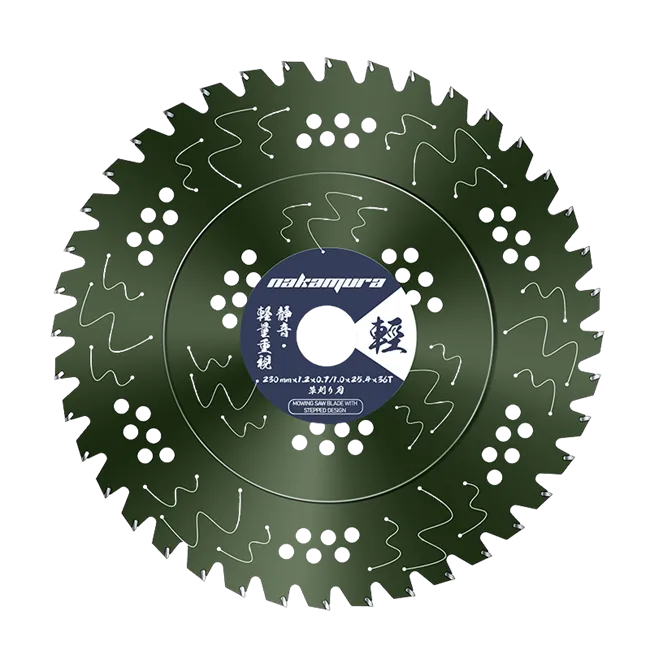
This is our largest volume-production facility. It handles the mass manufacturing of our core wood circular saw blades, alongside DIY-grade PCD saw blades and heavy-duty metal circular saw blades.
Where we handle the hardest materials. Huzhou is our engineering center strictly dedicated to ultra-hard cutting solutions, primarily producing diamond PCD saw blades and precision cermet tipped metal cutting circular saw blades for severe steel processing.
Our specialized plant for composite and non-ferrous materials. Dalian takes the lead on engineering multi-purpose saw blades, abrasive-resistant diamond saw blades, and clean-cutting aluminium saw blades.
OEM Reciprocating Saw Blades for Brands and Distributors
We support OEM and ODM projects for tool brands, importers, wholesalers and distributors. Whether you need an existing blade with private-label packaging or a blade specification for a particular application, our team can review the requirements with you before sampling and production.
What Can Be Customized?
- Blade length, width and thickness
- HCS, bi-metal or carbide-tooth construction
- Confirmed tooth and backing material combination for each bi-metal model
- Carbide grade, tooth geometry and attachment method for applicable carbide models
- TPI and tooth configuration
- Blade body profile
- Surface color and finish
- Logo, model number and laser marking
- Retail card, blister, box or bulk packaging
- Pack quantity and assorted blade combinations
- Shipping marks and outer cartons
Reciprocating Saw Blades for Brands, Distributors & Industrial Buyers
We manufacture reciprocating saw blades for B2B customers who need reliable product specifications, consistent batch supply and flexible OEM support. Whether you are expanding an existing blade range or developing a new private-label product line, we can match the blade material, tooth pattern, dimensions and packaging to your market requirements.

Tool Brands and Private-Label Buyers
For brands developing their own reciprocating saw blade range, we support product selection, custom specifications, blade colors, logo marking, retail packaging and assorted blade sets.
Suitable for: established tool brands, emerging brands and private-label product developers.
Importers and Distributors
We help importers and regional distributors build a practical product range covering wood cutting, metal cutting, pruning, demolition and demanding carbide-blade applications.
Suitable for: national importers, regional distributors and power-tool accessory suppliers.
Wholesalers and Hardware Suppliers
For wholesale customers, we provide standard and customized reciprocating saw blades in different materials, lengths and tooth configurations. Packaging and pack quantities can be adjusted for wholesale or retail distribution.
Suitable for: tool wholesalers, hardware suppliers and industrial supply companies.
Retailers and Hardware Chains
We support retail-ready products with clear application positioning, model identification, barcode placement, private-label artwork and assorted blade combinations.
Suitable for: hardware chains, home-improvement retailers and professional tool stores.
Power Tool and Tool Kit Manufacturers
Reciprocating saw blades can be supplied as accessories for reciprocating saws, cordless tool kits and promotional packages. Blade combinations can be selected according to the tool position and target application.
Suitable for: power-tool manufacturers, tool kit suppliers and promotional set buyers.
Industrial and Professional Buyers
For buyers with specific cutting requirements, we can review the workpiece material, hardness, thickness, cutting depth and operating conditions before recommending an HCS, bi-metal or carbide blade.
Suitable for: construction supply companies, demolition equipment suppliers, automotive dismantling suppliers, maintenance contractors and industrial procurement teams.
FAQ
Q1: What type of reciprocating saw blade should I use for wood?
A: For general wood cutting, an HCS blade with a coarse tooth pitch is usually a practical choice because it offers flexibility and fast chip removal. For nail-embedded wood or demanding demolition work, a bi-metal blade is normally more suitable because it provides greater tooth durability and impact resistance.
Q2: What type of blade should I use for metal?
A: Use a bi-metal metal-cutting blade and select the TPI according to the workpiece thickness. Thin sheet and thin-wall pipe generally require a finer tooth pitch, while thicker sections can use a coarser pitch. Send us the metal type and thickness if you need a model recommendation.
Q3: What is the difference between HCS, bi-metal and carbide blades?
A: HCS blades are flexible and economical for wood and selected softer materials. Bi-metal blades combine a harder cutting edge with a flexible backing, making them better suited to metal, nail-embedded wood and demanding demolition applications. Carbide-tooth blades provide greater wear resistance for selected difficult or abrasive materials, but the carbide grade and tooth design must match the workpiece and impact conditions.
Q4: When should I choose a carbide reciprocating saw blade?
A: Choose a carbide blade when a confirmed application causes standard HCS or bi-metal teeth to wear too quickly and the carbide model is designed for that material. Send us the material name, hardness if known, wall thickness or diameter, cutting method and current blade reference. We will check the application before recommending a model.
Q5: How do I choose the correct TPI?
A: Lower TPI blades cut faster and are commonly used for wood and rapid material removal. Higher TPI blades cut more finely and are generally better for thinner metal. The teeth should engage the workpiece consistently during cutting. Final selection should be based on the material and its thickness.
Q6: Can I combine different blades in one set?
A: Yes. Wood, metal, pruning and demolition blades can be combined into an assorted set according to the target customer and retail position. We can also support custom pack quantities and packaging artwork.
Q7: How do you test cutting performance?
A: Cutting tests are performed according to the blade application and agreed test conditions. For a meaningful comparison, the saw, workpiece material, workpiece dimensions and operating conditions should remain consistent. Project-specific testing requirements can be discussed before production.
Q8: Can you customize the logo, color and packaging?
A: Yes. We support private-label logos, model markings, blade colors, retail cards, blister packaging, boxes, bulk packs and assorted blade sets. Available options depend on the blade model and order quantity.
Zhejiang Zhongcun Precision Cutter Machinery Co., Ltd. is one of the leading reciprocating saw blade manufacturers and suppliers in China. We warmly welcome you to wholesale customized reciprocating saw blade from our factory. Good service and quality products are available.
Wood Pruning Reciprocating Saw Blades, Bi metal Reciprocating Saw Blades, Reciprocating Saw Blades For Metal