


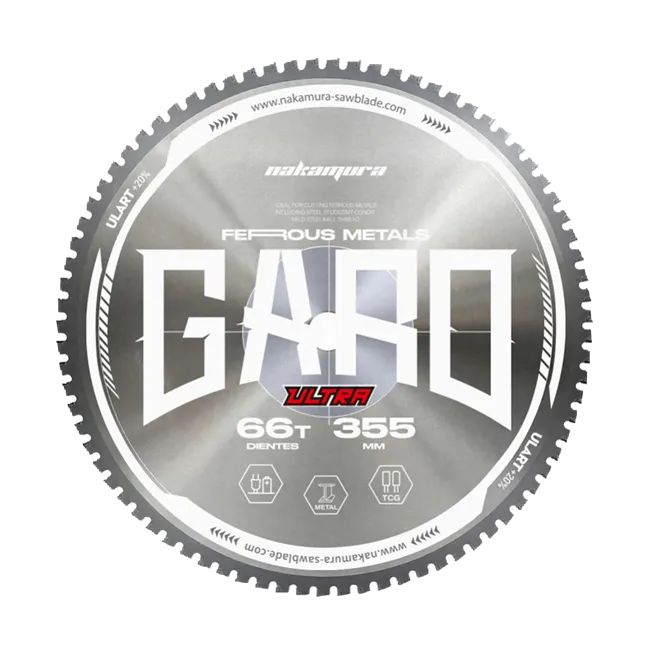
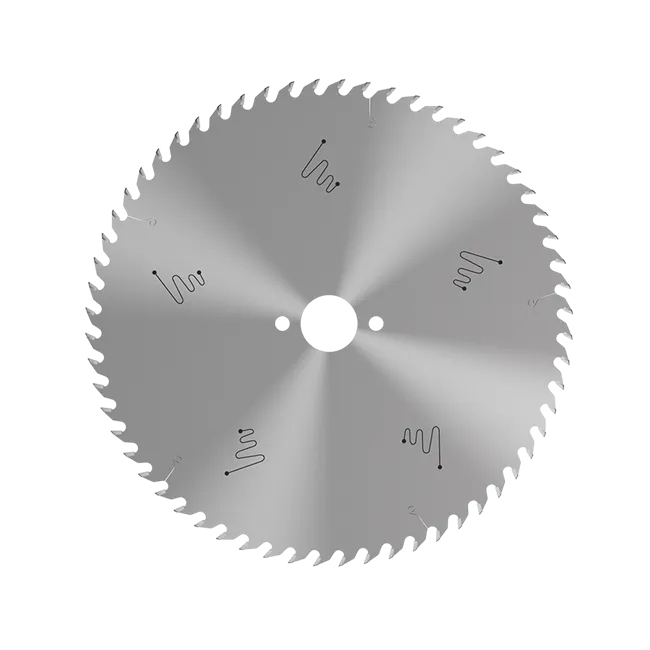


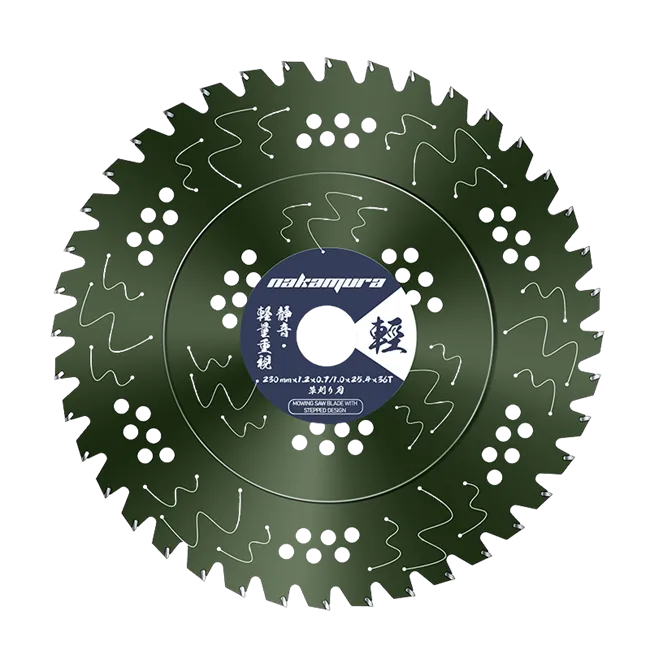
Carbide is a hard material made by sintering carbonized tungsten powder (WC) with cobalt (CO) as the binder at high temperature. It is also known as tungsten steel. When hard alloy is welded onto a circular alloy tool steel base, it is called a carbide tipped circular saw blade.
The base materials suitable for hard alloy circular saw blades include: 65Mn, 50Mn2V, SK5, SKS51, 75Cr1, etc. The welding materials mainly consist of silver welding wire and silver welding sheet. The middle layer of the silver welding sheet is copper, and both sides are silver, so it is called a "sandwich" welding sheet. It mainly plays the role of eliminating welding stress and reducing cutting impact force. Saw blades for electronic saws are generally welded with silver welding sheets. The quality of hard alloy circular saw blades depends on the base steel material, the hard alloy blade material, the suitability of the welding materials, and the precision of the manufacturing process.

The steel plate base is required to remain undistorted under the cutting impact force and friction heat during high-speed rotational operation. With small lateral oscillation, the cutting accuracy of the saw blade will be high, and the life of the knife head will be long. Creating a base with excellent properties is the common pursuit of every tool maker. The requirements for the hard alloy knife head are high hardness and good toughness. The workmanship should be precise; otherwise, even with good materials, a good product cannot be produced. The usage method should also be correct to fully exert the advantages of the tool. The internal hole tolerance of the hard alloy circular saw blade is generally H7, and the tolerance of the corresponding shaft is generally H7. That is, the internal hole is slightly larger and the shaft is slightly smaller, so as to meet the assembly requirements of the saw blade.
The clamping flange of the hard alloy circular saw blade is very important. The outer diameter of the flange is generally about 1/3 to 1/2 the size of the outer diameter of the saw blade. The diameters of the two clamped flanges should be the same and should be parallel. Otherwise, even the best saw blade will not perform well. There is a suitable range for the rotational speed of the saw blade. When the saw blade is used at the appropriate rotational speed, the surface quality and lifespan of the cutting will be significantly improved. The thickness of the material being sawed, the thickness of the feed, and the feed speed also have a significant impact on the saw blade. In conclusion, only when the accumulated accuracy of the equipment and the tool is high can the cutting quality and lifespan be guaranteed.

The number of teeth on the saw blade depends on various factors. Generally, the more teeth there are, the higher the surface quality will be, but it will be more difficult to remove chips and generate more heat. If the heat causes the saw blade to become unstable, the surface quality will actually decrease. When choosing the number of teeth, we should fully consider the issue of chip removal. Generally, for longitudinal cutting of wood, fewer teeth are needed, while for die-cutting, more teeth are required. For softer materials, the number of teeth should be smaller, and for harder materials, the number of teeth should be larger.
On the base steel plate of the circular saw blade, we often see a ring-shaped rolling ring. This is done to make the saw blade suitable for the tension, also known as tension. The appropriate tension is crucial for the use of the saw blade. Each manufacturing factory has its own methods and experience.
The selection of saw blades mainly involves the following parameters to pay attention to: outer diameter, inner diameter, tooth width, locating hole, keyway, number of teeth, tooth shape, rotational speed, flange size, feed speed, material thickness and characteristics. The material determines the tool.
Saw blades rotating at high speed are very dangerous. Do not stand on the tangent direction of the rotating saw blade. Make sure to use protective devices. During operation, concentrate your attention. When holding the tool, prevent your hand from slipping to the cutting position. When the machine is feeding, pay attention to the rebound of the tool. Generally, the machine is equipped with a rebound prevention device. Please make sure to use it. The danger of sawing accounts for a high proportion of machine tools, about 18%. Necessary protection must be configured.