




Custom furniture and high-end built-in woodworking rely heavily on details. Cabinet doors, worktops, wall panels, drawer sides, and panels before edge banding all require clean and accurate cutting.
For factories, a saw blade is not just a consumable. It directly affects edge quality, dimensional accuracy, rework, and final appearance. The right blade makes edge banding, assembly, and delivery smoother. The wrong blade may cause chipping, burrs, burn marks, and unstable dimensions.
What makes custom furniture cutting difficult?
- Edge chipping.
Custom furniture often uses MDF, particle board, plywood, laminated panels, and decorative boards. Once the surface chips, even good edge banding cannot fully hide the problem.
- Unstable dimensions.
Custom furniture needs accurate fitting. If panel size, cutting angle, or cutting line is not stable, installation gaps, uneven doors, and hardware alignment problems may follow.
- Multiple materials.
One project may include solid wood, plywood, MDF, OSB, laminated veneer, engineered wood, and high-pressure decorative panels. Each material has different density, fiber direction, surface hardness, and glue layers, so blade selection must change accordingly.

Different materials need different blade logic
- Solid wood cutting.
Ripping solid wood requires chip removal and feed efficiency, while crosscutting and finishing need a cleaner surface. Different tooth counts and tooth geometries should be selected according to the cutting process.
MDF, plywood, and engineered panels.
These materials require smooth cutting and good edge control. High-tooth-count ATB blades or panel-focused precision TCT blades can help reduce chipping and burrs. For production lines, blade stability and edge retention are also important.
Laminated and decorative panels.
Both the top and bottom surfaces may chip during cutting. Blade quality matters, but so do machine accuracy, feed speed, workpiece clamping, dust extraction, and whether a scoring blade is used. For high-volume MDF, HDF, or abrasive laminated materials, a PCD solution may be considered.
Nakamura Akuma for clean woodworking and panel cutting
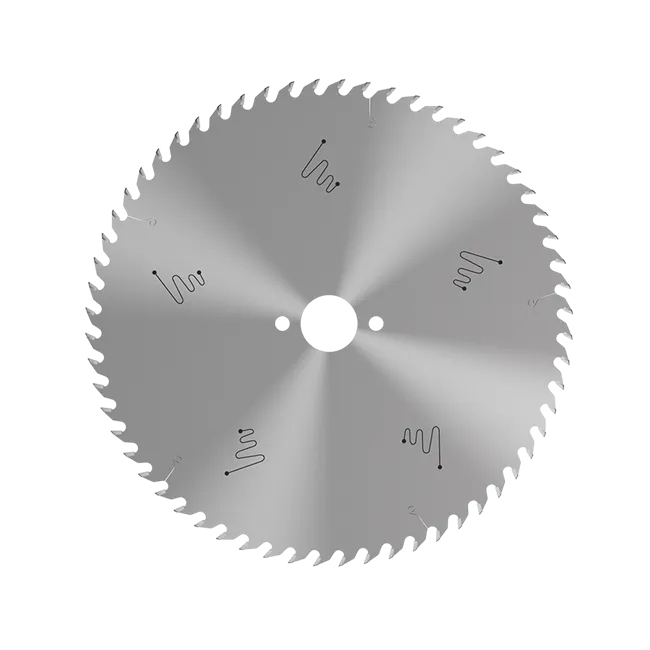
The Nakamura Wood Industrial Circular Saw Blades come in a 184mm 60T specification and are suitable for wood, OSB, MDF, and engineered wood materials. For custom furniture factories, they are suitable for panel sizing, trimming, and fine cutting where better edge quality is required.
The value of Akuma is not only sharpness. It is also about stability. When cutting panels, less blade wobble means a more controllable kerf and more consistent results before edge banding and assembly.
7-1/4 inch blade for installation and portable tools
Custom furniture is not only produced in the factory. On-site trimming, cut-outs, fitting, and installation adjustments are also common. Portable tools often have limited power, so blade cutting load and stability become important.
The Nakamura 7 1/4 Carbide Circular Saw Blade is designed for wood, OSB, MDF, and engineered panels. Its thin-kerf design helps reduce cutting load, making it suitable for handheld circular saws and cordless tools.
For installation teams, the right jobsite blade can reduce dragging and make trimming more stable.

PCD solution for abrasive and high-volume cutting
In high-end woodworking and custom furniture production, some customers process large quantities of MDF, HDF, laminated panels, or wear-resistant decorative materials. These materials may dull standard carbide tips faster, leading to fuzzy edges, rough cuts, or frequent blade changes.
The Nakamura PCD Saw Blade For MDF is more suitable for frequent and high-volume MDF or HDF cutting. PCD is not the default answer for every furniture application, but it can help reduce blade change frequency and keep production more stable when cutting abrasive materials continuously.
High-end woodworking depends on system matching
Saw blade selection should not depend only on price or tooth count. Material, machine type, RPM, feed speed, clamping, dust extraction, and edge banding process should all be considered.
Before choosing a blade, Nakamura suggests asking three questions:
What material are you mainly cutting?
Do you care more about edge quality, speed, or blade life?
Is the blade used for factory production or on-site trimming?
Only when these questions are clear can the blade truly match the working condition.
Conclusion
The quality of custom furniture is often hidden in millimeter-level details. A clean cut, a smooth edge, and a stable panel size all affect the final delivery.
Nakamura provides professional woodworking circular saw blades, precision TCT cutting solutions, and wear-resistant PCD options to help high-end woodworking customers reduce chipping, lower rework, and start every custom furniture project with a more stable first cut.
Nakamura supports precision cutting for high-end custom woodworking.