


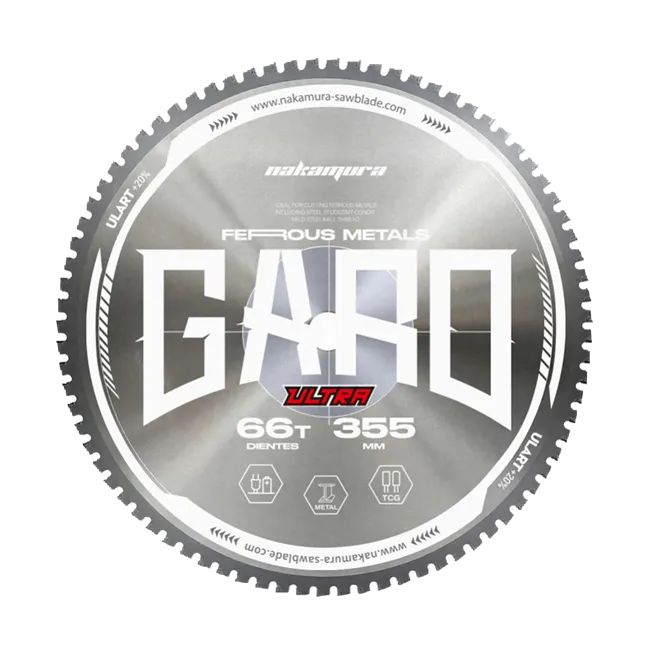
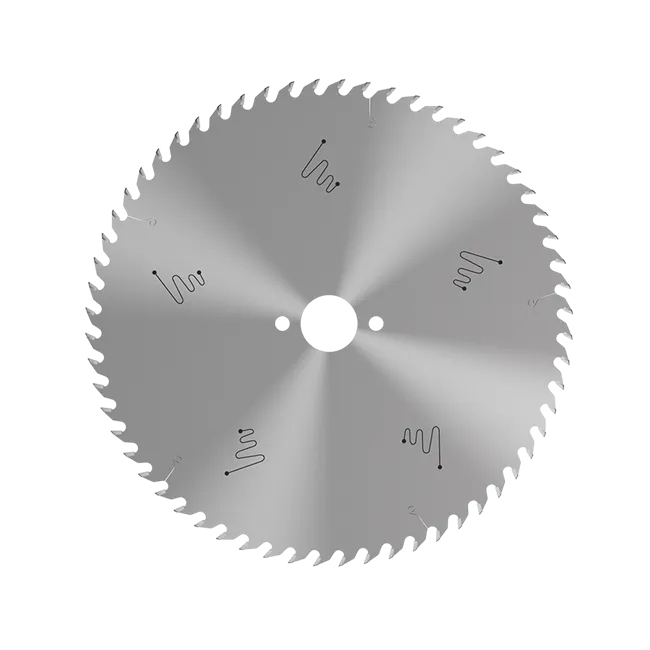


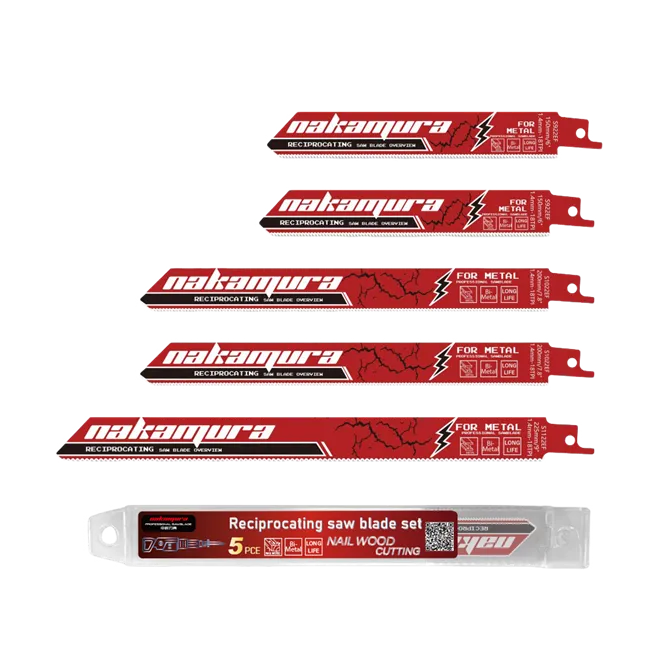

There are two types of cold saw blades:
High-speed steel saw blades (HSS) and TCT toothed alloy saw blades
The materials of high-speed steel saw blades are mainly M2 and M35. The general sawing speed of the saw blade is between 10-150 m/s, depending on the material and specifications of the sawed workpiece; the coated high-speed steel saw blade can reach a sawing speed of 250 m/min. The tooth feed of the saw blade is between 0.03-0.15 mm/tooth, depending on the power, torque and quality of the sawing equipment.
The outer diameter specification of the saw blade: 50-650 mm; the hardness of the saw blade HRC 65; the saw blade can be grinded, depending on the specifications of the sawed workpiece, generally 15-20 times. The sawing life of the saw blade is 0.3-1 square meters (the end surface area of the sawed workpiece). The specifications of the larger high-speed steel saw blades are generally made of inlaid high-speed steel (there are also more than 2000 mm); the saw teeth are made of inlaid high-speed steel, and the base of the saw blade is vanadium steel or manganese steel.
The material of TCT tooth alloy is tungsten steel. The general sawing speed of the saw blade is between 60-380 m/s, depending on the material and specifications of the sawed workpiece; the tooth feed of the tungsten steel saw blade is between 0.04-0.08.
Saw blade specifications: 250-780 mm; there are two types of TCT saw blades for cutting iron, one is small teeth, thin blades, high sawing speed, long saw blade life, about 15-50 square meters; it is a discarded saw blade; the other is large teeth, thick blades, low sawing speed, suitable for sawing large-sized workpieces; the saw blade diameter can reach more than 2000 mm. The saw blade life is generally about 8 square meters and can be sharpened 5-10 times.

Cold sawing and friction sawing are different, mainly in the different cutting methods:
Manganese steel flying saw blade: the manganese steel saw blade rotates at high speed and rubs against the workpiece and the friction saw blade. During the sawing process, the temperature of the friction saw and the workpiece is very high, and the contact with the welded pipe generates heat to break it, which is actually burned. High combustion marks can be seen on the surface.
High-speed steel cold cutting saw: It relies on the slow rotation of the high-speed steel saw blade to cut the welded pipe, so it can be burr-free and noise-free.
The sawing speed is fast, the cutting efficiency is optimized, and the work efficiency is high; the saw blade has low swing, and the cross section of the sawed steel pipe has no burrs, which improves the sawing accuracy of the workpiece and maximizes the service life of the saw blade.
1. The sawing method of cold milling is adopted. The sawing process generates very little heat, which avoids the changes in internal stress and material structure at the cut section. At the same time, the saw blade has very little pressure on the steel pipe, which will not cause deformation of the pipe wall orifice.
2. The cut end surface quality of the workpiece processed by high-speed steel cold cutting saw is good:
Adopting the optimized cutting method, the cross-section after cutting is high in precision, without burrs inside and outside, and the cut surface is flat and smooth. No subsequent processing such as flat head chamfering is required (reducing the processing intensity of the next process), saving processes and raw materials; the workpiece will not change the material due to the high temperature generated by friction; the operator fatigue is low, and the sawing efficiency is improved; there is no spark, no dust, no noise during the sawing process; environmental protection and energy saving.
3. Long service life, the saw blade gear grinder can be used to repeatedly grind the teeth, and the life of the saw blade after grinding is the same as that of the new saw blade. Improve production efficiency and reduce costs.

Select sawing parameters according to the material and specifications of the sawing workpiece:
1. What tooth pitch, tooth shape, saw tooth front angle parameters, back angle parameters; saw blade thickness, saw blade diameter;
2. What sawing speed is used;
3. What tooth feed rate is used;
The combination of the above various factors can obtain reasonable sawing efficiency and saw blade life.
It is easy to jitter during sawing, resulting in poor sawing effect, long equipment failure time, and even a series of phenomena such as saw blade bursting during sawing, or bearing burning due to unbalanced pressure on the spindle bearing. The surface size and burrs of the sawed steel exceed the standard.
Uneven force during sawing causes steel stacking, which is especially easy to occur when sawing small-sized steel, causing damage to the saw blade and equipment.
Treatment measures taken:
(1) Add a set of pneumatic torque clamping device at the sawing mouth to eliminate the superposition phenomenon, play a protective role for the saw blade, and reduce the reaction force on the saw blade caused by the deformation of the steel after the radial force.
(2) Add rollers at the sawing mouth, and cooperate with the clamping device to compress the steel before sawing. The sawing surface quality is significantly improved, and the damage rate of the saw blade is greatly reduced.

Water spraying area is too large and its treatment:
Round steel is about 320℃ when entering the cold saw. Water spraying is used to cool the saw blade during sawing and retracting. In actual production, the water spraying area is too large, resulting in a decrease in the surface quality of the steel and a waste of water.
Treatment measures taken:
(1) Change the original spraying water pipe to a spraying type, add a nozzle, use mist spraying, and implement key spraying on the sawing point. Because the end face of the nozzle has a circular arc concave surface, the water can be atomized to make the spraying uniform, and it is connected by a screw rod, which is very easy to replace and is conducive to maintenance work.
(2) Use the surrounding cooling method to cool the saw cover, spray cooling on the saw cut and saw teeth, and cool the key parts in a targeted manner.
(3) Use the jet valve when sawing and feeding, increase the jet pressure, and close the jet valve when retracting the saw.