






Choosing the right carbide saw blade is important for achieving clean cuts, good cutting efficiency, and consistent blade life. However, there is no single blade that is ideal for every wood-cutting application. The right choice depends on the material, cutting direction, required finish, machine, and cutting conditions.
Rip Cutting vs. Crosscutting
One of the first factors to consider is the cutting direction.
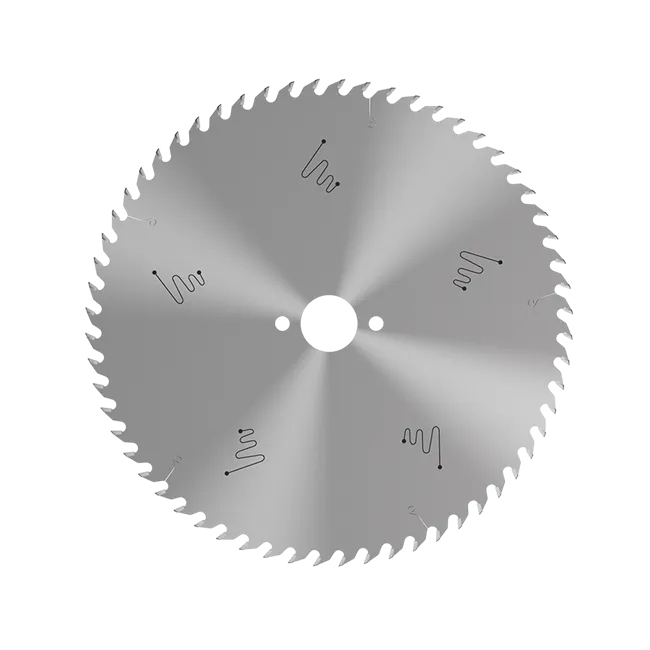
Rip cutting follows the grain of the wood. Blades designed for ripping generally use fewer teeth and larger gullets, providing more space for chip removal and allowing efficient cutting through solid wood.
Crosscutting cuts across the grain. A higher tooth count is often preferred when a cleaner edge is required because each tooth removes a smaller amount of material. However, tooth count should always be considered together with blade diameter, tooth geometry, material thickness, and machine parameters.
For general woodworking where both ripping and crosscutting are required, a combination or multipurpose blade can provide a practical balance between cutting speed and finish quality.
For example, the 7 1/4 Circular Saw Blade for Wood is designed for wood-cutting applications where reliable performance and a suitable cutting finish are required.
Tooth Count and Tooth Geometry
Tooth count is another important consideration.
Lower tooth counts: generally suitable for faster, rougher cuts and applications where efficient chip removal is important.
Medium tooth counts: suitable for general-purpose woodworking and mixed cutting requirements.
Higher tooth counts: often preferred for crosscutting, trim work, furniture components, and other applications where surface finish is important.
Tooth geometry also affects cutting performance. ATB (Alternate Top Bevel) is widely used for wood applications because the alternating bevel helps produce clean cuts across wood fibers. Other geometries, such as FTG and TCG, can be selected according to the material and cutting requirements.
For applications requiring a specific tooth configuration, the 184mm 24T Hardwood Saw Blade provides a practical option for hardwood cutting applications.
Choose the Blade According to the Material
Different wood-based materials can require different blade configurations.
Solid softwood and dimensional lumber may prioritize cutting efficiency and chip removal. Hardwood, plywood, MDF, laminated boards, and veneered panels may require a different balance between tooth count, geometry, and cutting parameters to achieve the desired edge quality.
A blade with more teeth is not automatically better. Excessive tooth count for a particular application can reduce chip space and may require a slower feed rate. Conversely, too few teeth may produce a rougher cut or increase tear-out when a fine finish is required.
The goal is to match the blade to the material rather than simply selecting the highest tooth count available.
What About Cutting Multiple Materials?
Some projects involve more than wood. If you occasionally need to cut materials such as plastic or other suitable non-wood materials, a multipurpose blade can reduce the need to change blades between operations.
The 7-1/4 Multi-Material Cutting Blades is designed for applications where versatility across suitable materials is important.


However, when a project is primarily focused on wood cutting, a blade specifically configured for the wood material and required cutting result is usually the more appropriate choice.
Other Factors to Consider
Tooth count is only one part of blade selection. Before choosing a carbide saw blade, consider:
Blade diameter and arbor size – The blade must be compatible with the machine.
Material and thickness – Solid wood, plywood, MDF, and laminated boards can require different configurations.
Tooth geometry – ATB, FTG, TCG, and other geometries provide different cutting characteristics.
Required finish – Rough construction cuts and fine furniture cuts have different requirements.
Machine specifications – RPM, feed rate, and machine condition all affect cutting performance.
Blade body and carbide quality – A properly manufactured blade body and suitable carbide grade contribute to stability and service life.
It is also important to follow the blade and machine manufacturer's recommended operating parameters rather than changing speed or feed rate based only on tooth count.
Final Thoughts
There is no universal "best" carbide saw blade for wood. A blade suitable for fast framing cuts may not be the right choice for fine furniture work, while a high-tooth-count finishing blade may not be efficient for demanding rip cuts.
The best approach is to match the blade's diameter, arbor, tooth count, tooth geometry, carbide specification, and application to the actual cutting requirements.
For professional woodworking, construction, furniture production, or other specialized applications, selecting the correct blade configuration can help achieve more consistent cutting results and make better use of both the blade and the machine.
If you are unsure which carbide saw blade is suitable for your material or application, providing the material type, thickness, machine model, blade diameter, and required cutting finish can help determine a suitable configuration.