



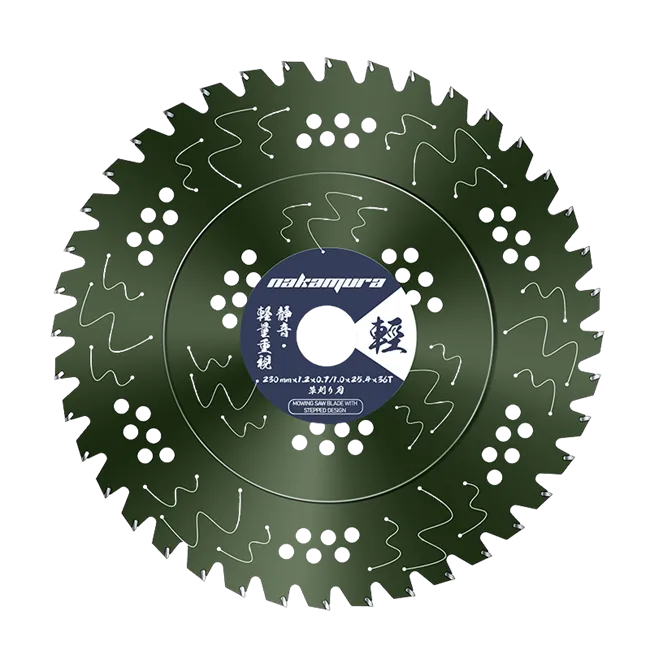

Miter saws are widely used in woodworking, furniture manufacturing, renovation, and DIY projects for crosscutting, miter cutting, trimming, and producing accurate end cuts. When working on picture frames, door casings, baseboards, decorative mouldings, and other applications where cutting accuracy matters, choosing the right saw blade can have a direct impact on cut quality, stability, and final assembly.
So, what should you look for in a miter saw blade designed for fine cuts? Besides blade diameter and machine compatibility, factors such as tooth count, tooth geometry, carbide quality, kerf, and coating all deserve attention.
Start with Blade Size and Machine Compatibility
The first step in choosing a saw blade is always to confirm the blade diameter, bore size, and maximum allowable RPM of the machine.
Common miter saw blade sizes include 165mm and 184mm (7-1/4"). The blade must match the machine's mounting specifications and should never exceed the maximum RPM indicated for the blade or tool.
For cordless power tools and compact miter saws, 165mm and 184mm blades are common choices. Selecting the correct size helps maintain stable operation and provides a solid foundation for accurate cutting.
Tooth Count Affects Cutting Speed and Finish
Tooth count is one of the key factors influencing cutting performance.
In general:
Fewer teeth: faster cutting and better suited to rough cutting or fast material removal.
Medium tooth count: a balance between cutting speed and finish quality.
More teeth: finer cutting and better suited to applications where surface finish is important.
For example, a 24T blade is generally more suitable for faster wood cutting, while a 40T blade can provide a practical balance between cutting efficiency and finish quality.
For picture frames, decorative mouldings, door casings, and other visible end cuts, higher tooth counts can be considered when a finer finish is required.
Tooth Geometry Matters Too
Tooth count is only one part of blade selection. Tooth geometry also plays an important role.
Common woodworking tooth designs include ATB, FTG, and TCG.
ATB (Alternate Top Bevel) teeth use alternating bevels to cut into the material progressively and are widely used for wood, plywood, and various panel materials.
For miter saw applications, specially designed ATB variations can help improve end-cut performance and provide controlled cutting when working on decorative mouldings, picture frames, and door casings.
165mm Carbide TCT Saw Blade: A Balance of Speed and Finish
For woodworking applications that require a balance between cutting efficiency and surface quality, a 40T TCT blade can be a practical choice.
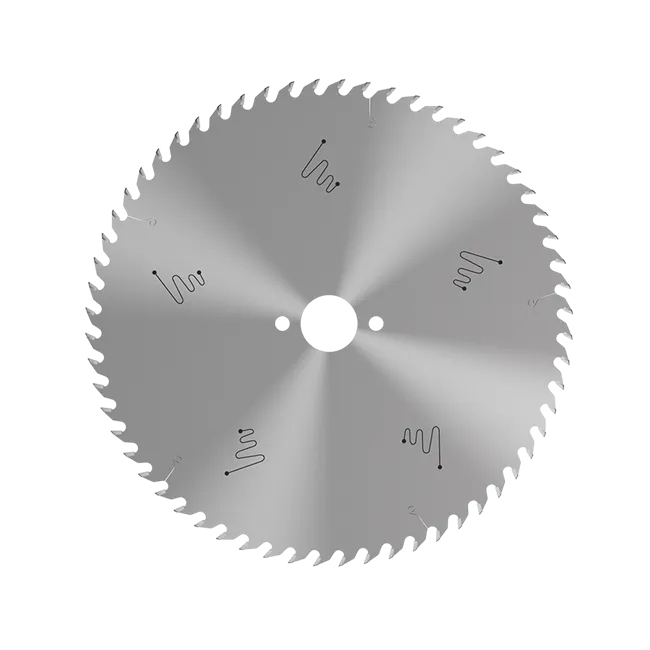
The NAKAMURA 165mm 40T Carbide TCT Saw Blade features ATB(BC) teeth and a 65Mn steel body with Teflon coating. It is designed for applications including wood, OSB, MDF, and integrated wood.
This type of blade is suitable for portable power tools and common woodworking applications where both cutting efficiency and a clean finish are important.
Customized 184mm 24T Hardwood Saw Blade: For Faster Wood Cutting
When productivity and fast material removal are the main priorities rather than an ultra-fine finish, a lower tooth count can be more appropriate.
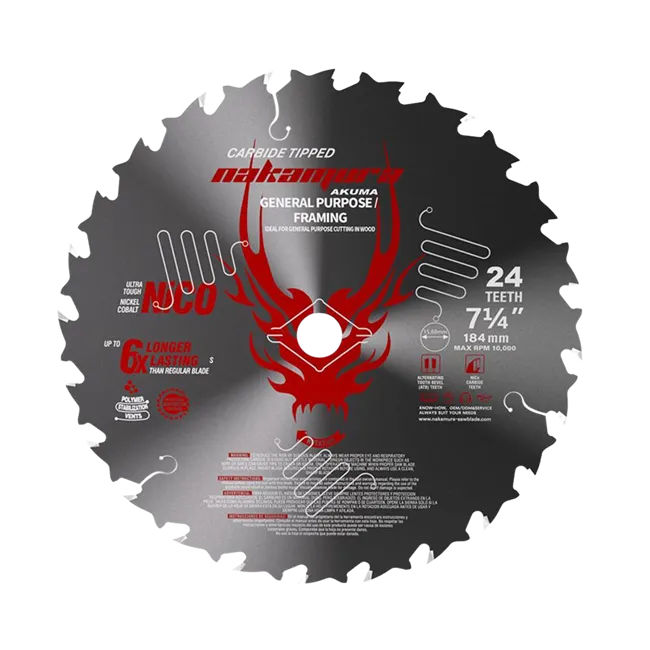
The NAKAMURA 184mm 24T Hardwood Saw Blade features ATB(BC) teeth and is designed for wood, OSB, MDF, and integrated wood applications.
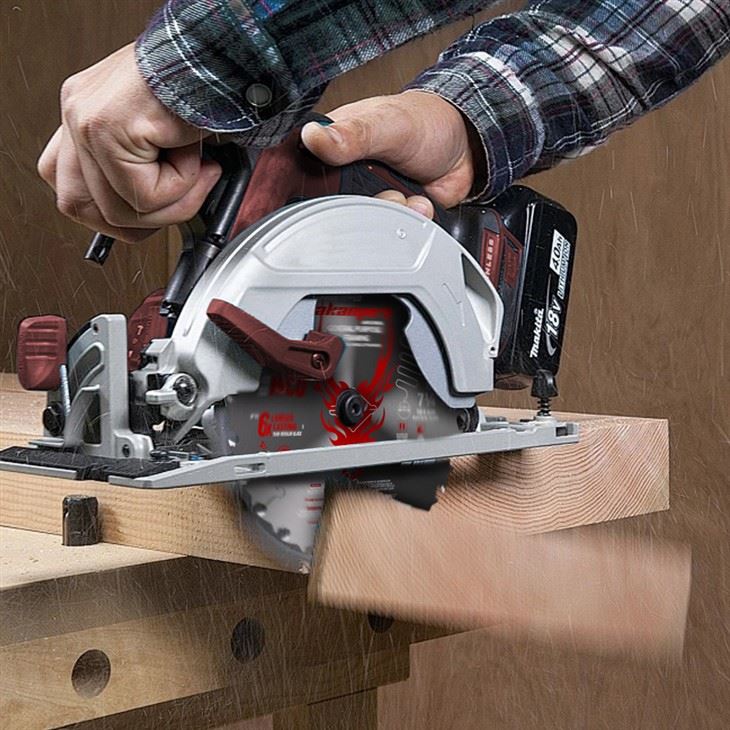
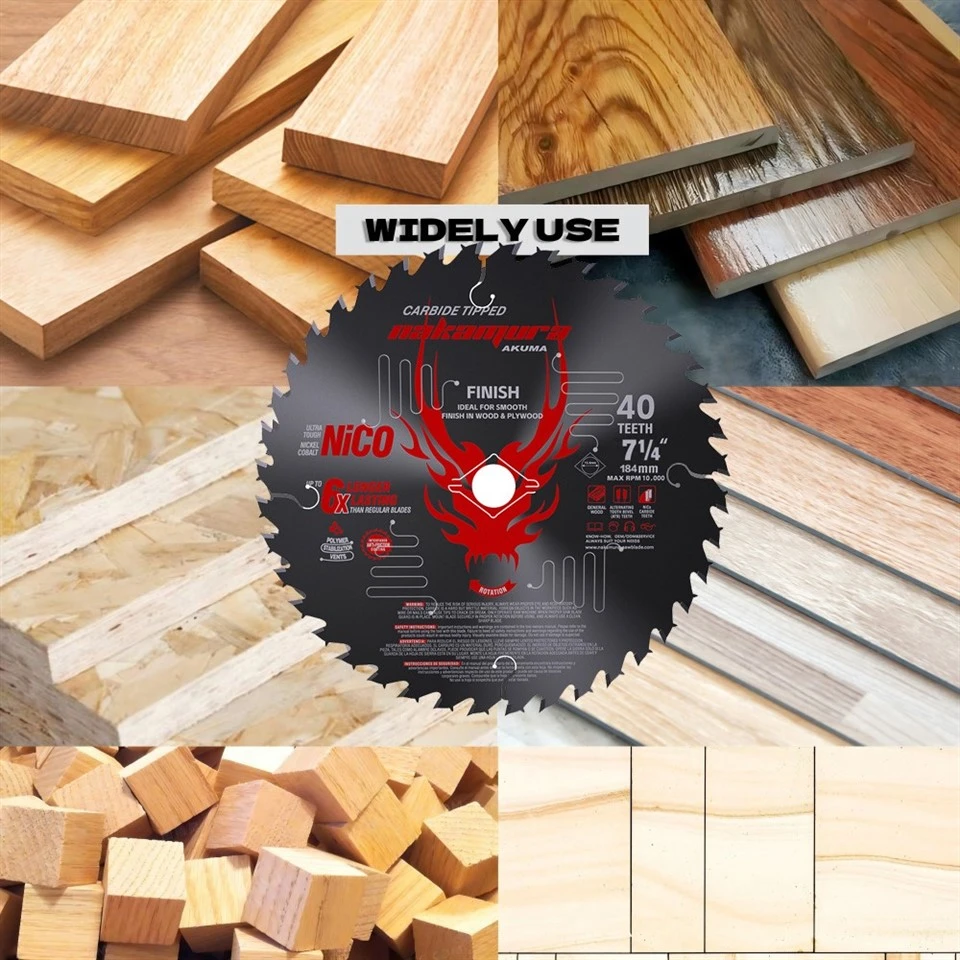
Compared with higher-tooth-count blades, a 24T design can provide faster cutting and is suitable for construction lumber, solid wood, and applications where efficient crosscutting or rough cutting is required.
For workshops that perform both rough and fine cutting, using different tooth counts for different operations can be more effective than trying to use one blade for every application.
Carbide Tipped Miter Saw Blade: Designed for Miter Saw Applications
For miter saw applications, a blade is not necessarily better simply because it is sharper or cuts more aggressively.
Miter saws are commonly used for crosscuts, 45-degree miter cuts, and precision end cuts. Therefore, controlled tooth entry and blade stability are especially important.
The NAKAMURA AKUMA Carbide Tipped Miter Saw Blade uses ATB(BC) tooth geometry and is available in a 184mm × 15.88mm × 24T configuration with Teflon coating. It is designed for solid wood, MDF, OSB, plywood, engineered wood, decorative mouldings, and picture frame profiles.
Its negative hook angle is designed to help reduce aggressive grabbing of the workpiece and provide more controlled tooth entry. The thin-kerf design can also reduce material removal and cutting load, while the Teflon coating helps reduce the buildup of resin, adhesives, and MDF dust.
For applications such as picture frames, door casings, baseboards, and decorative mouldings, a dedicated miter saw blade can therefore be a better choice than a general-purpose woodworking blade.
Don't Overlook Kerf and Coating
Kerf refers to the width of the cut made by the saw blade.
A thin kerf removes less material and can reduce cutting load, which can be particularly useful for portable power tools and applications where cutting efficiency is important.
Coating can also influence real-world performance. For example, Teflon-type anti-stick coatings can help reduce the buildup of resin, adhesives, and wood dust on the blade surface, helping maintain smoother cutting.
Therefore, blade selection should not be based on tooth count alone. Kerf, blade-body stability, and surface coating should also be considered.
Different Materials Require Different Blade Designs
Different woodworking materials place different demands on a saw blade.
Solid Wood:
For fast material removal, a lower tooth count can be suitable. For cleaner crosscuts, a medium or higher tooth count may be preferred.
MDF and OSB:
These engineered boards can contain adhesives and abrasive particles, making wear resistance and resistance to material buildup important considerations.
Plywood and Engineered Wood:
When a cleaner cut is required, ATB tooth geometry and a higher tooth count can be considered.
Decorative Mouldings, Picture Frames, and Door Casings:
These applications often require accurate end cuts and are well suited to dedicated miter saw blades with controlled cutting geometry.
More Teeth Does Not Always Mean a Better Blade
This is a common misconception when choosing a saw blade.
A higher tooth count can provide a finer finish, but it can also reduce cutting speed and increase the amount of material handled by each tooth.
Lower tooth counts are generally more suitable for faster cutting and material removal.
The right blade should therefore be selected based on:
Machine specifications + cutting material + cutting direction + required finish + cutting speed + frequency of use
rather than simply choosing the blade with the highest number of teeth.
How to Choose the Right Woodworking Saw Blade
If your priority is fast wood cutting, a lower tooth count such as 24T can be a practical choice.
If you need a balance between cutting speed and finish quality, a 40T blade can provide a versatile solution.
For picture frames, door casings, decorative mouldings, and other precision end-cutting applications, it is worth paying closer attention to dedicated miter saw blade designs, including tooth geometry, hook angle, kerf, and blade-body stability.
NAKAMURA offers a range of TCT woodworking saw blades, miter saw blades, and PCD saw blades for different machines, materials, and cutting requirements. Customized specifications, tooth geometry, coatings, and packaging can also be developed according to application requirements.
For professional woodworking, the right saw blade is not simply one that can cut. It should provide the right balance of cutting speed, finish quality, stability, durability, and controlled operation.
Choosing the right blade can make every cut more consistent, efficient, and precise.