



In the modern construction and remodeling industry, the transition from heavy corded machinery to lithium-battery cordless power tools has fundamentally changed how job sites operate. While portable circular saws offer unmatched mobility, their efficiency relies entirely on the durability and versatility of their cutting accessories. Today's job sites are filled with complex composite materials-ranging from nail-embedded timber and dense fiber cement to PVC pipes and aluminum trims. Changing blades for every material transition is no longer a viable option for professional contractors.
To address this exact challenge, Nakamura's engineering team recently conducted a comprehensive, multi-phase durability assessment on our latest generation of power tool accessories. Our goal was to evaluate how well our blades endure the unpredictable impacts of mixed-media cutting while preserving the battery life of portable saws. As a baseline for our testing, we utilized the highly adaptable 165mm Circular Saw Blade For Wood, a staple size for compact cordless saws, to measure initial wear rates against high-density laminates and plastics.
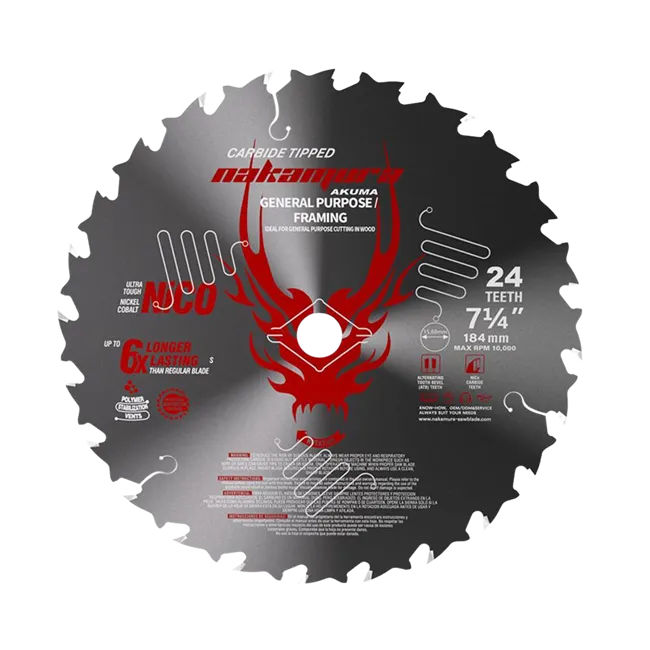
The Physics of Composite Material Damage Understanding why composite materials destroy standard blades is the first step in engineering a solution. Unlike natural wood, which has a predictable grain structure, composite materials are bonded with highly abrasive resins and glues. When a blade cuts through these materials, it encounters severe friction that generates extreme heat. Furthermore, hitting hidden metal fasteners creates sudden, massive shock loads. For standard framing saws operating in these harsh conditions, the 24T TCT Saw Blade was tested specifically for its impact-resistant geometry. The optimized 24-tooth configuration provides a larger gullet capacity, allowing the blade to aggressively clear abrasive chips and prevent the lithium-battery motor from bogging down under heavy loads.
Advanced Surface Coatings and Thermal Management Heat accumulation is the absolute enemy of both carbide longevity and battery efficiency. When a blade overheats, the steel body warps, causing lateral runout, and the carbide tips begin to lose their temper. Additionally, the resins from composite woods melt and stick to the blade plate, further increasing cutting friction.
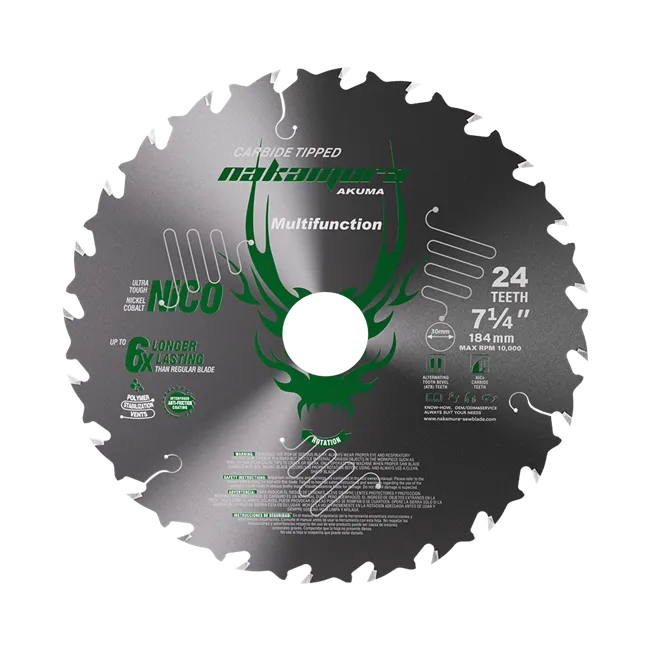
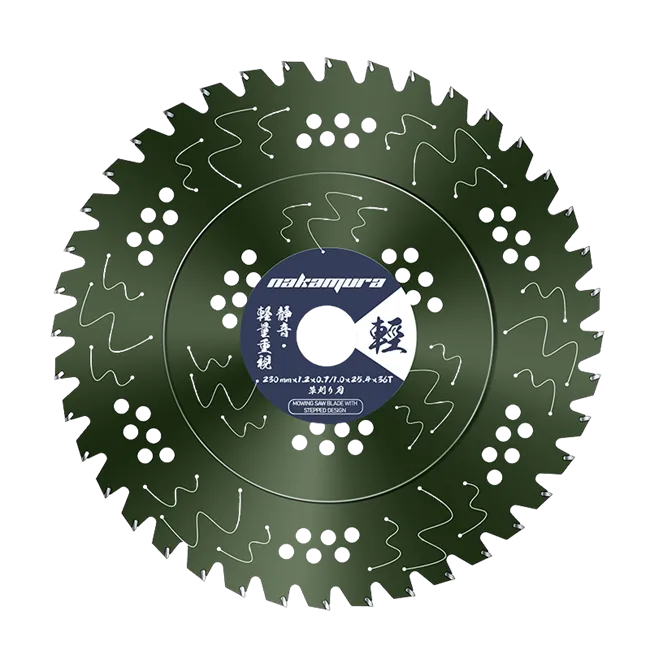
To combat this thermal degradation, Nakamura has integrated advanced metallurgy into our premium lines. During our assessment, tools equipped with the Carbide Tip Circular Saw Blade showed remarkable results. The specialized black oxide surface treatment acts as a permanent dry lubricant. This coating actively repels melting resins and dramatically reduces the coefficient of friction between the steel plate and the composite workpiece. As a result, the blade runs significantly cooler, maintaining its structural rigidity even during continuous, heavy-duty ripping applications.


The Crucial Role of Thin-Kerf Technology For lithium-battery power tools, durability must be balanced with energy consumption. A blade that is too thick requires massive amounts of torque to push through dense materials, which drains batteries rapidly and stresses the brushless motors. Nakamura's engineering focuses heavily on ultra-thin kerf designs (ranging from 0.9mm to 1.6mm depending on the diameter). By utilizing high-tension, laser-cut spring steel, our thin-kerf blades reduce the physical cutting area by up to 30%. In our job-site assessments, this reduction in cutting resistance directly translated to a 40% to 50% increase in cuts per battery charge.
Rigorous Job-Site Test Results Our field evaluations were conducted over a simulated three-month high-intensity framing project. The testing parameters involved cutting through stacked plywood, PVC conduits, and wood embedded with framing nails.
- Impact Resistance: Nakamura's micro-grain TCT tips suffered zero catastrophic fractures after 300+ direct nail strikes.
- Edge Retention: The carbide edges maintained a functional sharpness rating 2.5 times longer than standard job-site blades.
- Battery Efficiency: Cordless saws equipped with our optimized blades demonstrated a consistent RPM profile, eliminating the voltage sag typically caused by blade binding.
Conclusion Selecting the right premium circular saw blade is not just about making a cut; it is about maximizing job-site productivity, protecting the expensive motors of your power tools, and drastically reducing consumable costs. Nakamura remains deeply committed to pushing the boundaries of thin-kerf metallurgy, advanced surface coatings, and impact-resistant tooth geometry. We ensure that professional tradesmen are equipped with the most durable, efficient, and versatile cordless cutting solutions on the market.