

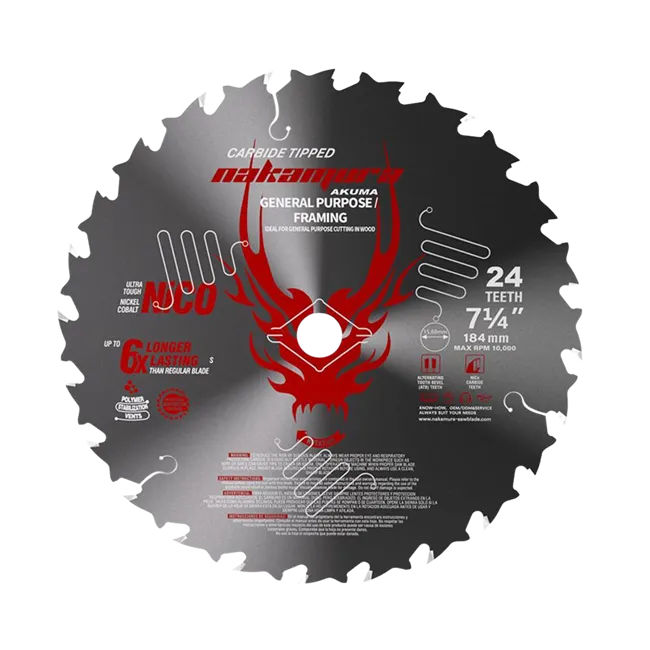
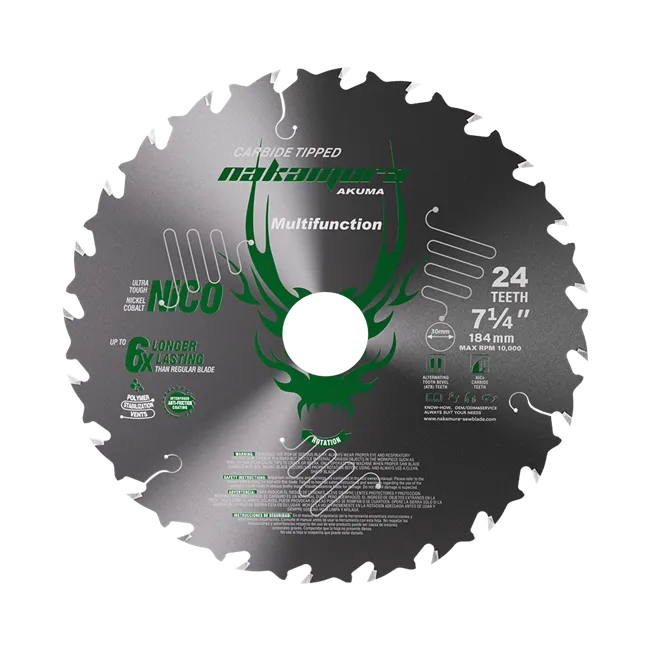

In saw blade manufacturing, "precision" is not just a nice word. It is a complete manufacturing logic that runs through the whole process.
Whether a blade cuts fast, runs steadily, and leaves a clean edge does not depend only on the tip material. It also depends on blade body processing, heat treatment, tensioning, tip brazing, tooth grinding, surface treatment, and final inspection. If any step is unstable, the blade may show vibration, wandering, burrs, chipping, heat build-up, or shorter service life during cutting.
This is how Nakamura understands precision manufacturing: not as one impressive process, but as every process working together for final cutting performance.
Precision manufacturing is not only about expensive equipment
Advanced equipment is important, but equipment is only the foundation. Real saw blade quality comes from the combination of equipment, process control, inspection, and technical experience.Laser cutting can improve blade body contour accuracy and reduce deformation caused by mechanical contact, but heat influence, cutting path, and later flatness still need to be controlled. Automated brazing can improve tip positioning and joining consistency, but filler metal, temperature, gap control, and post-brazing inspection still matter. CNC grinding can improve tooth geometry consistency, but final performance also depends on wheel selection, cooling, feed parameters, and inspection standards.In other words, precision manufacturing is not achieved by buying machines alone. It requires every process to be managed under one quality control system.

Blade body stability starts at the first process
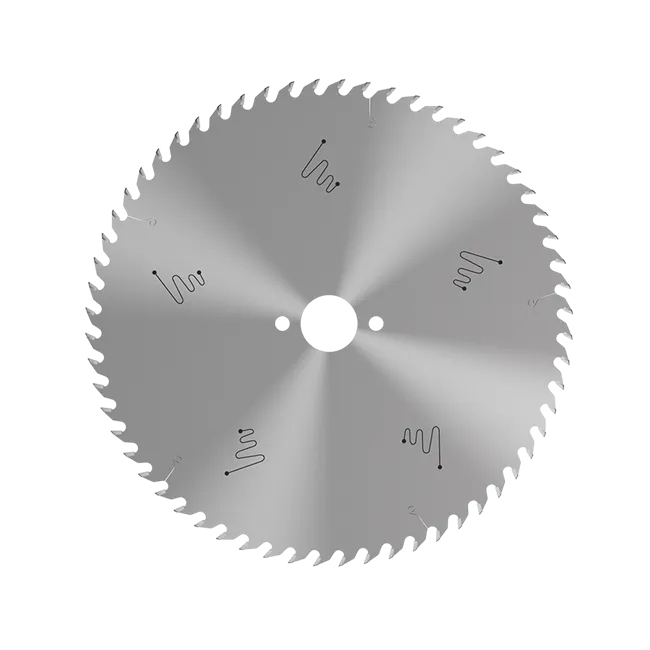
The blade body is the foundation of the whole blade. Outer diameter, bore size, expansion slots, noise-reduction lines, flatness, and tension condition all affect how steadily the blade runs at high speed.If the blade body is unstable, even a good tip and fine grinding cannot guarantee straight cutting or smooth running. Thin-kerf blades, small-diameter handheld tool blades, and high-speed metal cutting blades are especially sensitive to blade body processing and heat treatment.
For example, the Nakamura Wood Cutting Disc Blade 125mm is a compact woodworking cutting blade designed for wood, OSB, MDF, integrated wood, and similar materials. Although the blade is small, it still requires controlled body flatness, tooth consistency, and stable cutting entry. In small handheld tools, even slight blade wobble can be felt clearly by the user.
Tip joining is a critical step in precision manufacturing
TCT carbide-tipped blades and PCD blades both require cutting tips to be firmly joined to the steel body. This process is not just about attaching the tip. It involves tooth seat dimensions, filler metal flow, heating temperature, tip positioning, and cooling control.If tip position is unstable, later grinding will be affected. If brazing strength is not sufficient, the tip may loosen during use. If heat control is not suitable, local blade body properties may be affected.The value of automated brazing is not only higher production speed. It helps reduce human variation and makes bulk products more consistent in tip position, brazing appearance, and later grinding quality.
Metal cutting requires stronger process coordination
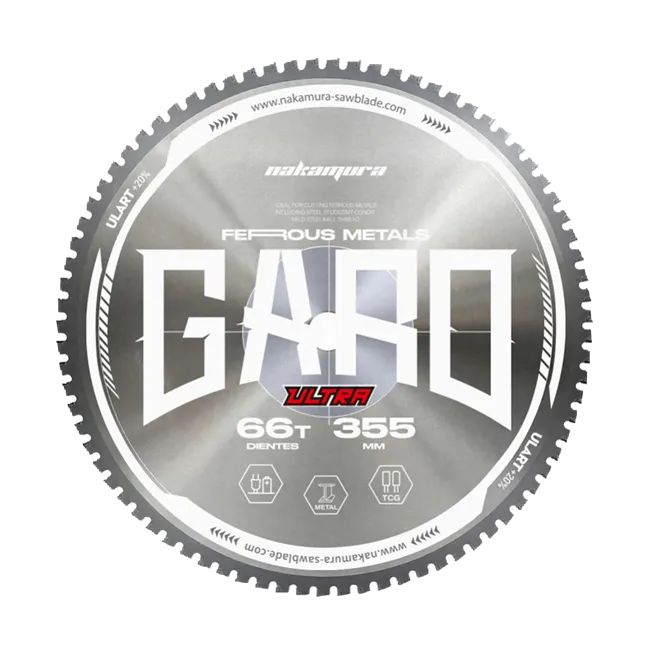
Metal cutting blades face higher cutting resistance, more friction heat, and stricter edge requirements. When cutting metal tubes, profiles, stainless steel parts, or light metal components, if tooth geometry, blade body rigidity, tip joining, and grinding accuracy do not match, burrs, vibration, burning, or abnormal tip wear may appear.The Nakamura Stainless Steel Cutting Circular Saw Blade is designed for stainless steel cutting applications and is suitable for metal cutting scenarios where edge stability and processing consistency are important. For this type of product, precision manufacturing is not one single process. It is the combined result of blade body quality, tooth design, brazing, grinding, and inspection.
Metal cutting also reminds us that saw blade quality should not be judged only by appearance. Real quality appears after the blade is mounted and used.

Precision grinding shapes the first cutting experience
When users start cutting, the most direct feeling often comes from grinding quality.Edge sharpness, tooth angle consistency, left-right symmetry, controlled runout, and radial deviation all affect cutting resistance and edge quality. In wood cutting, grinding affects fuzzing, chipping, and burning. In metal cutting, it affects burrs and heat. In PCD abrasive material cutting, it affects kerf stability and tool life.
"Micron-level precision" can describe the capability direction of high-precision equipment, but it should not be used to claim that every blade must reach 0.001 mm in every dimension. A more accurate statement is that key tooth dimensions and angles need to be controlled within stable tolerances and confirmed by inspection.
PCD blades: precision is more than tip hardness
PCD tips are highly wear-resistant, but using PCD alone does not guarantee good performance. A PCD blade also needs a stable body, reliable tip joining, suitable tooth geometry, precision grinding, and strict inspection.The Nakamura 305mm Fibre Cement Saw Blade is designed for fiber cement board and other abrasive sheet materials. Fiber cement board, mineral-based panels, and similar construction materials create dust and strong abrasion, placing high demands on both PCD tips and blade body stability. For this type of product, precision manufacturing supports stable cutting, reduced abnormal wear, and better production control.
PCD products show Nakamura's system-based manufacturing idea especially well. The focus is not only on "superhard" tips, but on matching those tips with the whole blade structure.
Inspection is not a final fix. It is process control.
Precision manufacturing should not wait until the final product to find problems. Effective quality control should run through raw material selection, blade body processing, heat treatment, brazing, grinding, coating, and final inspection.
- Raw materials should match the blade category and application.
- Blade body dimensions, flatness, and bore size should be checked.
- After brazing, tip position, joint condition, and appearance should be reviewed.
- After grinding, tooth geometry, runout, radial deviation, and edge condition should be inspected.
- Finished blades should also be checked for packaging, labeling, specifications, and trial cutting when needed.
For B2B customers, process control matters more than one good sample. They need not only one good blade, but stable quality across one batch, the next batch, and long-term supply.
Conclusion
Saw blade quality is not determined by one highlight. It is built by a complete manufacturing system.From laser processing of the blade body to heat treatment and tension control; from automated brazing to precision grinding and final inspection; from woodworking blades to metal cutting blades and PCD blades, Nakamura treats precision as a system, not a slogan.Nakamura - precision manufacturing for more stable, sharper, and more reliable saw blades.