



Choosing the right carbide saw blade diameter is essential for achieving clean cuts, maintaining cutting efficiency, and operating safely. However, there is no single minimum diameter that applies to every circular saw. The appropriate size depends on the saw's design, the material being cut, and the manufacturer's specifications.
In this guide, we'll explain the key factors that determine blade diameter and how to choose the right size for different cutting applications.
1. Is There a Minimum Diameter for Carbide Saw Blades?
There is no universal minimum diameter for carbide saw blades. Standard circular saw blades are available in a wide range of sizes, from small blades designed for compact tools to large blades used in industrial cutting applications.
The smallest blade you can use depends primarily on:
Saw compatibility: The saw manufacturer's specified blade diameter range.
Arbor size: The blade's center hole must match the saw's spindle, using only approved adapters or reducing rings where applicable.
Maximum RPM: The blade's rated speed must be compatible with the operating speed of the saw.
Cutting material: Wood, aluminum, plastic, and other materials may require different blade designs and tooth configurations.
Cutting depth: Smaller blades generally provide less cutting depth than larger blades.
The most important rule is to follow the saw manufacturer's specifications. A blade that physically fits the spindle is not necessarily suitable for the machine.
2. Choosing Blade Diameter for Different Saw Types
Different saws are designed around specific blade sizes. The following examples illustrate how to approach blade selection.
Handheld Circular Saws
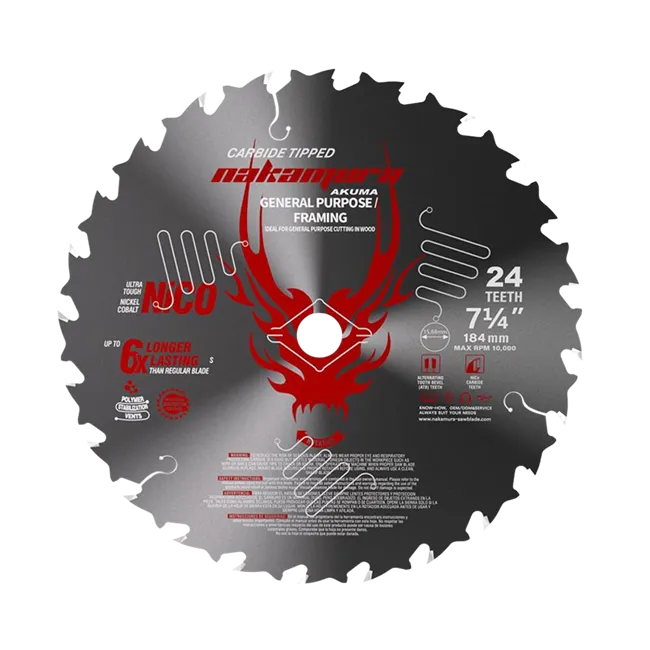
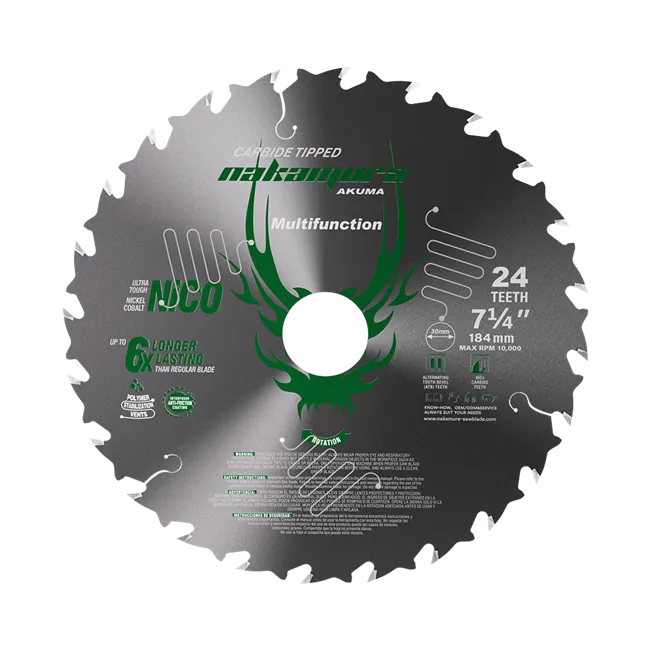
Handheld circular saws commonly use blades around 6-1/2 inches or 7-1/4 inches in diameter, although other sizes are available.
A smaller blade may be suitable for a compact saw if the manufacturer permits it. However, using a smaller blade can reduce the maximum cutting depth. It does not automatically improve cutting performance or reduce the risk of kickback.
For plastic and other suitable materials, a blade should be selected according to the material, tooth geometry, and saw specifications. For example, Nakamura offers a 7-1/4 Circular Saw Blade for Plastic for applications where this diameter and blade design are appropriate.
Chop Saws and Cut-Off Saws
Chop saws are designed for particular blade diameters, which vary by machine and application. A 10-inch saw does not have a universal 10-inch minimum requirement; rather, 10 inches may be the specified blade size for that model.
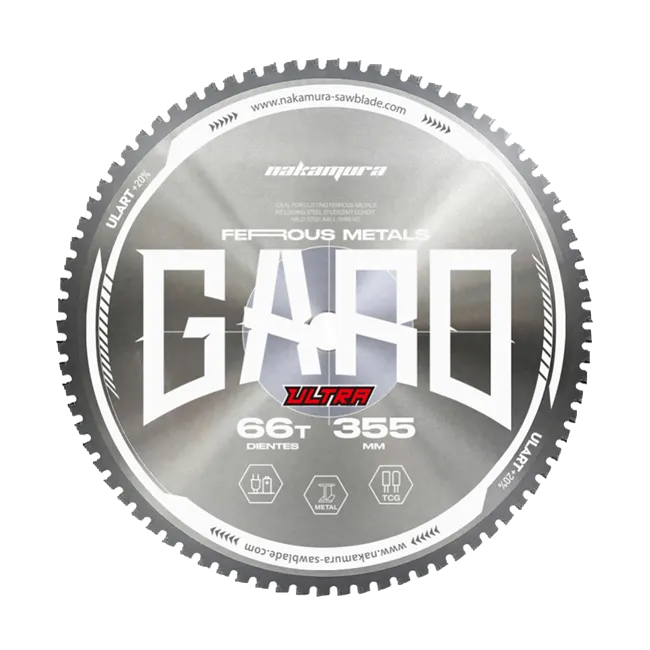
When selecting a replacement blade, check the machine's approved diameter, arbor dimensions, maximum RPM, and intended cutting material. Metal and aluminum cutting also require a blade specifically designed for the application.
Nakamura's Multipurpose Chop Saw Blade is one option to consider when the blade specifications match the saw and cutting requirements.
Table Saws
Many table saws use 10-inch blades, while compact and specialized models may use other sizes.
Do not assume that an 8-inch or 7-inch blade is suitable simply because it can be mounted. The blade must be compatible with the saw's design, guard system, riving knife where applicable, and operating requirements.
For woodworking, the choice between a smaller and larger blade should consider cutting depth, material thickness, tooth count, and the desired finish.
Aluminum Cutting Applications
Aluminum cutting requires particular attention to blade design and operating conditions. The appropriate diameter depends on the machine, the aluminum profile or workpiece, and the blade's intended application.
A larger blade does not automatically produce a cooler cut. Cutting performance also depends on tooth geometry, feed rate, blade speed, workpiece support, and chip clearance.
For suitable machines, Nakamura's Circular Saw Blade to Cut Aluminium is an option for aluminum-cutting applications. Always confirm the exact diameter and specifications before ordering.


3. How Arbor Size and RPM Affect Blade Selection
Two specifications deserve particular attention when choosing a carbide saw blade.
Arbor size: This refers to the diameter of the hole in the center of the blade. It must fit the saw's spindle correctly. An incorrect fit can cause runout, vibration, and unsafe operation. Use only manufacturer-approved adapters or reducing rings.
Maximum RPM: Every blade has a maximum rated rotational speed. The saw's operating speed must not exceed that rating. Blade diameter and RPM together determine peripheral cutting speed, but there is no single peripheral-speed requirement suitable for every carbide blade and material.
For this reason, selecting a blade based on diameter alone is insufficient. Always check the full blade specifications and the saw's requirements.
4. Does a Larger Carbide Saw Blade Always Perform Better?
Not necessarily. A larger blade may provide greater cutting depth, but it must be compatible with the saw and the application.
A smaller blade may be appropriate for a compact tool or a shallow cut. A larger blade may be needed for thicker material or a machine designed around that diameter.
Cut quality and blade life also depend on carbide grade, tooth geometry, blade-body balance, material properties, feed rate, and operating conditions. Choosing the correct blade is more important than simply choosing the largest available size.
5. Common Mistakes When Choosing Blade Diameter
Avoid these common mistakes when purchasing replacement blades:
Choosing by arbor size alone: A matching center hole does not guarantee compatibility.
Ignoring the saw manufacturer's specifications: The blade diameter must fall within the approved range.
Overlooking the RPM rating: The blade must be rated for the machine's operating speed.
Using a general-purpose blade for every material: Wood, aluminum, and plastic may require different blade designs.
Assuming a smaller blade is always cheaper to operate: Cutting efficiency and service life depend on the complete blade and application, not diameter alone.
Conclusion
The minimum diameter of a carbide saw blade depends on the saw, the material being cut, and the manufacturer's specifications. There is no universal minimum size for handheld circular saws, chop saws, table saws, or aluminum-cutting applications.
Before choosing a blade, confirm its diameter, arbor size, maximum RPM, cutting depth, and intended material. These checks help ensure that the blade is suitable for the machine and the job.
If you are sourcing carbide circular saw blades for your business, Nakamura can help you evaluate blade specifications and OEM customization options according to your application. Contact our team with your saw model, material, required diameter, and cutting requirements to discuss a suitable solution.