


Many users are confused when they see two different RPM numbers: one printed on the saw and one printed on the blade. A common question is: can I use a circular saw blade with a higher maximum RPM rating than my saw?
In most cases, yes. But the key point is this: the RPM printed on the blade is the maximum safe speed of the blade, not the speed the blade will automatically run at. The saw controls the actual rotating speed.
For example, if your circular saw has a maximum no-load speed of 5000 RPM and the blade is rated for 10000 RPM, the blade will rotate at about the speed of the saw, not at 10000 RPM. From an RPM safety point of view, this is normally acceptable.
However, the opposite is not safe. If your saw runs at 5000 RPM and the blade is rated for only 4000 RPM, the blade may be forced to operate beyond its safe limit. This can lead to excessive vibration, blade distortion, tooth damage, or even blade failure.
Maximum RPM Is Not the Same as Best Cutting RPM
One common misunderstanding is that a higher maximum RPM rating means a blade must be used at a higher speed to perform well. That is not always true.
Maximum RPM is mainly a safety limit. Cutting performance is usually affected by several other factors, including:
- Blade diameter
- Tooth count
- Tooth geometry
- Hook angle
- Kerf thickness
- Blade body stability
- Cutting material
- Saw power
- Feed rate
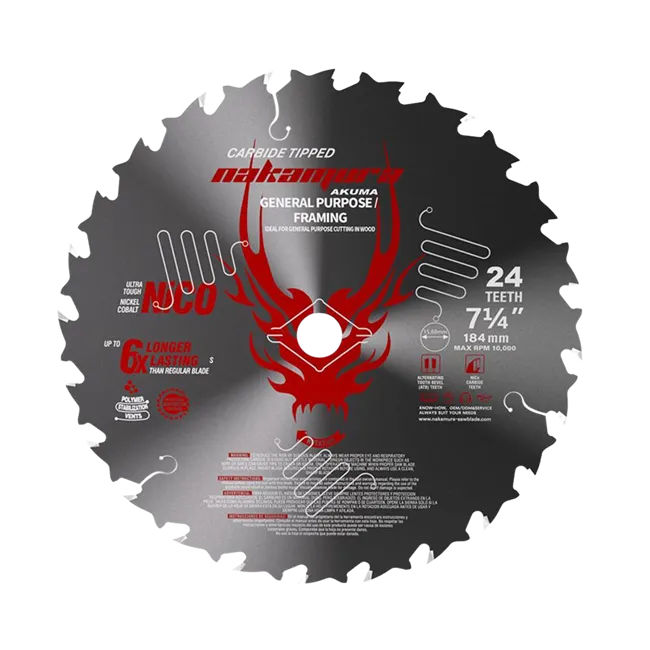
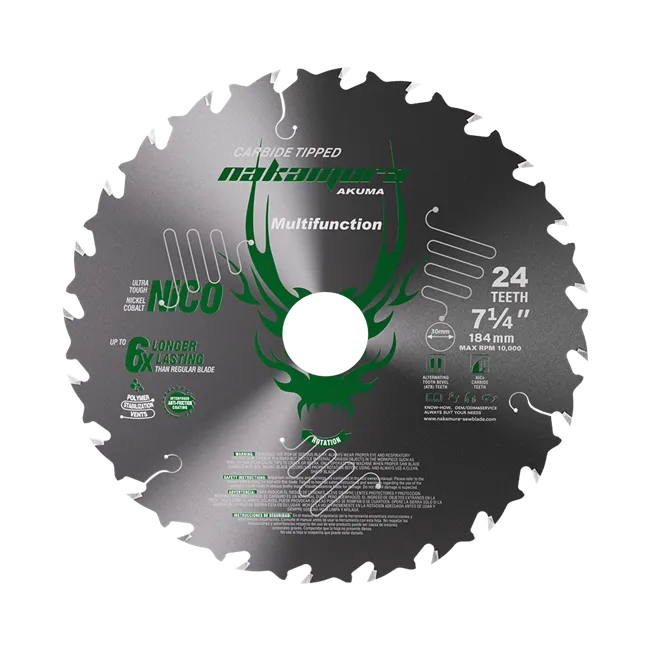
For wood cutting, a 24T blade is usually better for fast ripping, framing lumber, OSB, MDF, and general jobsite cutting. A 40T or 60T blade is usually better for cleaner crosscuts, plywood, melamine, and cabinet-grade panels.
For fast cutting in hardwood, OSB, MDF, engineered wood, and construction timber, the 184mm 24T Hardwood Saw Blade is a suitable option. Its 24T configuration and thin-kerf design help reduce cutting resistance and improve feeding efficiency.
For veneered plywood, cabinet-grade hardwoods, melamine, and MDF where a cleaner edge is required, the 165mm 50T TCT Saw Blade Circular is a better match. A higher tooth count helps reduce chipping and produce a smoother finish.

RPM Is Only One Part of Blade Compatibility
Before installing any circular saw blade, do not check RPM alone. A blade must also match the saw physically and functionally.
- First, the blade diameter must match the saw.
Never install a blade that is larger than the saw manufacturer allows. An oversized blade can interfere with the guard, reduce control, and create a serious safety risk.
- Second, the arbor size must match.
The blade bore must fit the saw spindle correctly. If a reducer ring is used, it must be accurate and stable. A loose or off-center blade can cause severe vibration.
- Third, the blade must match the material.
Wood blades should not be used for steel. Metal cold cut blades should not be installed on high-speed woodworking saws unless both the blade and the machine are specifically rated for that use.
- Fourth, the blade direction must be correct.
Always check that the arrow on the blade matches the rotation direction of the saw. A reversed blade can cut poorly, vibrate heavily, and damage the teeth.
- Fifth, inspect the blade before use.
Do not use a blade with cracks, missing tips, warping, abnormal wear, or visible runout.
Be Careful with Metal Cold Cut Blades
Wood cutting and metal cutting are very different applications. Metal cutting usually requires lower RPM, secure clamping, and a dedicated tooth design. Installing a metal cold cut blade on the wrong high-speed woodworking saw can cause rapid wear, chipped teeth, heavy vibration, and safety hazards.
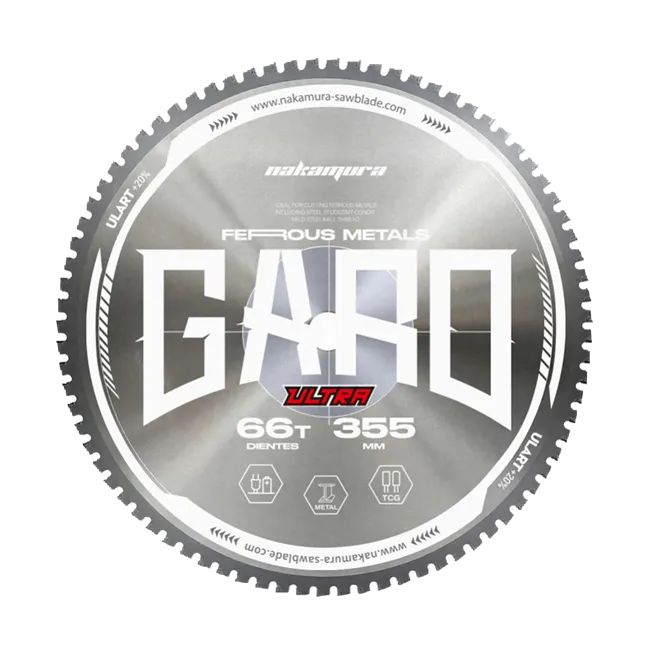
For example, the 14 Cold Cut Saw Blade is a 355mm metal cutting blade designed for applications such as angle steel, round pipe, and spiral steel pipe. It should be used with a compatible dry-cut metal saw or cold cutting machine, not as a general-purpose woodworking circular saw blade.
A Simple Rule to Remember
Before using a circular saw blade, check this basic rule:
Blade Max RPM ≥ Saw Maximum No-Load RPM
Then confirm the following:
- Blade diameter matches the saw
- Arbor size matches the spindle
- The guard has enough clearance
- Tooth design matches the material
- The machine type matches the application
- The blade is not damaged
- The blade is installed in the correct direction
If any of these points do not match, do not use the blade.

Conclusion
Using a circular saw blade with a higher maximum RPM rating than your saw is generally safe, because the saw determines the actual blade speed. The real danger is using a blade with a lower maximum RPM rating than the saw's maximum speed.
Still, RPM is only the first checkpoint. For safe and efficient cutting, you must also match the blade diameter, arbor size, tooth count, tooth geometry, material application, and saw type. For professional users, distributors, and OEM buyers, the best blade is not simply the one with the highest RPM rating. It is the one that correctly matches the machine, material, and cutting purpose.