


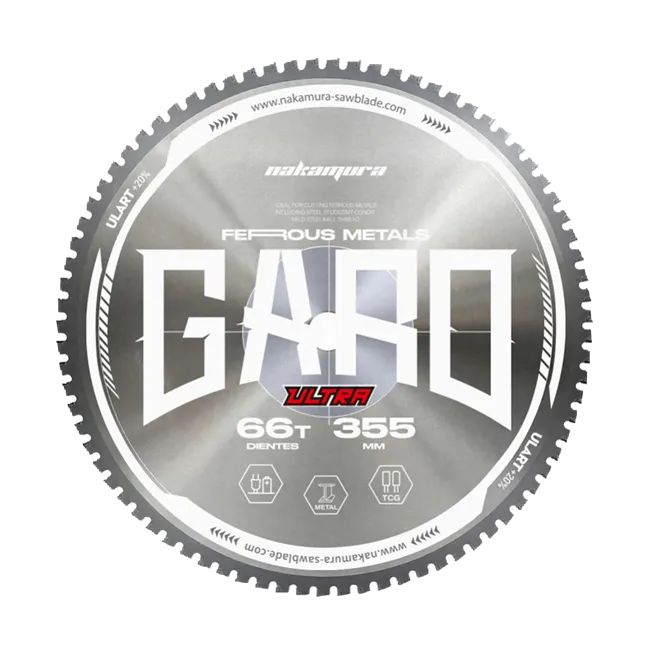
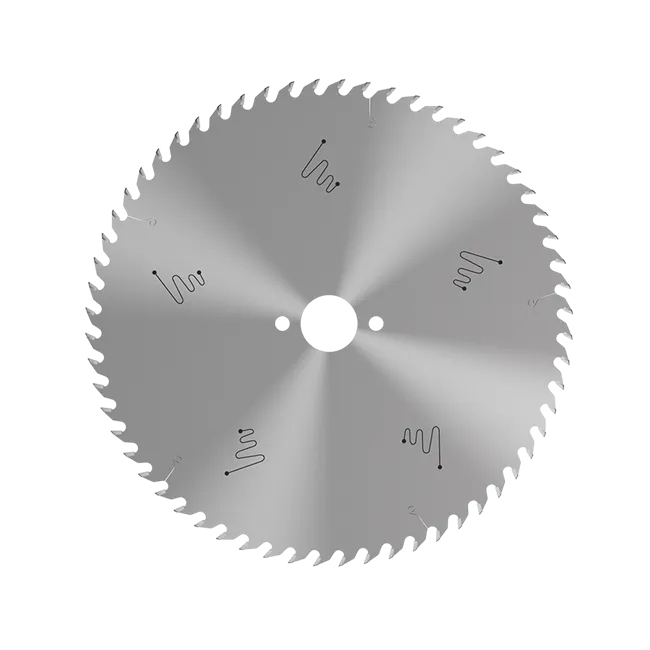
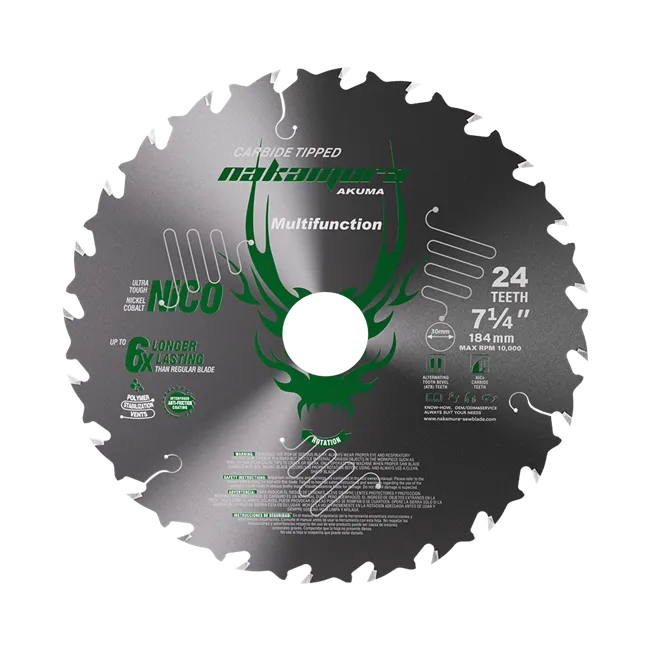

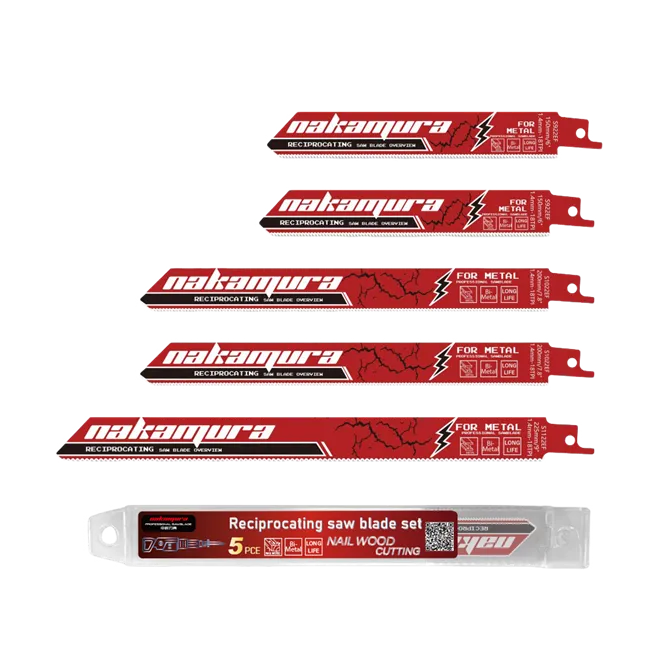


Selecting the right metal carbide saw blade involves more than choosing a diameter and tooth count. It requires understanding how technical specifications interact with your equipment, materials, and production goals. This guide provides the detailed knowledge needed to make informed decisions and optimize your cutting operations.
Critical Technical Specifications Explained
1. Blade Diameter and Bore Size:
Diameter: Determines cutting depth and machine compatibility
Bore Size: Must match your machine arbor precisely (tolerance typically H7)
Expansion Considerations: Thermal expansion during cutting affects actual running diameter
2. Tooth Geometry Parameters:
Hook Angle: Controls cutting aggressiveness
Positive (10°-20°): For softer materials, faster feeding
Neutral (0°-10°): General purpose applications
Negative (-5°-0°): For hard materials, thinner metals, plastics
Clearance Angles: Prevent rubbing and heat buildup
Primary clearance: Typically 12°-15°
Secondary clearance: For additional relief in deeper cuts
Tooth Face Geometry:
Alternate Top Bevel (ATB): General wood and plastic cutting
Triple Chip Grind (TCG): For metals and abrasive materials
Combination (ATBR): Mixes ATB and raker teeth
Flat Top Grind (FTG): For aggressive ripping in wood
3. Carbide Specifications:
Carbide Grade: ISO classification system
K-grade (Red): For cast iron, non-ferrous metals, plastics
P-grade (Blue): For steel and steel alloys
M-grade (Yellow): Intermediate for stainless and heat-resistant alloys
Specific grades within each category offer different toughness/hardness balances
Carbide Quality Factors:
Grain size (0.4-6 microns)
Cobalt content (6-12%)
Additives (TiC, TaC, NbC for specific properties)
4. Blade Body Specifications:
Plate Material: Typically 75Cr1 or similar spring steel
Tensioning: Expressed as tension level or flatness specification
Runout Tolerance: Usually ≤0.05mm for precision applications
Balance Quality: G6.3 standard, G2.5 available for high-speed applications
Selection Matrix for Common Applications
| Material Type | Recommended Tooth Geometry | Carbide Grade | Hook Angle | Special Features |
|---|---|---|---|---|
| Aluminum Extrusions | TCG/Modified TCG | K10-K20 | 5°-10° | High chip clearance |
| Stainless Steel | ATB with variable pitch | M10-M20 | -5°-0° | Vibration dampening |
| Solid Hardwood | Hi-ATB | K10-K30 | 15°-20° | Anti-vibration slots |
| Plastic Laminates | Special ATB | K01-K10 | 0°-5° | Polished flutes |
| Composite Panels | TCG with PCD option | Special | 0°-10° | Non-stick coating |
| Structural Steel | FTG or Modified ATB | P20-P40 | 10°-15° | Reinforced teeth |
Performance Optimization Parameters
Cutting Speed Calculations:
SFM = (π × Diameter × RPM) / 12 Optimal SFM ranges: - Aluminum: 8,000-16,000 SFM - Steel: 3,000-8,000 SFM - Wood: 9,000-18,000 SFM - Plastics: 4,000-12,000 SFM
Feed Rate Optimization:
Chip load per tooth recommendations vary by material and tooth geometry
General range: 0.08-0.25mm per tooth for metals, 0.15-0.5mm for wood
Too low: Causes rubbing and premature dulling
Too high: Risks tooth damage and poor finish
Coolant and Lubrication Considerations:
Wet Cutting: Extends blade life 2-3x in metal applications
Dry Cutting: Requires specialized coatings and geometries
Mist Systems: Compromise solution with less mess than flood coolant
Zhongcun's Precision Manufacturing Standards
At Zhejiang Zhongcun Precision Cutter Machinery, our manufacturing processes ensure every blade meets or exceeds published specifications:
Quality Control Protocols:
Raw Material Inspection: Certificate verification for all steel and carbide
Process Control: SPC monitoring at all critical manufacturing stages
Final Inspection: 100% visual inspection, sample testing for critical dimensions
Performance Testing: Random production samples undergo cutting tests
Our Manufacturing Tolerances:
Diameter tolerance: ±0.1mm to ±0.5mm depending on size
Bore tolerance: H7 standard (H6 available)
Runout: ≤0.05mm for standard blades
Balance: G6.3 standard (G2.5 available)
Tooth height variation: ≤0.02mm
Maintenance and Operational Best Practices
Proper Installation:
Clean machine arbor and blade mounting surfaces
Use correct flange size (minimum 1/3 blade diameter)
Tighten with proper torque using calibrated tools
Check runout after installation
Operating Guidelines:
Allow proper warm-up period (3-5 minutes at reduced feed)
Maintain consistent feed pressure
Monitor cutting sound and appearance for early problem detection
Implement regular cleaning schedule
Sharpening Considerations:
Maintain original geometry specifications
Limit carbide removal to 0.1-0.2mm per sharpening
Maximum of 5-7 regrinds before replacement
Use diamond grinding wheels exclusively
Making the Right Choice
When evaluating suppliers, consider these technical capabilities:
Can they provide complete technical documentation?
Do they understand the interaction between all specification parameters?
Are they willing to conduct application testing?
Can they customize beyond standard catalog offerings?
With our 18 years of manufacturing experience and comprehensive R&D capabilities, Zhejiang Zhongcun provides not just blades, but complete technical partnership. Our engineers can help you navigate these specifications to find the optimal solution for your application.
Request our detailed technical catalog or speak with an engineer about your specific requirements.
Technical Support: +8615088308666
Email: longyi@hosino.cn
Comprehensive technical data sheets available upon request