


Why is "brazing" more accurate for TCT saw blades?
Many customers use the general word "welding," but for TCT saw blades, the more accurate term is usually brazing.
In brazing, silver-based or copper-based filler metal is heated and melted to join the tungsten carbide tip to the steel body. The carbide tip and steel body normally do not fully melt as they would in fusion welding.This means a high-quality TCT blade depends not only on tip material, but also on filler metal, heating temperature, brazing gap, tip positioning, and cooling control.
How does joining quality affect blade performance?
- Tip bonding strength.If filler metal flow is insufficient, heating is unstable, or the brazing gap is not suitable, the bond between the tip and the body may become weaker. During high-speed cutting, this can increase the risk of tip loosening or tip loss.
- Tip positioning accuracy.If the tip is brazed out of position, even precise grinding later cannot fully correct the effect on tooth angle, runout, kerf stability, and cut quality.
- Heat-affected area.Too much heat or excessive heating time may affect the local properties of the blade body. Too little heat may prevent proper filler metal flow. Good brazing requires a balance between joint strength and heat control.
- Batch consistency.One good sample does not guarantee stable bulk production. For distributors, brand owners, and OEM customers, joining consistency across batches is more important than the appearance of one blade.
Main process: induction brazing remains central for TCT blades
For TCT woodworking blades, metal cutting blades, and many multi-purpose blades, high-frequency induction brazing is a common and mature process.It uses induction heating to raise the temperature around the tooth seat and filler metal quickly, allowing the filler metal to flow into the joint. Compared with manual flame brazing, automated induction brazing can better control heating time, temperature range, tip position, and batch consistency.Laser welding should not be described as automatically better for all saw blades. It is more commonly used in some diamond segment and construction cutting tools. For TCT carbide-tipped circular saw blades, induction brazing is still one of the most widely used joining methods.
Nakamura's joining control for TCT blades
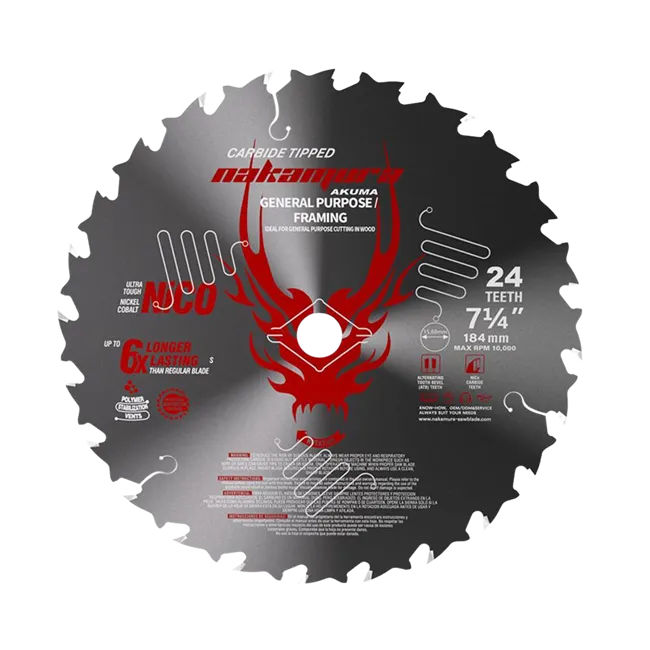
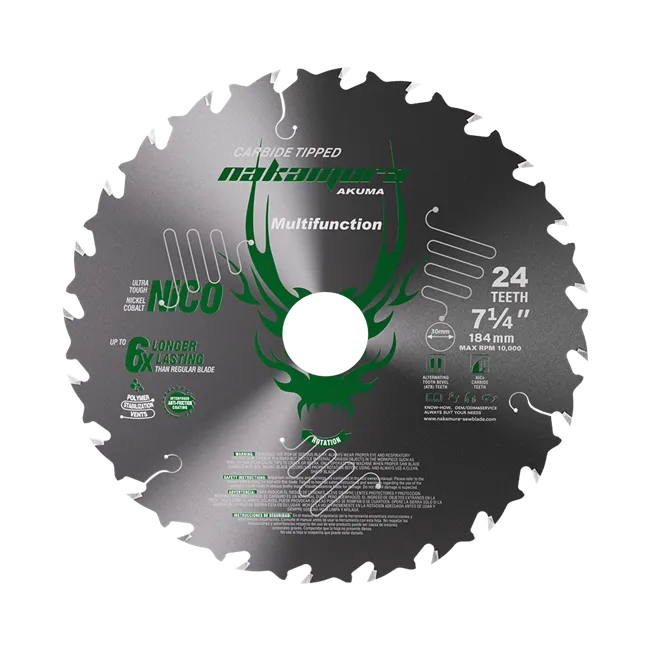
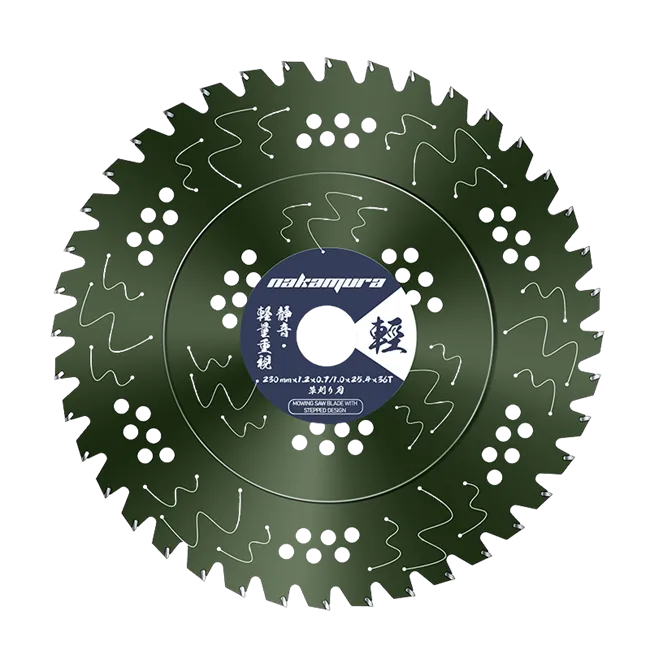
The Nakamura Tungsten Carbide Tipped Saw Blade uses a TCT structure and is designed for wood, OSB, MDF, plywood, laminated board, and integrated wood.For this type of blade, performance does not come only from hard carbide tips. Each tip must be joined to the steel body consistently and accurately. Nakamura uses automated brazing equipment to help control tip alignment and joining consistency, making bulk orders more stable in appearance, cutting performance, and OEM supply.For woodworking blades, joining position directly affects later grinding. If tip position is not stable, tooth geometry, left-right symmetry, and cutting line control will be affected.
Metal cutting blades: joining must handle higher heat load
During metal cutting, a blade faces higher friction heat, impact, and cutting resistance. Tip bonding strength, blade body heat stability, tooth geometry, and coating all need to work together.
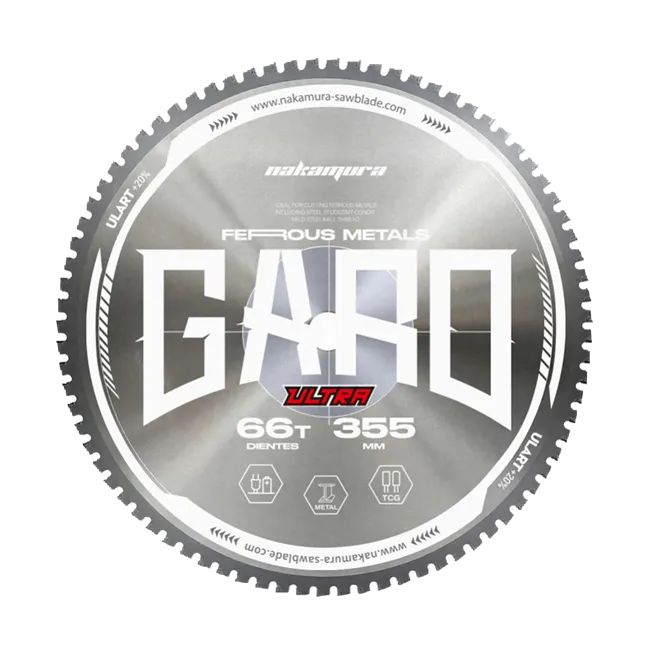
The Nakamura Metal Cutting Circular Blade is designed for metal and stainless steel cutting applications, serving hardware processing, installation work, and industrial supply customers. For this product type, unstable tip joining can affect edge quality, vibration control, and user safety.Therefore, for metal cutting blades, the joining process is not just about attaching the tip. It must keep the cutting edge supported under heat load and repeated cutting.
PCD blades: superhard tips need stable joining
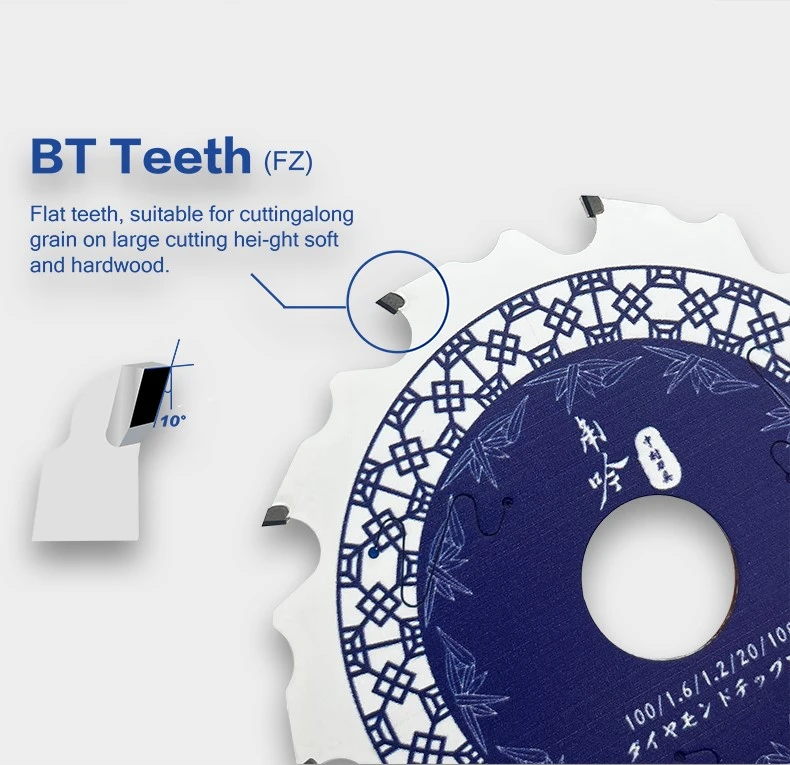
PCD tips offer strong wear resistance, but they also require accurate positioning and stable bonding. If PCD tips are not aligned correctly, the blade may have uneven edge contact, excessive local stress, increased noise, and reduced edge quality.The Nakamura PCD Tipped Circular Saw Blades are designed for furniture panels, decorative boards, MDF, OSB, and other abrasive board materials. For continuous panel processing, the value of PCD is not only wear resistance, but also fewer blade changes and less downtime. Tip bonding strength, edge consistency, and body stability are all important.A PCD blade is not better simply because the tip is harder. The superhard tip, joining process, tooth geometry, and blade body stability must work together.
Conclusion
Brazing is the critical connection between the cutting tip and the blade body. It is not always visible, but it affects blade stability, safety, and cutting quality.
Through automated brazing, tip positioning control, joining consistency management, and follow-up inspection, Nakamura helps TCT blades, metal cutting blades, and PCD blades perform more reliably across different materials and working conditions.
Nakamura - precision brazing that connects cutting tips with lasting quality.