

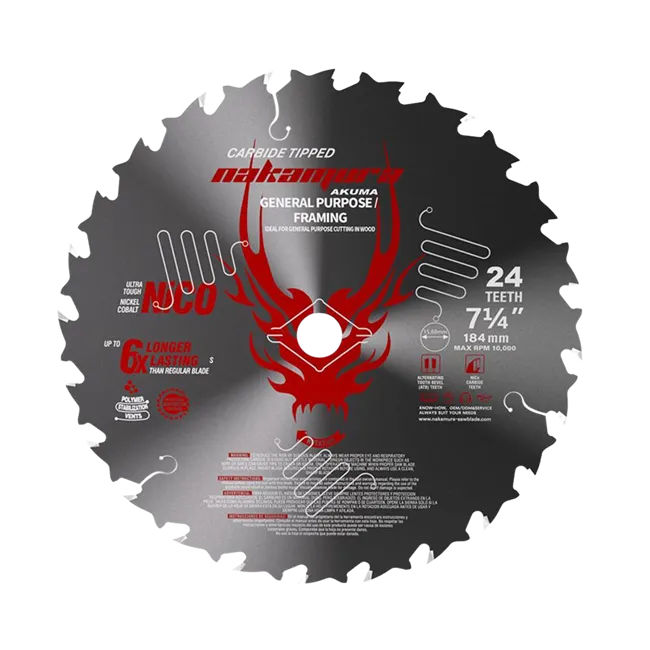
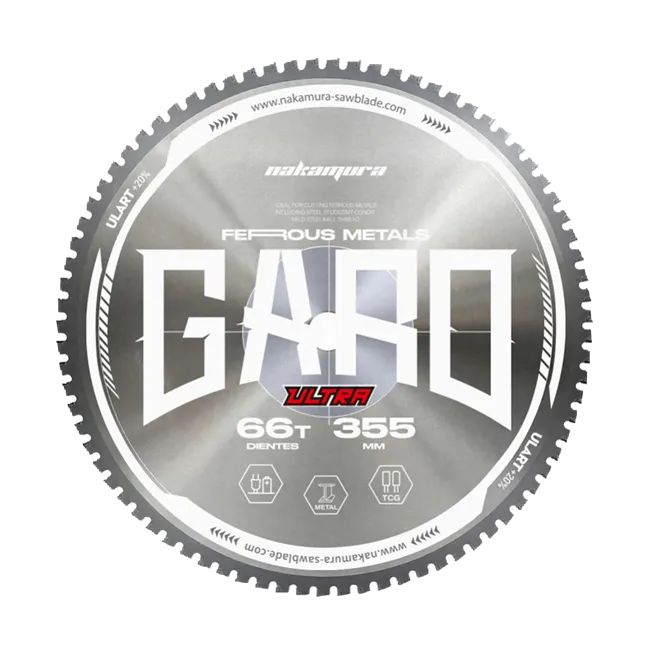
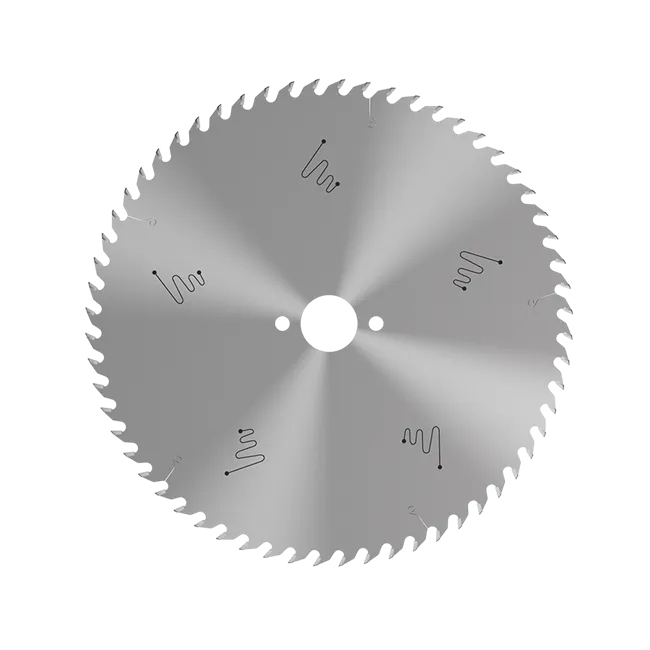
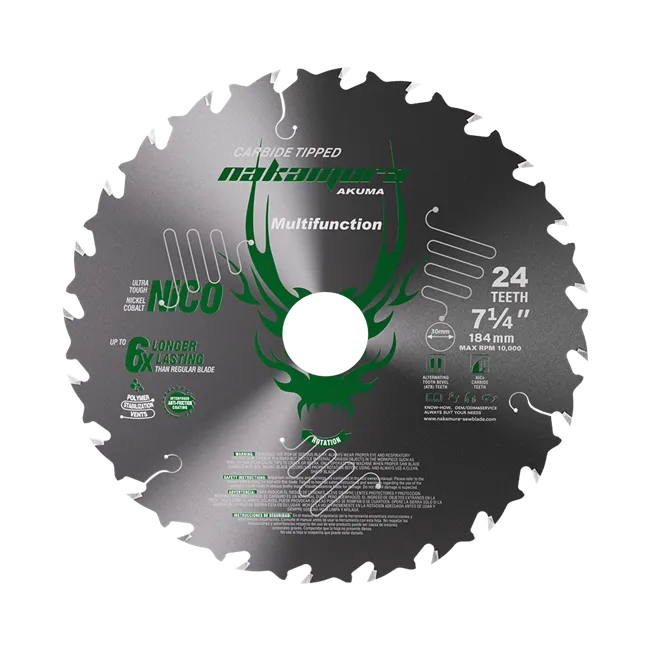

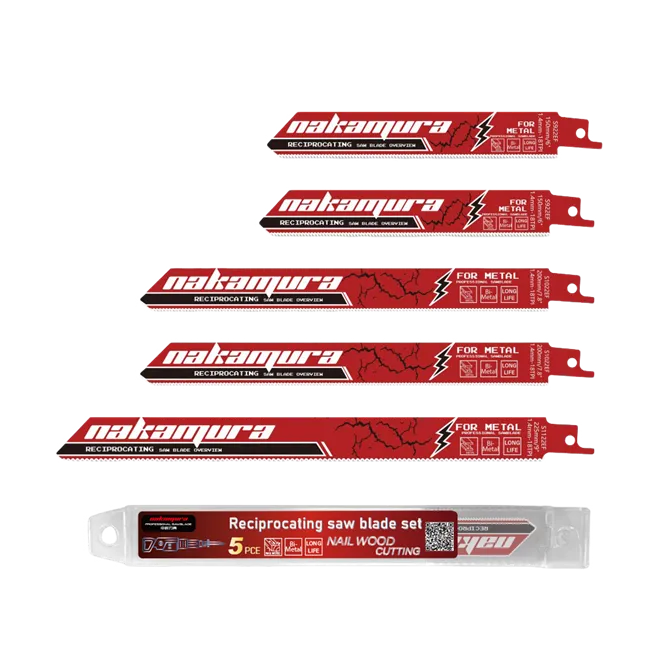

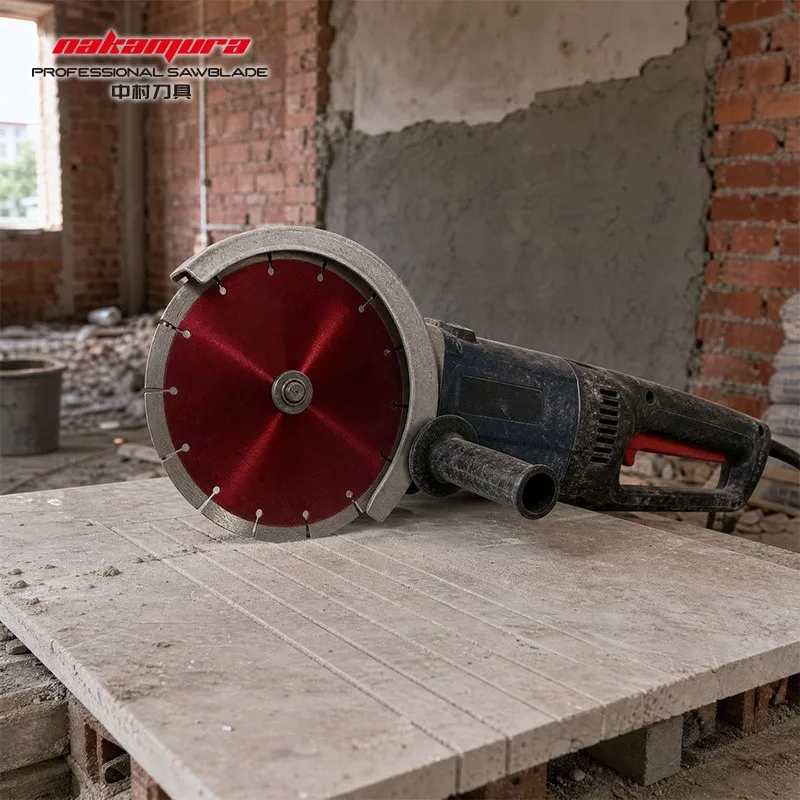
A diamond circular saw blade is a widely used cutting tool. It features diamond cutting edges located on either the inner or outer circumference of the blade. It is extensively applied in processing hard and brittle materials such as stone and ceramics.
A diamond saw blade primarily consists of two components: the steel core (matrix) and the segments (cutter heads).
The Core: This serves as the main supporting base to which the segments are bonded. It does not wear away during the cutting process.
The Segments: These are the active parts that execute the cutting during operation and are continuously consumed over time.
Inside the segments, diamond particles are encapsulated within a metal matrix bond. During processing, these particles cut the target material through friction. As the blade operates, both the metal bond and the diamonds wear away together. Ideally, the metal bond should wear slightly faster than the diamonds. This ensures that new diamond edges are constantly exposed, maintaining the segment's sharpness while maximizing its overall lifespan.
Diamond circular saw blades span a massive range of sizes, from tiny engraving discs measuring just a few millimeters to giant industrial blades several meters in diameter. Because the materials they cut vary significantly in structure, hardness, and dimensions, their manufacturing methods, raw materials, and application requirements differ accordingly.

Classification of Diamond Circular Saw Blades
Diamond circular saw blades are currently the most prevalent cutting tools in the stone industry. They are disc-shaped and use powder metallurgy or electroplating methods to embed diamond particles around the perimeter of the core. The blade utilizes the high strength and hardness of these diamond particles to fracture and chip away at target materials to achieve cutting.
The classification of diamond circular saw blades is quite broad and complex. They are typically categorized in the following ways:
1. By Manufacturing Process
- Sintered Diamond Saw Blades: Divided into cold-pressed sintering and hot-pressed sintering.
- Welded Diamond Saw Blades: Divided into brazed and laser-welded types.
Brazing uses a high-temperature melting medium to bond the segments to the core (e.g., high-frequency induction brazed blades, vacuum brazed blades).
Laser welding utilizes a high-temperature laser beam to melt the contacting edges of the segment and the core together, creating a strong metallurgical bond.
- Electroplated Diamond Saw Blades: Diamond powder is adhered to the core via an electroplating process. However, due to severe environmental pollution risks, the government is gradually phasing out this manufacturing method.
2. By Processing Target
Marble cutting blades, granite cutting blades, concrete cutting blades, etc.
3. By Appearance/Shape
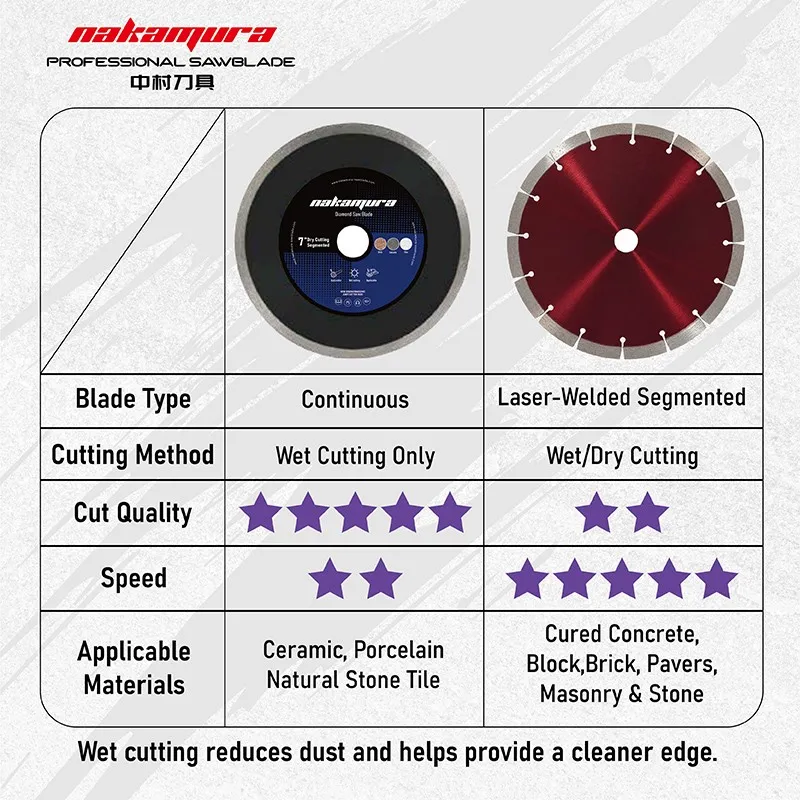
Continuous rim blades, segmented blades, turbo blades, etc.
Note: The classifications above do not cover every single variant, as there are many specialized diamond circular saw blades designed for niche applications. Different blade types must be precisely matched to the specific materials being processed.
Key Characteristics of Diamond Circular Saw Blade Cutting
Cutting with circular saw blades offers distinct advantages, including convenient operation, high efficiency, and excellent processing quality.
However, it also comes with downsides: it generates significant noise, and the blades themselves have relatively low rigidity. During the cutting process, the blade is prone to vibration, wobble, and deflection, which can compromise the parallelism and accuracy of the cut workpiece.

Factors Affecting Efficiency and Lifespan
The efficiency and operational life of a diamond circular saw blade depend heavily on cutting process parameters as well as the diamond's grade, grit size, concentration, and the hardness of the bond.
1. Cutting Parameters
- Cutting Linear Speed: In practice, the linear speed of the blade is limited by equipment conditions, blade quality, and the physical properties of the stone. To optimize both blade life and cutting efficiency, the linear speed must be selected based on the specific type of stone being cut.
- Cutting Depth: Within the limits of machine performance and tool strength, a larger cutting depth should be selected to maximize cutting efficiency. Conversely, if high surface precision and smoothness are required, a shallow cutting depth should be used.
- Feed Rate: The feed rate refers to the speed at which the stone advances into the blade.
When cutting softer stone like marble, operators can increase the cutting depth and lower the feed rate to improve output.
When cutting fine-grained, homogeneous granite, the feed rate can be moderately increased; if the feed rate is too low, the diamond edges can easily get glazed (dulled).
When cutting coarse-grained, unevenly hard granite, the feed rate must be reduced. Otherwise, severe blade vibration can cause the diamonds to fracture, reducing cutting efficiency.
2. Diamond Grit Size (Particle Size)
Commonly used diamond grit sizes range from 30/35 to 60/80 mesh.
- Harder Rock: Requires finer grit sizes. Under equal pressure, finer diamonds are sharper, making it easier for them to penetrate hard rock surfaces.
- Blade Diameter: Large-diameter blades generally prioritize high cutting efficiency and utilize coarser grits (e.g., 30/40 mesh, 40/50 mesh). Small-diameter blades focus on producing smooth cut cross-sections and utilize finer grits (e.g., 50/60 mesh, 60/80 mesh).
3. Diamond Concentration
Diamond concentration refers to the density of diamond distribution within the matrix of the working layer.
By industry standard, a concentration of 100% means containing 4.4 carats of diamond per cubic centimeter of matrix, while a 75% concentration contains 3.3 carats.
In terms of volume, a 100% concentration means the diamond particles occupy exactly 1/4 of the segment's total volume.
Increasing diamond concentration generally extends blade life because it reduces the average cutting force exerted on each individual diamond particle. However, higher concentrations inherently increase manufacturing costs, meaning there is an optimal economic concentration that scales alongside the required cutting efficiency.
4. Segment Bond Hardness
In general, a harder bond offers stronger wear resistance.
- Highly Abrasive Rock: Requires a high bond hardness.
- Soft Rock: Requires a low bond hardness.
- Hard & Highly Abrasive Rock: A medium bond hardness is ideal.
Future Development Trends
Diamond circular saw blades remain the primary tool for the stone processing industry. In recent years, the consumption of synthetic diamonds in stone processing has skyrocketed, causing the production and application of diamond circular saw blades to scale drastically.
Globally, the development of diamond circular saw blades is moving toward the following trends:
- Manufacturing high-efficiency, premium-quality blades and engineering saw-grade specialized diamonds.
- Increasing research focus on powder formulations, matrix bonds, and advanced sintering processes.
- Conducting deeper studies into stone sawability and underlying cutting mechanisms.
- Rapidly advancing and adopting laser-welded saw blades.
- Developing ultra-large-scale diamond circular saw blades.
Ultimately, the future direction of diamond circular saw blades centers on maximizing cutting efficiency, extending tool lifespan, reducing production costs, and achieving strict environmental sustainability.