


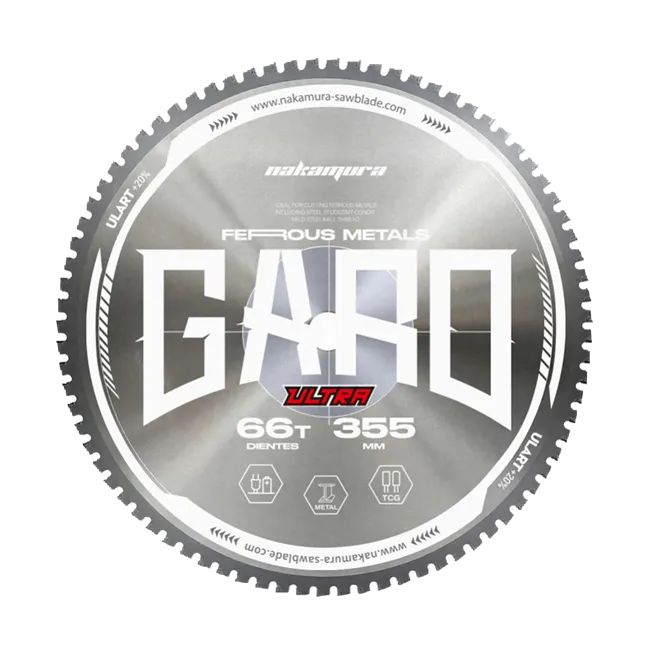
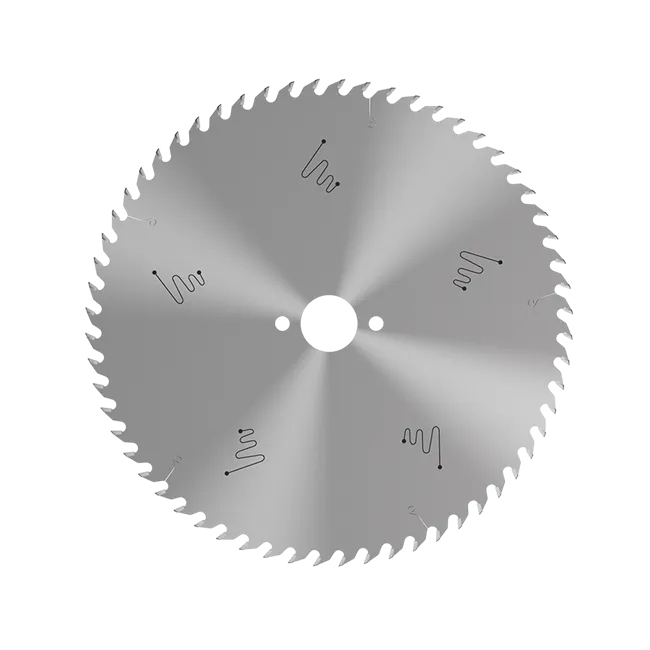
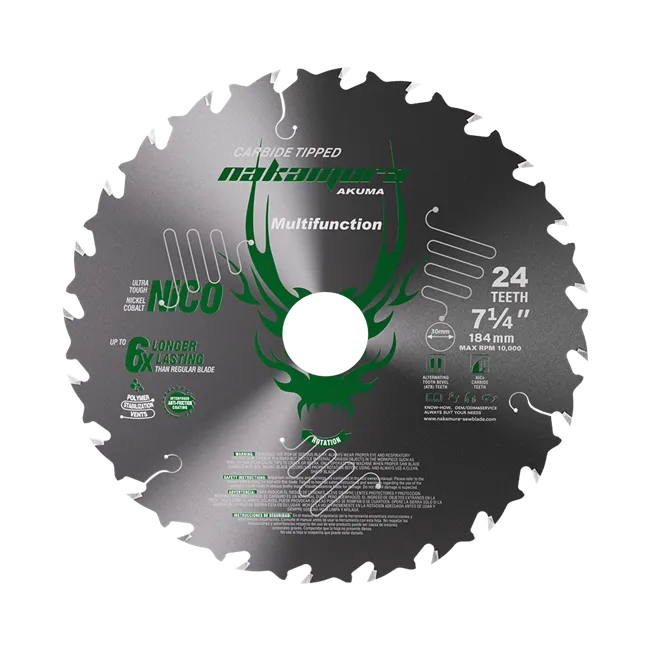

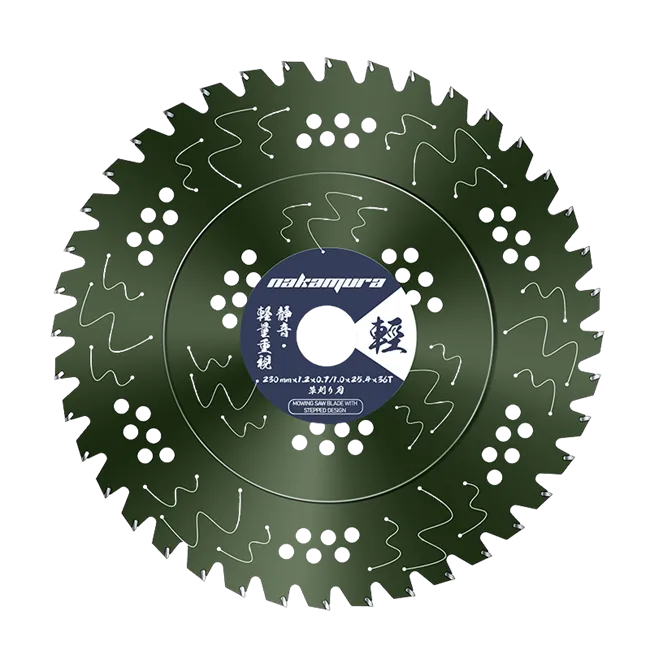
In the production and use of cemented carbide circular saw blades, there are many factors that affect its quality and service life, among which the welding quality of the cutter head has a great impact on the service life of the saw blade. Due to the low crack and low weld strength of welding, the saw blade is sometimes scrapped due to the fracture of the cutter head and U-turn during the sawing process. Therefore, improving and enhancing the welding quality is of great significance for improving the quality of the saw blade, reducing the scrap rate of the saw blade, and prolonging the service life of the saw blade.
1. Causes of knife head cracks and U-turns
The welding of the tungsten carbide circular saw blade is welded with low-voltage resistance, and the disc body and the alloy cutter head are heated to 780 °C ~ 920 °C and welded together with silver welding wire through solvent. It is different from the welding of high-speed steel cutters, and it is characterized by welding materials with completely different chemical compositions and physical and mechanical properties. Due to the different thermal expansion coefficients of steel and cemented carbide, when the heating or cooling rate is too fast, it is easy to increase the temperature difference between the alloy cutter head and the surface or inside the disc body, resulting in excessive expansion and contraction, and cracks in the cutter teeth.
Welding cracks on cemented carbide are caused by excessive welding stress. After sufficient heating, the welding zone begins to cool, the solder solidifies, and the thermal expansion coefficient of steel is 2~3 times larger than that of cemented carbide, resulting in different degrees of shrinkage on steel and cemented carbide. This is shown in Figure 1. As a result of gradual shrinkage, tensile stresses develop on the cemented carbide, and if not handled properly, cracks can occur in the alloy sheets. The way to reduce this stress is to add a compensating plastic deformation gasket to the weld to reduce the welding stress in the cutter head.

When the tungsten carbide bit is heated to more than 900 °C in the air, it will be violently oxidized, and the oxide film formed will make the alloy bit brittle due to the presence of many pores, which will reduce the mechanical properties of the alloy bit and thus reduce the welding strength. Before welding, the oxide scale generated by high temperature must be removed to improve the welding quality.
In addition, the heating rate has a significant effect on the welding quality. Rapid heating will cause cracks and uneven welding of tungsten carbide bits (some are welded well and some are not welded well), thus reducing the welding strength. Therefore, after reaching the welding temperature, according to the size of the alloy cutter head, it should be kept warm for 10~30s to make the temperature of the welded joint uniform. If the heating is too slow, it will cause oxidation on the surface of the welded joint, and as a result, the welding strength will also be redu

2. Problems that should be paid attention to
When welding the blade of alloy circular saw blades, attention must be paid to the problems that may cause cracks and reduce the welding strength, and corresponding measures must be formulated to obtain good welding quality.
Make preparations before welding:
(1) Cleaning of knife grooves, cleaning of tooth burrs and grease scales;
(2) Cleaning the carbide cutter head to remove the oxide scale on the cutter head to make it metallic.
Strictly abide by the welding process:
(1) The weld should be filled to make it have sufficient strength;
(2) The heating should be uniform;
(3) No cracks are allowed on the cutter head. Because the presence of any cracks will reduce the cutting performance of the tool.