


What problems can coating help solve?
The most direct function of coating is to reduce friction between the blade surface and the material. When friction is reduced, heat build-up, resin adhesion, and material drag may also be reduced.
In woodworking, softwood, plywood, OSB, MDF, laminated boards, and glue-rich panels may create resin or dust build-up. If the blade surface is rough, chips and residue can collect around the teeth and blade body. During continuous cutting, this may lead to heat build-up, burning, rougher edges, or unstable cutting.
In metal cutting, coating is more about heat control, corrosion resistance, reduced adhesion, and blade body protection. But metal cutting stability does not come from coating alone. Tip material, tooth geometry, RPM, feed rate, and clamping all matter.
Not all coatings should be called "hard coatings"
The original text mentioned titanium plating, TiN, and nano-composite coatings with fixed life comparisons. This needs to be stated more carefully.In the circular saw blade industry, many woodworking blades and multi-purpose blades use Teflon-type anti-stick coatings, color coatings, or other surface treatments. Their main functions are to lower friction, reduce gumming, improve corrosion resistance, and strengthen product identification. They do not necessarily increase the hardness of carbide tips.PVD hard coatings such as TiN, TiAlN, or AlCrN are more common on certain metal cutting tools, end mills, drills, or specialized cutting tools. They are not standard for every circular saw blade. Without clear product data and testing, claims such as "30% lower friction" or "5 times longer life" should not be used.A more professional way to explain coatings is this: different coatings serve different functions. Some focus on anti-stick performance, some on heat resistance, some on rust protection, and some on brand appearance. Coating selection must start with the material being cut.

Wood cutting: anti-stick coating reduces resin and dust build-up
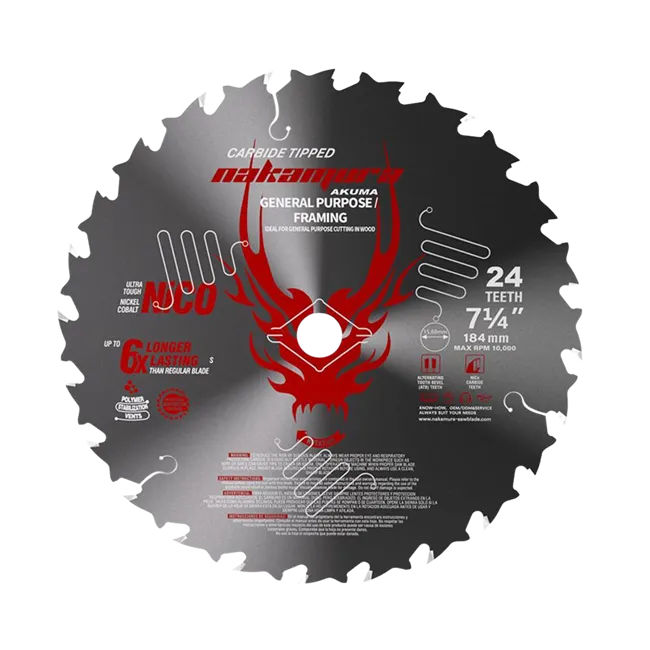
Wood cutting may look simple, but materials vary widely. Wet wood, softwood, hardwood, plywood, MDF, OSB, laminated boards, and glue-rich panels all behave differently during cutting.The Nakamura Carbide Tip Circular Saw Blade is a Sakura Series carbide-tipped woodworking blade. Its product page mentions an anti-stick coating that helps lower friction and reduce sticky build-up, making it suitable for framing, cross-cutting, and general woodworking applications. For this type of blade, coating value is not about making the blade "never heat up." It is about reducing resin and dust adhesion during repeated cutting so the blade can stay smoother and easier to clean.For distributors and end users, anti-stick coating also helps product identification. Different series and applications can use different colors, printing, and coating styles, which supports retail display and brand positioning.
Multi-purpose cutting: coating must handle complex jobsite conditions
On renovation and construction jobsites, users rarely cut only one material. In the same day, they may cut timber, formwork, plastic pipe, aluminum profiles, light metal parts, composite boards, and sometimes nail-embedded reclaimed wood.In these situations, the blade surface may face dust, chips, adhesive residue, and material transfer from different workpieces. If coating and tooth geometry do not match, heat build-up, adhesion, chip clogging, and vibration may appear.
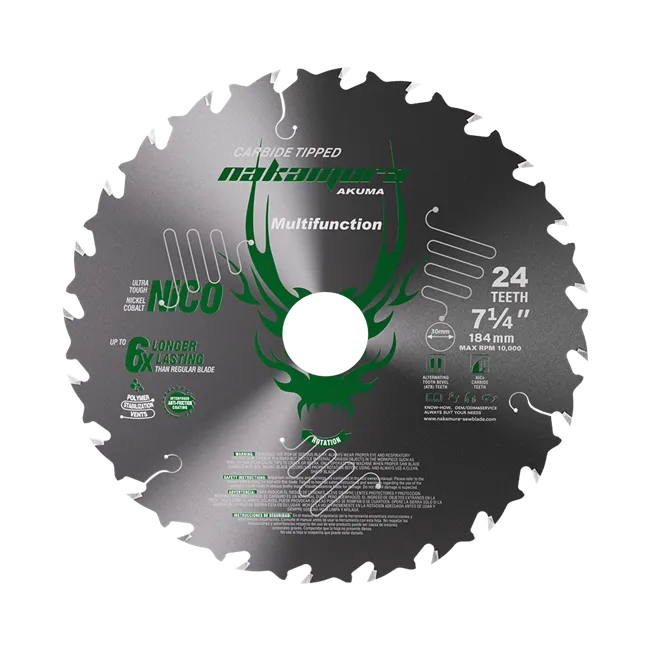
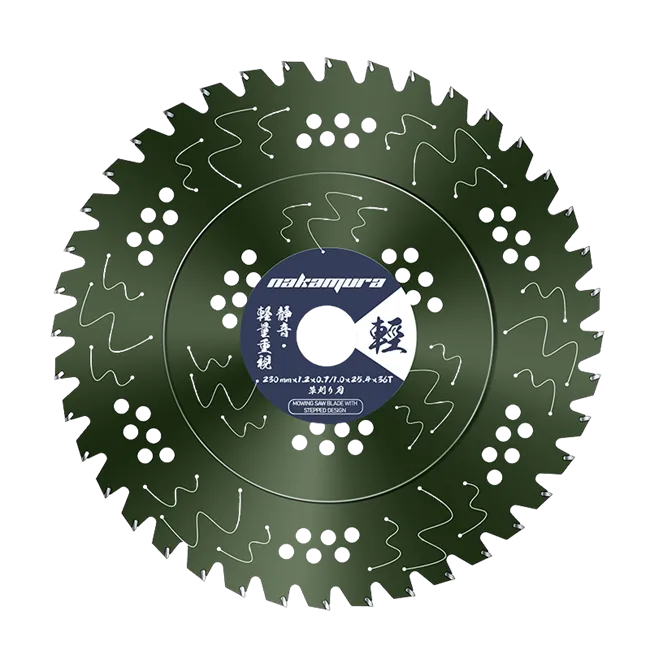
The Nakamura Multi Purpose Saw Blades are designed for construction, renovation, and mixed-material cutting. The product page lists surface finish options such as Teflon coating, color coating, sandblasting, polishing, and private-label coating. It also states that surface coatings, expansion slots, and noise-reduction slots can help reduce heat build-up, material adhesion, and vibration.
This shows that coating for multi-purpose blades should not be judged only by hardness. It should support tooth geometry, chip clearance, and blade body structure under changing materials.
Metal cutting: coating cannot replace correct cutting parameters
Metal cutting has higher coating requirements, but it is also easier to misunderstand.Some users may believe that a heat-resistant coating allows them to raise RPM or feed speed freely. In reality, metal cutting is highly sensitive to parameter matching. Excessive speed, aggressive feeding, or poor clamping can cause overheating, burrs, tooth damage, or abnormal tip wear.
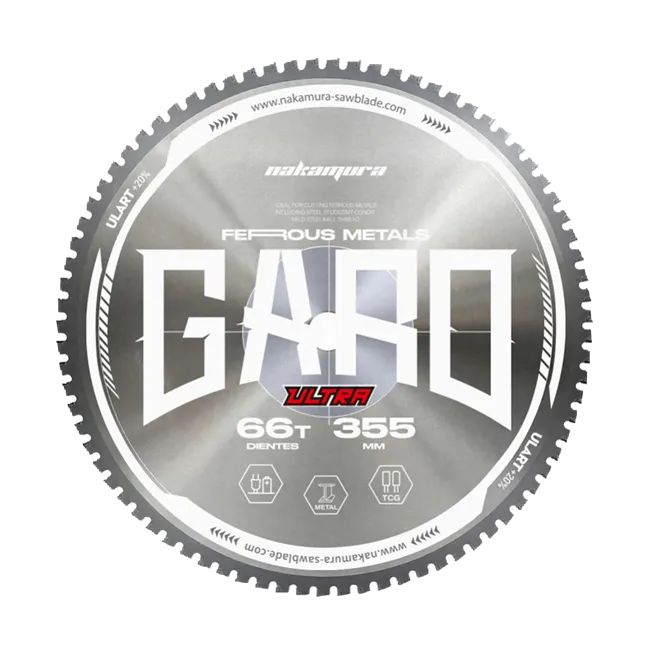
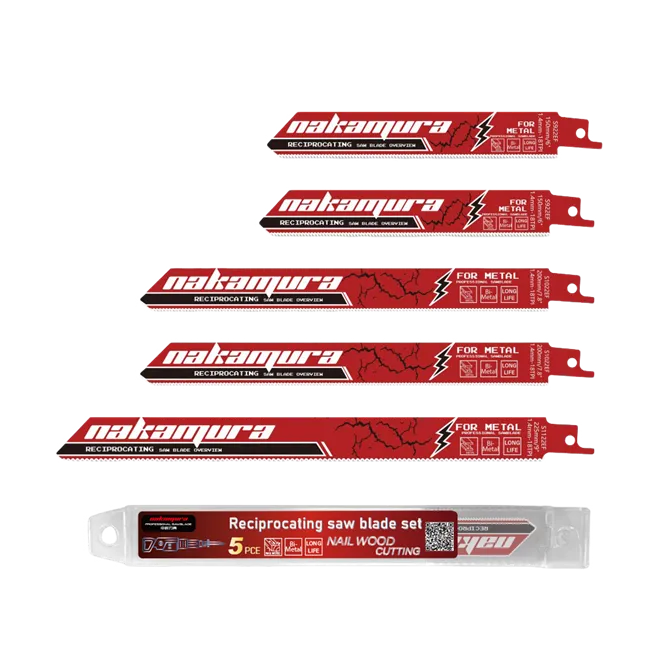
The Nakamura Ultra-Quiet Metal Cutting Blade For Radial Arm Saw is listed with Teflon anti-stick coating for metal cutting applications. For metal saw blades, coating can help reduce adhesion and support heat control, but stable cutting still depends on BT/BW tooth geometry, blade body rigidity, noise-reduction design, machine RPM, and feed control.
Therefore, on metal cutting product pages, coating should be described as a supporting feature for reducing adhesion and heat build-up, not as a single factor that dramatically increases blade life.

How Nakamura understands coating value
Nakamura's coating logic is not to apply one color to every blade. It is to select a suitable surface solution based on cutting material and sales channel.Woodworking blades focus on anti-stick performance, smooth cutting, and reduced resin build-up.Woodworking blades focus on anti-stick performance, smooth cutting, and reduced resin build-up.
- Multi-purpose blades focus on adhesion control, heat control, and product identification under mixed-material conditions.
- Metal cutting blades focus on heat control, corrosion resistance, cutting stability, and blade body protection.
- OEM and ODM orders also need to consider color, logo printing, packaging, and overall brand image
A coating is thin, but it connects product performance, user experience, and brand recognition. For B2B customers, stable coating quality not only makes the blade look more professional, but also helps build a clear and repeatable product series.
What should buyers ask when choosing coated blades?
When purchasing coated saw blades, buyers should not only ask whether the coating is "good." More useful questions include:
- What problem is this coating designed to solve: anti-stick, heat control, rust protection, or brand appearance?
- Is the blade intended for wood, aluminum profiles, plastic, light metal, or steel?
- Will the coating support chip removal and tooth geometry performance?
These questions are more valuable than comparing coating names alone.
Conclusion
Coating is the hidden armor of a saw blade, but it is not a universal armor.A good coating solution should work together with blade body material, tooth geometry, tip material, precision grinding, cutting parameters, and the final application. Through anti-stick coating, surface treatment, series color planning, and OEM customization, Nakamura provides more complete solutions for woodworking blades, multi-purpose blades, and metal cutting blades.Nakamura - the right coating for smoother cutting, steadier performance, and a more professional blade appearance.