





1. Selection of saw blade tooth profile and its impact on performance
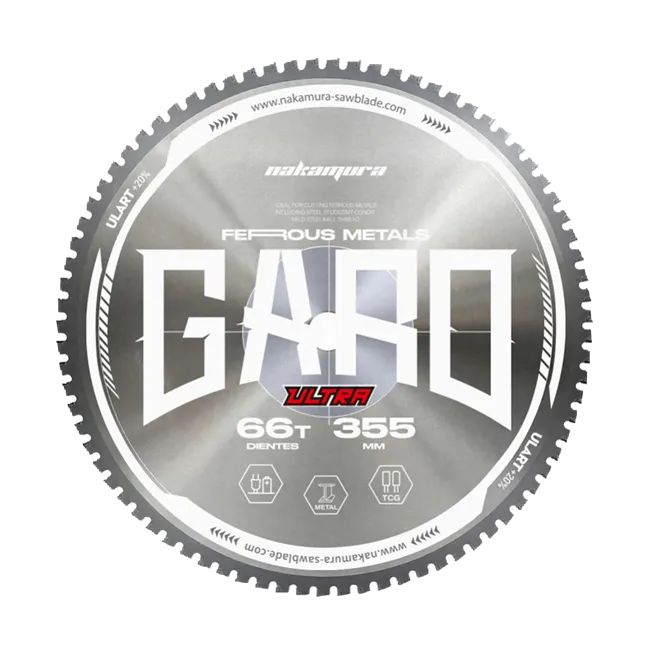
The tooth shape of the saw blade is one of the important factors affecting the performance of the saw blade. Common saw blade tooth shapes include flat teeth, which are easy to grind and cost-effective. They are very suitable for sawing ordinary wood and can also be used for slotting saw blades to maintain a flat groove bottom. In addition, there are different types of tooth shapes such as pointed teeth, trapezoidal teeth, and arc-shaped teeth, each with unique characteristics and application scenarios. When selecting, it is necessary to choose the appropriate tooth profile based on specific usage requirements and material characteristics to achieve the best sawing effect.
ATB is widely favored due to their fast cutting speed and easy grinding, especially suitable for multi blade saws, solid wood longitudinal sections, edge saws, as well as sawing operations for reinforced flooring and aluminum alloy veneers. Meanwhile, ATB tooth shapes are also commonly used for slotting operations on plywood, photo frames, and particleboard veneers. Although the grinding of flat teeth is relatively complex, it can reduce the phenomenon of edge breakage on the veneer and prevent aluminum alloy adhesion and saw marks. Therefore, it performs particularly well in panel saws and aluminum alloy sawing.

2. Clever design of saw blade angle
The cutting edge angle of a saw blade involves multiple aspects, including radial rake angle, radial clearance angle, transverse rake angle, tip inclination angle, side rake angle, and side centripetal angle. The reasonable combination of these angles is crucial for the performance and cutting effect of the saw blade.
Among them, the radial rake angles have the most significant impact on cutting performance. The size of the radial rake angle directly affects the sharpness and cutting speed of the saw blade. Typically, the radial rake angle is selected within the range of 10 ° to 20 °. When processing softer materials or performing solid wood longitudinal sections, a larger radial rake angle should be selected; For harder materials, a smaller angle should be chosen. The main function of the radial clearance angle is to reduce the friction between the saw tooth and the processed surface. The larger the back angle, the smaller the friction force, thereby ensuring a smoother surface of the processed product. However, once the radial rake angle is determined, an excessively large radial clearance angle may cause the blade to become thinner, thereby affecting its strength. Therefore, a balance needs to be made when making a choice. For carbide saw blades, the radial clearance angle is usually set between 10 ° and 15 °.
3. Design of saw blade heat dissipation line
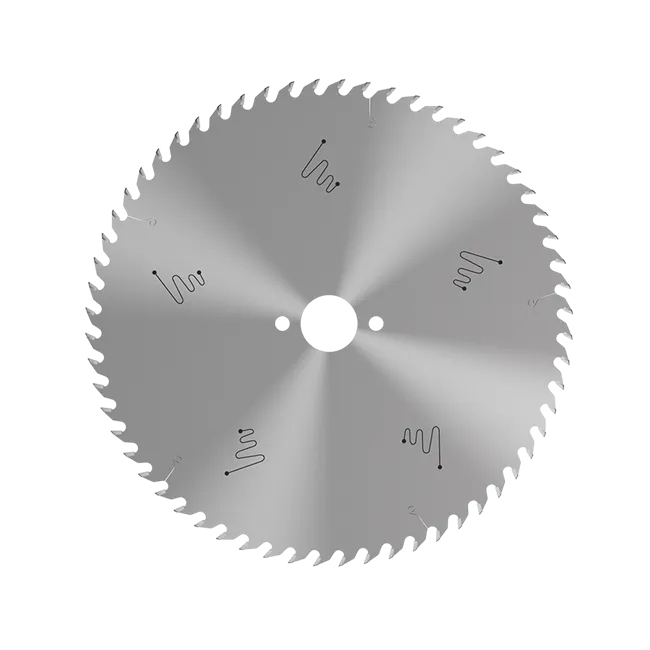
The heat dissipation line plays a crucial role in the saw blade, aiming to ensure rapid heat dissipation during the processing. If the heat dissipation is not timely, the saw blade will deform due to heat accumulation, which will affect its cutting quality and may even lead to abnormal processing. These heat dissipation lines are usually finely cut by laser, presenting a smooth curved shape. They are designed with small circular or elliptical holes at both ends, with a diameter of about 0.5 millimeters, to facilitate rapid heat dissipation.
4. Selection of the number of heat dissipation wires
The number of heat dissipation lines usually depends on the size of the saw blade and the number of blades. For saw blades with a diameter of 300mm or more, the body is often designed with heat dissipation wires, and the number of heat dissipation wires is usually 3 to 5 times the number of blades. However, for multi blade saws or thin blade saws with smaller diameters, it is not recommended to use heat dissipation wires due to the small blade diameter. These types of saw blades are usually designed with heat dissipation holes to meet the heat dissipation requirements.
The noise pollution generated during high-speed cutting of saw blades is an urgent problem that needs to be solved. In order to reduce the impact of high noise above 90dB on human hearing, designers usually consider using a silencing groove structure when making saw blades. This structure can effectively reduce noise, and there are three main design forms.
The three structures of silencing grooves include: multi blade saws often use silencing grooves as shown in Figure B, with a diameter usually greater than 250mm; and saw blades with larger diameters often use silencing grooves as shown in Figure A. If a copper rod is further embedded in the silencing hole, as shown in Figure C, the noise reduction effect can be further enhanced. This type of design is commonly used in large-diameter saw blades. In addition, saw blades with different outer diameters need to be matched with corresponding length of silencing grooves to ensure the best silencing effect.
