


Why are saw blades becoming thinner?
- The first reason is material saving. Every cut creates a kerf, and the wider the kerf, the more material is removed. A thin-kerf blade reduces waste, especially in panel cutting, wood processing, and fine finishing work.
- The second reason is lower cutting load. A narrower kerf means the tool removes less material, so cutting resistance can be reduced. This is especially valuable for cordless circular saws, lower-power machines, and mobile jobsite work.
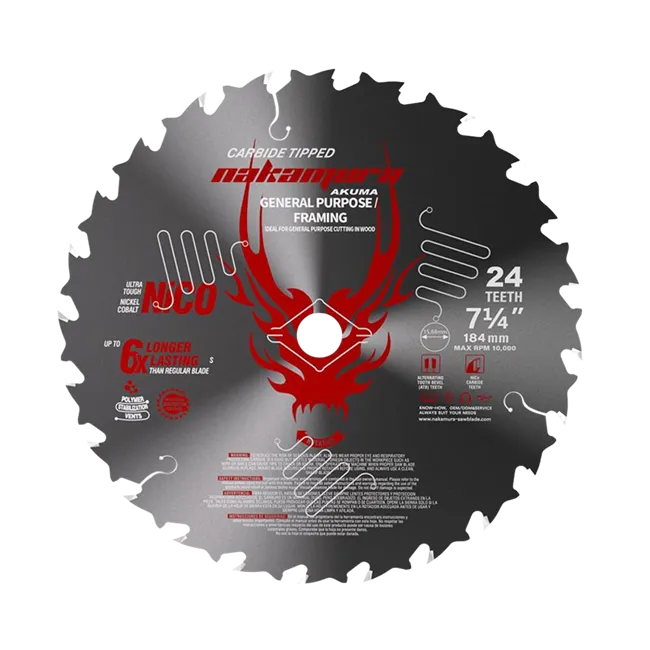
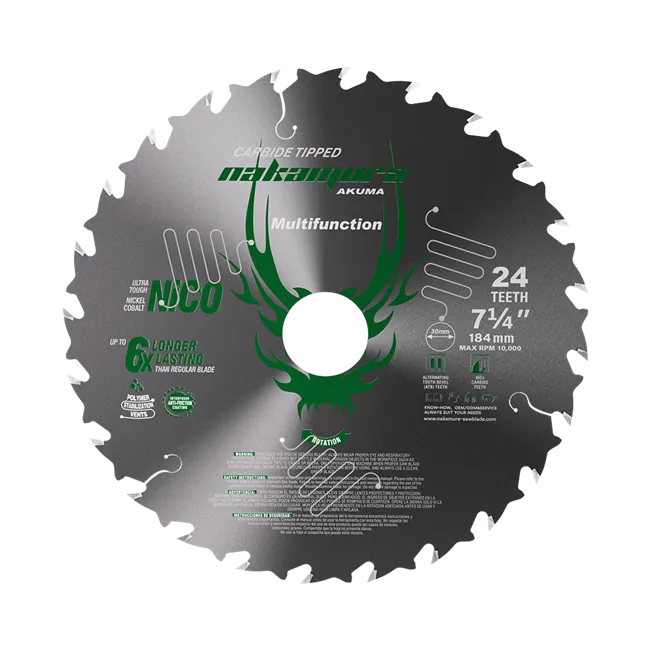
The Nakamura 7 1/4 Carbide Circular Saw Blade uses a thin-kerf design to help reduce cutting load and support smoother feed. It is suitable for wood, OSB, MDF, and engineered panels.

What makes thin-kerf blades difficult?
The thinner the blade, the more sensitive it becomes to flatness, tensioning, and vibration.
If the blade body material, heat treatment, or tension control is not stable, the blade may wobble, vibrate, overheat, or produce an unstable cut. That is why the key is not simply "thin," but "thin and stable."
A reliable thin-kerf blade requires the right steel body, tooth geometry, brazing quality, coating, and balance.
Different materials need different thin-kerf solutions
Wood cutting requires low resistance and clean edges. Metal cutting needs stronger tooth geometry, heat control, and wear resistance.
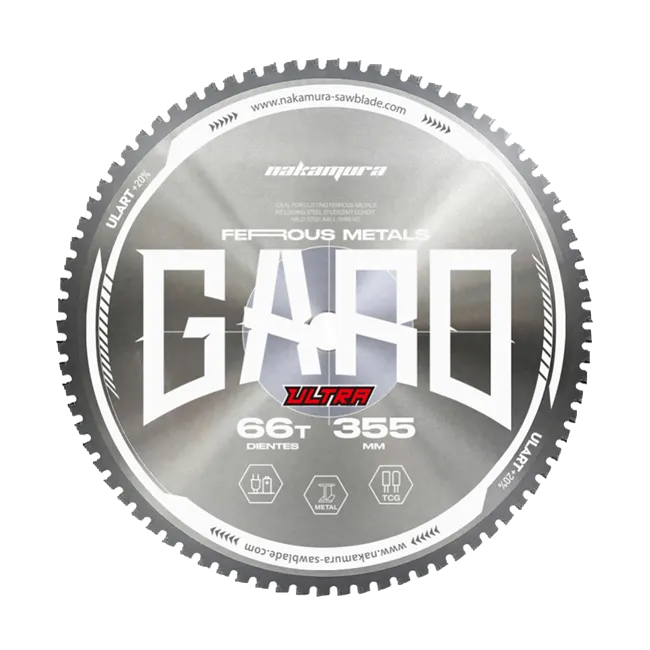
For mobile jobsite metal cutting, the Metal Cutting Circular Saw Blade 6 1/2 uses a thin-kerf design to help lower cutting resistance and reduce tool load. It is suitable for light steel sections, tubing, metal studs, channels, and common metal profiles.
For abrasive materials such as fiber cement board and calcium silicate board, thin design alone is not enough. Tip wear resistance becomes more important. The Nakamura 305mm Fibre Cement Saw Blade uses a PCD structure for abrasive board cutting, helping reduce blade changes and production interruptions.

Nakamura's thin-kerf strategy
Nakamura's thin-kerf approach is not about chasing the thinnest possible blade. It is about balancing cutting efficiency, blade stability, and total user cost.
In product design, Nakamura matches kerf thickness, plate thickness, tooth geometry, and coating according to material type, machine power, cutting depth, and application scenario. For OEM and ODM customers, bore size, tooth count, coating color, packaging, and product positioning can also be customized.
Thin-kerf is the trend, but quality remains the baseline
The value of a thin-kerf blade is not only less waste or faster cutting. It is about total cutting cost: less material loss, lower machine load, smoother cutting, and more stable batch performance.
Nakamura will continue to optimize thin-kerf product structures for woodworking, metal cutting, PCD, and multi-purpose applications, providing more efficient, stable, and cost-effective precision cutting solutions for global customers.
Nakamura makes every cut lighter, steadier, and more efficient.