



Noise is an important consideration in modern woodworking and furniture manufacturing.
In busy factories, workshops, and panel-processing facilities, circular saws may operate continuously throughout the production day. Cutting noise is generated not only when the teeth contact the workpiece, but also by blade vibration, machine operation, material interaction, and air turbulence around the rotating blade.
As a result, saw blade engineering has increasingly focused on more than cutting speed and blade life. Blade-body stability, tooth geometry, vibration control, and cutting efficiency can all contribute to a more comfortable and controlled working environment.
Understanding the Sources of Saw Blade Noise
A circular saw blade can generate significant noise during both idle running and cutting.
When the blade rotates, the blade body can vibrate and interact with surrounding air. During cutting, the teeth generate additional impact and cutting noise as they enter the workpiece and remove material.
The actual sound level depends on many factors, including blade diameter, tooth count, machine speed, material type, feed rate, blade condition, and machine construction.
Therefore, reducing noise requires a complete approach rather than relying on a single blade specification.
Blade Body Design and Vibration Control
One of the most effective areas for improvement is blade-body engineering.
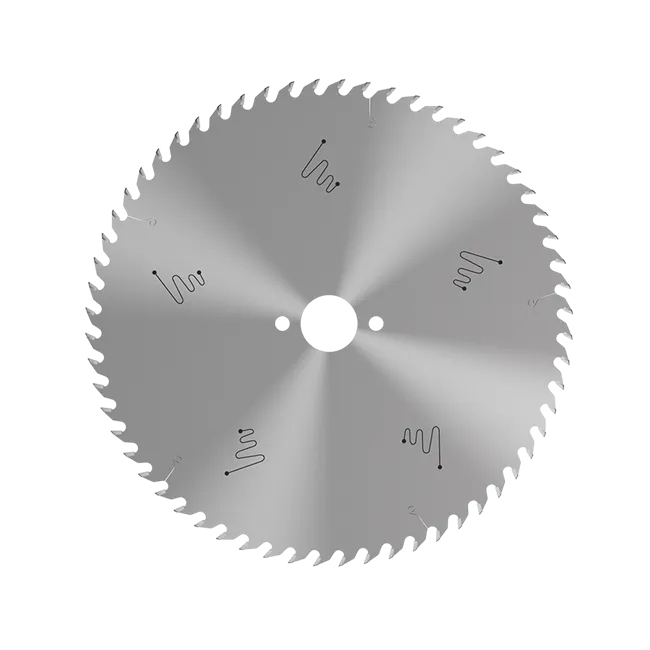
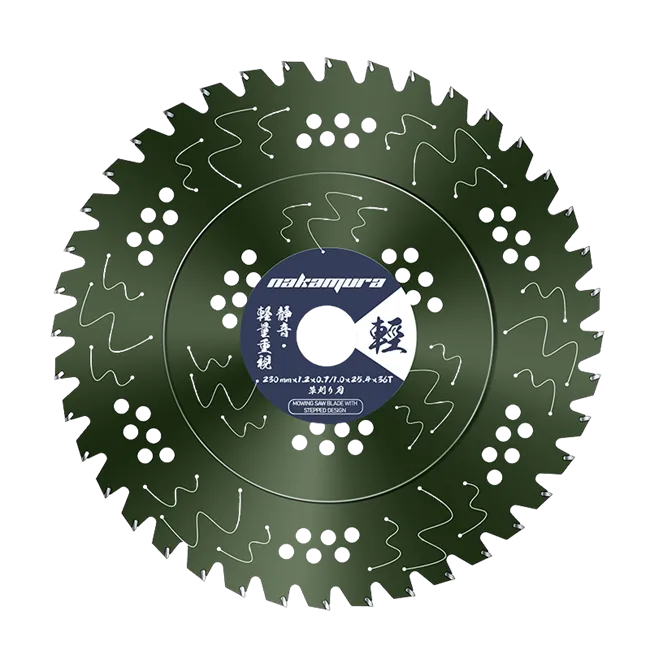
A precisely manufactured blade body can improve balance and running stability. Stabilizing slots and vibration-control structures can further help manage the vibration generated during operation.
This is especially important in woodworking applications where high rotational speeds and continuous production place significant demands on the blade.
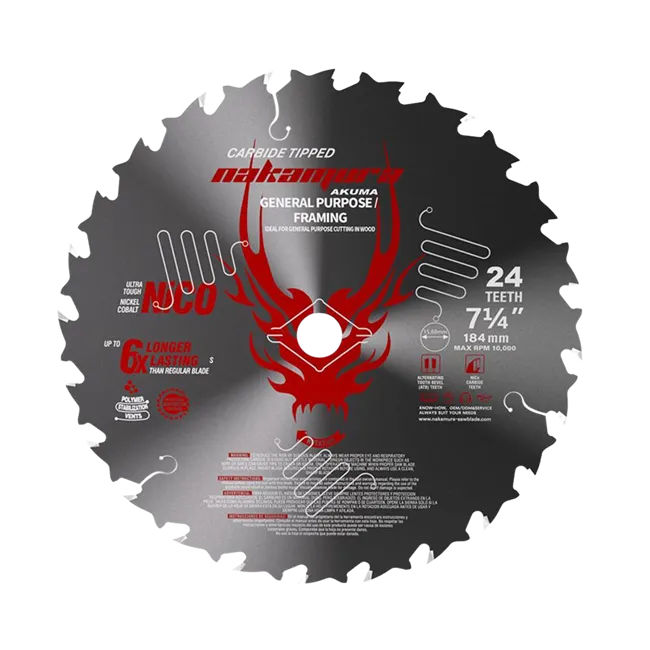
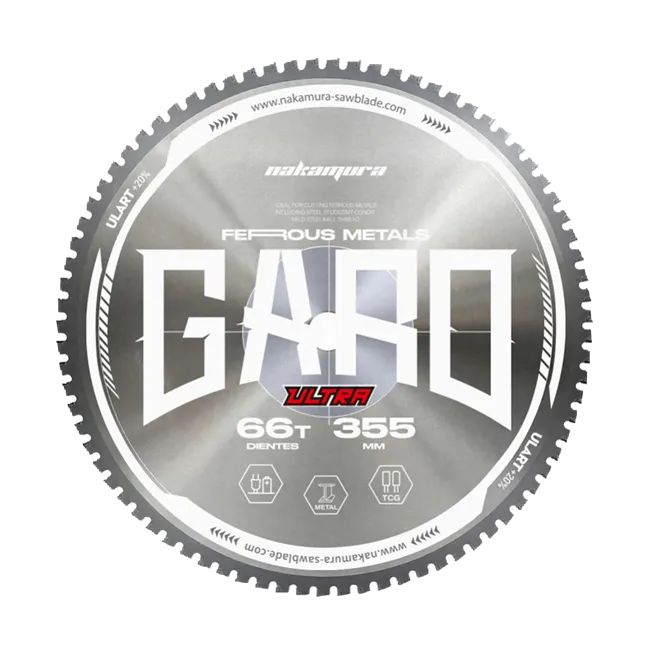
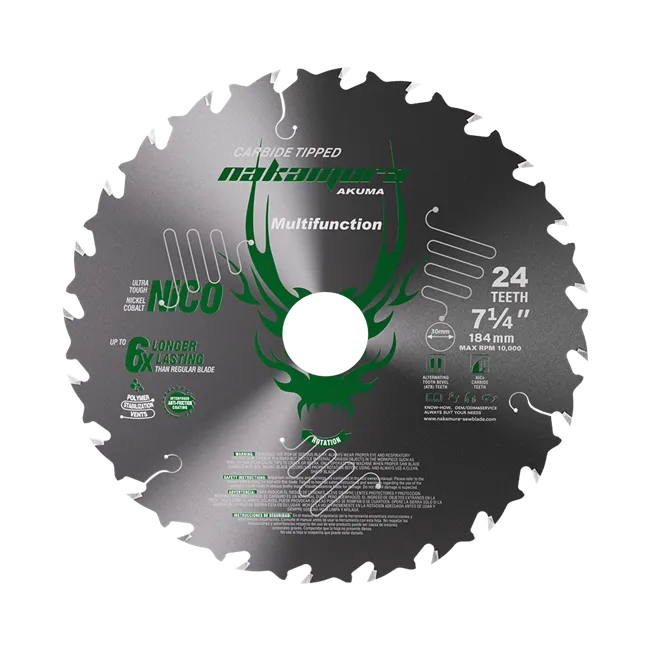
NAKARUMA develops TCT and PCD circular saw blades with different body designs and tooth configurations for professional woodworking and panel-processing applications.
NAKARUMA Sakura Series Wood Cutting Saw Blade
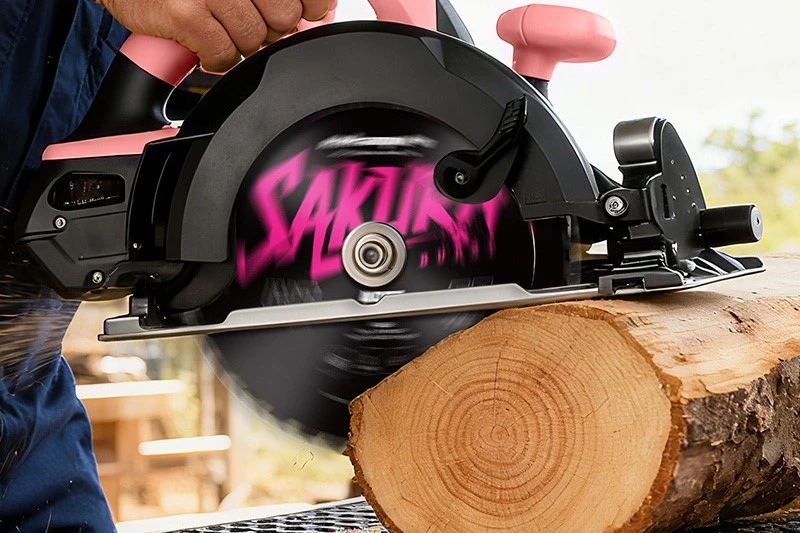
The Sakura Series Wood Cutting Saw Blade is designed for applications including wood, OSB, MDF, and integrated wood.
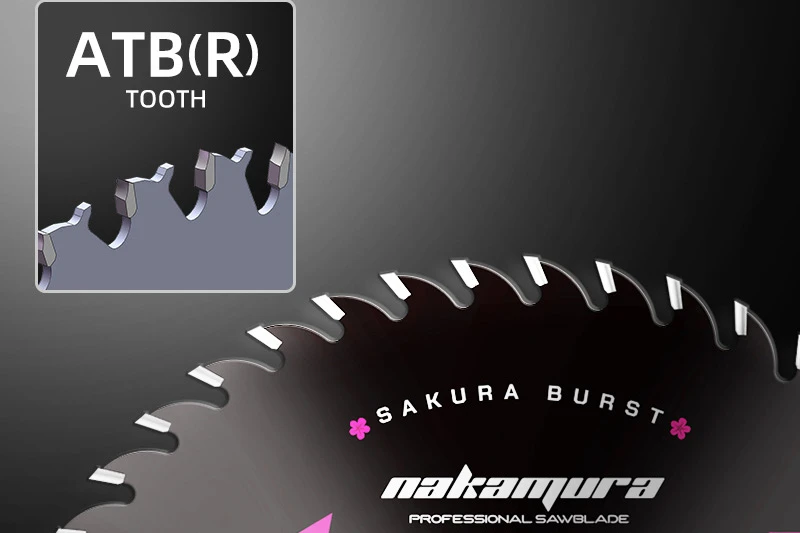
The series uses ATB(R) tooth geometry and is available with Teflon coating. The combination of tooth design and blade-body engineering helps provide smooth cutting performance while reducing friction and material adhesion.
For general woodworking applications, selecting the correct tooth configuration can improve both cutting quality and overall blade stability.
Cutting Panels Requires Greater Precision
Engineered wood products such as MDF, particleboard, plywood, and laminated panels can create different challenges compared with solid wood.
These materials often require clean edges and controlled chip formation because excessive chipping or tear-out can affect subsequent manufacturing processes.
A blade with an appropriate tooth configuration and sufficient cutting precision can help improve edge quality and reduce the need for additional finishing.
NAKARUMA Plywood Fine Finish Circular Saw Blade
The Plywood Fine Finish Circular Saw Blade is designed for applications where a cleaner finish is important.
Available in multiple diameters and tooth configurations, the blade is suitable for plywood and other wood-based panels. Its fine-tooth configuration helps provide controlled cutting and improved surface quality.
For furniture manufacturers and panel-processing operations, this type of blade can be particularly useful when edge appearance is an important part of the final product.
PCD Technology for High-Wear Applications
For some woodworking and panel-processing applications, especially when abrasive engineered materials are involved, PCD saw blades can provide an alternative to conventional carbide-tipped blades.
Polycrystalline diamond is extremely wear-resistant and can maintain its cutting performance over extended production cycles.
NAKARUMA PCD Saw Blade
The PCD Saw Blade is designed for professional cutting applications where long tool life and stable cutting performance are priorities.
PCD blades can be particularly suitable for materials such as MDF, particleboard, laminated panels, and other abrasive composite materials.
Although PCD blades have a higher initial tool cost than many standard TCT blades, their extended wear resistance can make them an attractive option for high-volume production environments.
How Tooth Geometry Influences Noise and Cutting Quality
Tooth geometry affects more than the appearance of the finished cut.
Tooth count, hook angle, clearance angle, tooth shape, and grinding precision all influence how the blade enters the material, removes chips, and distributes cutting forces.
A properly selected tooth configuration can reduce unnecessary cutting resistance and contribute to smoother operation.
For example, a blade designed for fast longitudinal cutting in solid wood may have very different requirements from a blade intended for fine cross-cutting or laminated panels.
This is why selecting a saw blade according to the specific material and application is essential.
Other Factors That Affect Woodworking Noise
Even the best-designed saw blade cannot eliminate all sources of workplace noise.
Operators should also consider:
Machine spindle condition
Blade alignment
Feed speed
Cutting depth
Workpiece support
Blade sharpness
Machine enclosure
Dust extraction
Overall equipment maintenance
A properly maintained machine combined with a correctly selected saw blade can create a more stable cutting process.
Noise-control measures should also be combined with appropriate workplace safety practices and hearing protection whenever required.
Toward More Efficient and Comfortable Woodworking
The woodworking industry continues to move toward higher productivity, improved surface quality, longer tool life, and better working conditions.
Saw blade technology plays an important role in this development.
Through precision manufacturing, optimized tooth geometry, vibration-control design, TCT technology, and PCD solutions, modern saw blades can help manufacturers achieve more consistent cutting while improving overall production efficiency.
NAKARUMA provides a range of circular saw blade solutions for wood, MDF, OSB, plywood, laminated panels, and other applications.
Whether the priority is general woodworking, fine finishing, or long-life cutting of abrasive composite materials, choosing the correct blade for the application remains one of the most important factors in achieving stable cutting performance.