




As construction, furniture manufacturing and woodworking operations place greater emphasis on productivity, circular saw blades are evolving from basic cutting tools into increasingly specialized components of the manufacturing process. For professional users processing large volumes of lumber, plywood, OSB and hardwood, a blade must do more than simply cut. It needs to maintain sharpness, stability and consistent edge quality throughout repeated operations.
In real-world applications, blade performance is influenced by cutting material, tooth geometry, kerf width, blade-body rigidity, heat management and vibration control. Resin, adhesives and dense engineered boards can increase friction and chip buildup, leading to higher heat, greater cutting resistance and faster tooth wear. This has made application-specific blade design increasingly important.
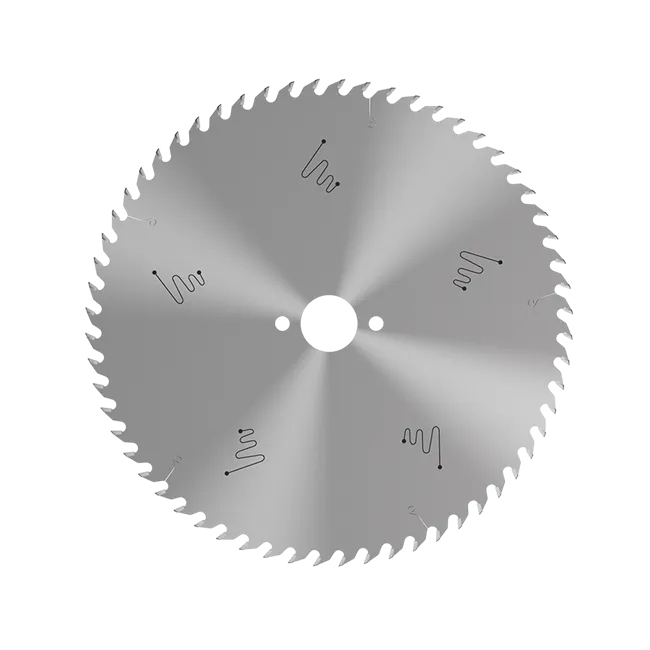
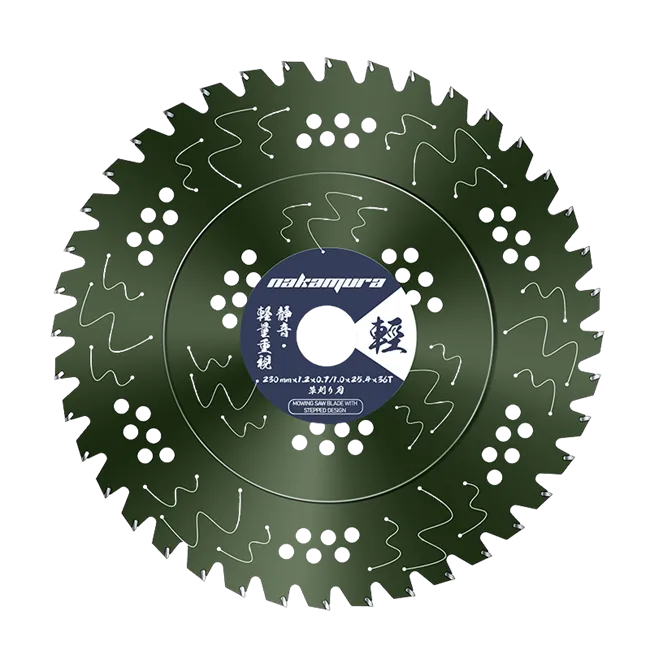
Nakamura's Circular Saw Blade Carbide Tip uses carbide-tipped teeth together with laser-cut expansion slots, anti-vibration features and a thin-kerf configuration. It is designed for softwood, hardwood, plywood, fiberboard, bamboo, MDF, OSB and laminated timber. The combination of carbide teeth and a stable blade body supports durable, controlled cutting across a range of woodworking applications.
Friction and resin buildup are also important factors in woodworking efficiency. When processing resinous, treated or laminated materials, buildup can gradually affect blade movement and cutting performance. Nakamura's woodworking blades use surface treatments such as Teflon coating to help reduce friction and material adhesion, supporting smoother cutting operation.
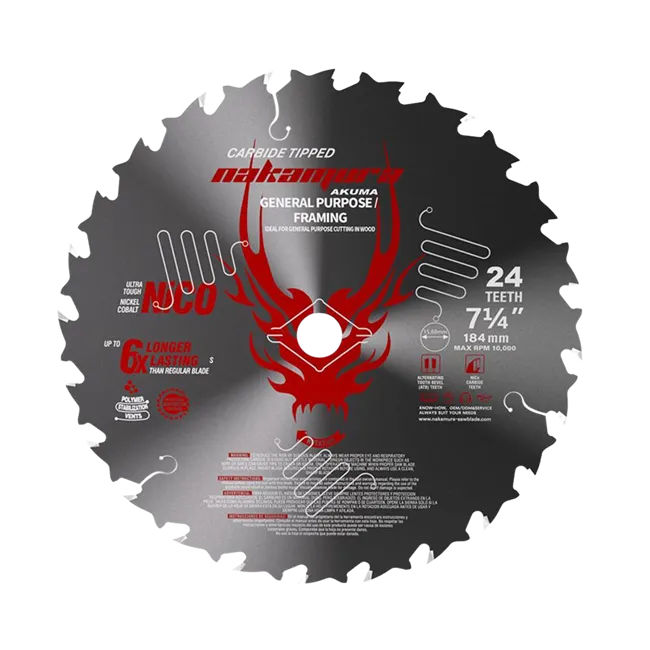
For construction and high-volume lumber processing, the Woodworking 24 Tooth TCT Blade uses a 24T configuration with tungsten-carbide-tipped teeth for thick timber, framing lumber, construction wood, OSB, MDF, laminated wood, softwood and hardwood. The lower tooth count provides more chip-clearance space for faster cutting and ripping.
For applications that require a balance of jobsite productivity and impact resistance, the 7-1/4 40T Carbide Circular Saw Blade is designed for wet lumber, heavy framing, OSB and wood with embedded nails. Its ATB (BC) tooth geometry and Teflon coating help reduce friction, while its durability-oriented design makes it suitable for frequent jobsite cutting.


Blade life is another growing priority for professional users. Compared with conventional steel teeth, carbide tips offer strong wear and heat resistance and can maintain their cutting edge for longer periods under demanding conditions. For high-volume woodworking operations, longer blade life can reduce downtime caused by blade changes while helping maintain more consistent cutting quality.
Blade performance, however, is only one part of the complete cutting system. Even a high-performance blade cannot deliver its full potential if the machine spindle has excessive runout, the blade is installed incorrectly or cutting parameters are unsuitable. Professional operations should therefore consider machine maintenance, blade installation, feed rate and cutting depth alongside blade selection.
From reducing material waste to extending tool life, controlling edge chipping and improving running stability, modern woodworking blades are using advances in materials, tooth geometry and blade-body design to improve overall performance. For manufacturers, the evaluation of a blade is increasingly moving beyond purchase price toward cost per cut, service life, productivity and finished-edge quality.
As woodworking continues to move toward higher efficiency, lower waste and more precise processing, circular saw blades will increasingly be designed around specific applications. For manufacturers, distributors and professional users, matching blade configuration to the material and machine will remain an important strategy for improving productivity and controlling total processing costs.