




According to Future Market Insights' report, "Woodworking Circular Saw Blades Market Size, Share and Forecast 2025–2035," the global woodworking circular saw blade market is projected to grow from USD 57.3 million in 2025 to USD 88.2 million by 2035, registering a CAGR of around 4.4% during the forecast period. This indicates steady market expansion rather than short-term explosive growth, supported by construction activity, furniture production, wood processing and DIY home improvement demand.
Construction and Furniture Manufacturing Remain Key Demand Drivers
Wood framing, interior renovation, furniture manufacturing, cabinetry and panel processing remain the major application areas for woodworking circular saw blades. As residential construction, commercial remodeling and customized furniture production continue to expand, buyers are looking for saw blades that deliver better durability, cutting stability and productivity.
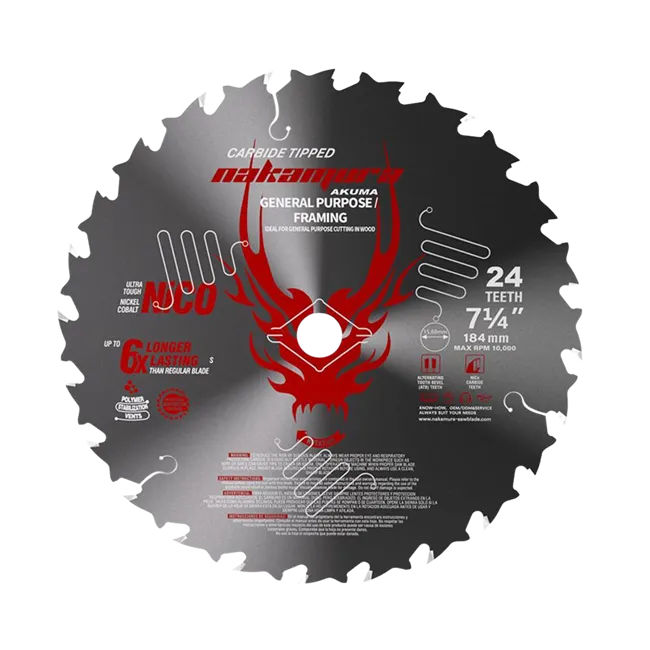
In construction and jobsite applications, fast cutting of timber, OSB, MDF and engineered wood requires strong chip removal, impact resistance and efficient feed performance. For these rough and fast cutting applications, a 24T framing and ripping blade is often a practical choice. One example is the NAKAMURA 184mm 24T Hardwood Saw Blade.
"Framing Blade" Should Be Understood as a Structural Woodworking Blade
FMI estimates that the framing blade segment will account for 39.2% of market revenue in 2025. In professional woodworking terminology, "framing blade" should not be misunderstood as a frame saw blade. It refers to circular saw blades used for construction framing, structural timber cutting, rough sizing and fast jobsite cutting.
These blades usually feature fewer teeth, larger gullets and faster chip evacuation. Their main advantage is not mirror-finish cutting, but cutting speed, durability and jobsite reliability. For cutting timber, OSB, MDF and engineered wood, 24T or 40T carbide-tipped woodworking blades are better aligned with construction and general woodworking needs.
Stationary Machines Support Repetitive and Precision Cutting Demand
By mode of operation, stationary machines are expected to account for 44.6% of the market in 2025. This category includes table saws, sliding table saws, panel saws, cut-off machines and woodworking production equipment. Compared with handheld circular saws, stationary machines require better blade balance, cutting consistency, vibration control and long-term stability.
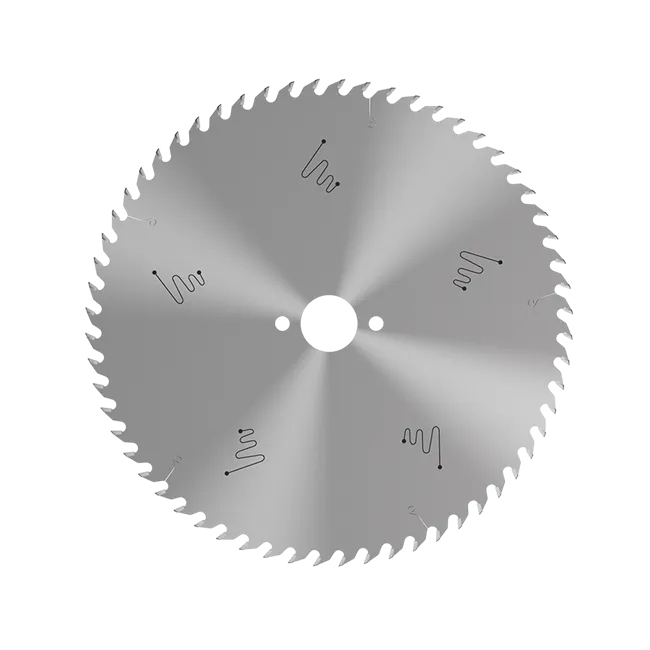
In furniture and cabinet production, manufacturers care more about straightness, edge quality, reduced chipping, blade life and stable performance in batch processing. For softwood, hardwood, plywood, OSB, MDF and veneered panels, a 184mm 40T woodworking blade can provide a good balance between cutting efficiency and surface finish. A suitable example is the NAKAMURA 184mm Circular Saw Blade for Wood.
100–200mm Blades Benefit from Portable Power Tools and Compact Machines
FMI also indicates that the 100–200mm diameter segment is expected to hold 37.8% of the market share in 2025. This size range is commonly used on handheld circular saws, cordless circular saws, compact table saws and portable jobsite tools. It is especially suitable for renovation work, jobsite cutting, DIY woodworking and small-scale furniture processing.
However, 100–200mm should not be interpreted as the universal mainstream size for all woodworking machines. In panel sizing, industrial woodworking and high-volume furniture production, 216mm, 254mm, 305mm and larger blades are also widely used. Buyers should select blade diameter based on machine type, RPM, arbor size, material thickness and cutting direction.
Technology Upgrades Focus on Carbide Tips, Thin Kerf and Anti-Vibration Design
The main technical improvements in woodworking circular saw blades are concentrated in several areas:
- Tungsten carbide tips for longer sharpness retention and wear resistance.
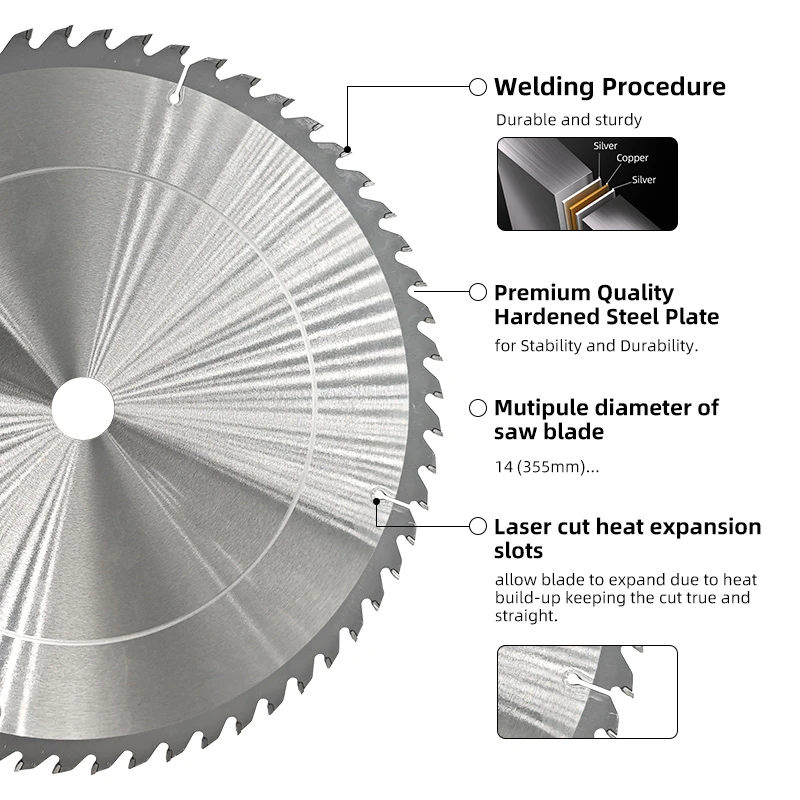
- Precision brazing to improve the bonding strength between carbide tips and the steel body.
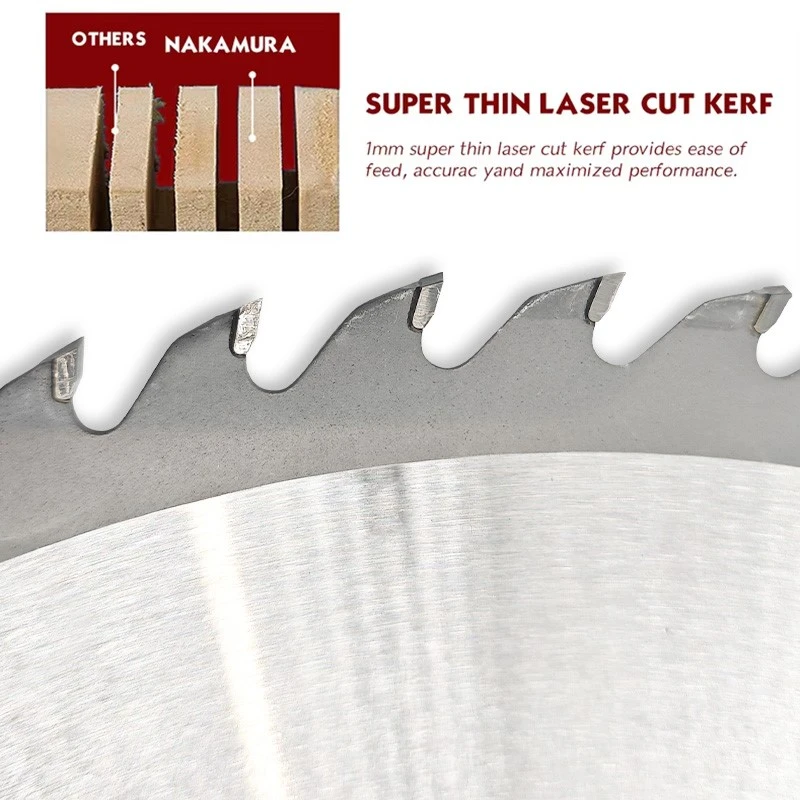
- Thin kerf design to reduce cutting resistance, material waste and power consumption.
- Expansion slots and anti-vibration slots to reduce wobble, heat deformation and cutting instability.
- PTFE anti-stick coating to reduce resin build-up and improve continuous cutting performance.
For fine woodworking, veneered boards, plywood, MDF and furniture panels, higher tooth count blades are more suitable for reducing chipping and improving cut quality. For example, the NAKAMURA 7-1/4 Carbide Circular Saw Blade in 184mm 60T specification is designed for cleaner cuts and furniture-grade applications.
Regional Outlook: Mature Demand in Europe and North America, Higher Growth Potential in Asia-Pacific
Europe and North America remain important mature markets for woodworking circular saw blades. European demand is supported by renovation, furniture manufacturing and wood product processing, while North America benefits from residential construction, commercial woodworking and a strong DIY culture.
Asia-Pacific, especially China, India and Southeast Asia, shows stronger growth potential. Urbanization, furniture exports, panel processing, renovation upgrades and the wider adoption of power tools are increasing demand for small and medium-diameter woodworking saw blades. For Chinese manufacturers, 184mm, 185mm and 190mm TCT woodworking circular saw blades are well suited for OEM supply to Europe, North America, Australia, Japan and Southeast Asia.

Buying Recommendation: Match the Blade to the Application, Not Just the Price
For B2B buyers, tool brands and wholesalers, circular saw blade sourcing should not be based only on unit price. The following factors are more important:
- Cutting material: solid wood, softwood, hardwood, MDF, OSB, plywood, veneered panels or engineered wood.
- Cutting direction: ripping, crosscutting, sizing, fine finishing or general-purpose cutting.
- Tooth count: 24T for fast cutting, 40T for general woodworking and 60T for cleaner finishing.
- Tooth geometry: ATB or BC tooth design helps improve woodworking cut quality.
- Blade body stability: laser-cut steel body, tensioning, dynamic balancing and anti-vibration slots affect high-speed cutting performance.
- OEM capability: packaging, coating color, arbor size, tooth count, specifications and branding all matter in bulk supply.
Overall, the woodworking circular saw blade market is expected to maintain steady growth over the next decade. For manufacturers and buyers, the real opportunity lies not only in market expansion, but also in clearer product positioning, application-based blade selection and reliable factory supply capability.