


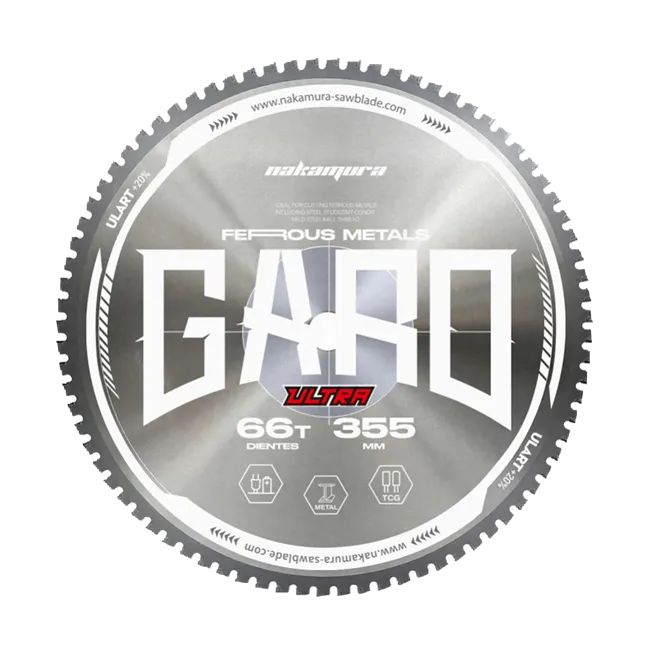
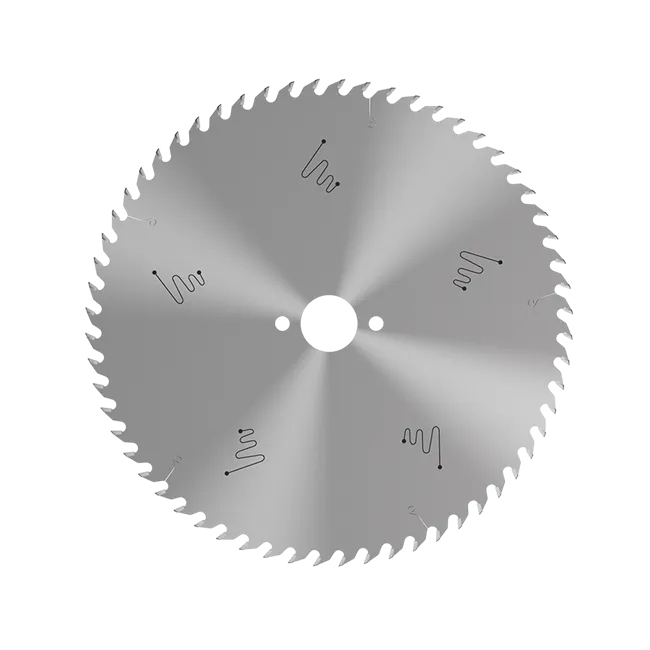



In wood processing, the performance of a saw blade has a direct impact on production efficiency, cut quality, and material yield. Whether it is used for furniture manufacturing, construction timber cutting, MDF, OSB, plywood, or other engineered wood products, an industrial wood saw blade is not just a round metal disc. Its performance comes from the steel body, carbide tips, tooth geometry, brazing quality, precision grinding, and final inspection.
Taking industrial-grade blades such as Nakamura as an example, the real value is not found in one single specification. What matters more is whether the blade runs steadily in real cutting conditions: whether it overheats, wanders, chips the edge, wears too quickly, or matches the speed and feed of the machine.
1. The Core Design Logic: Speed, Tool Life, and Cut Quality
A wood TCT saw blade is typically made with a steel body and tungsten carbide tips. The steel body supports the blade during high-speed rotation, while the carbide tips do the actual cutting. For industrial users, the blade needs to stay sharp, but it also needs to handle heat, impact, and wear during continuous cutting.
The performance of carbide tips is related to tungsten carbide grain size, cobalt content, and sintering quality. In general, higher cobalt content can improve toughness and impact resistance, but may reduce wear resistance. Lower cobalt content can increase hardness and wear resistance, but the tip may become less tolerant of impact. This is why furniture panels, solid wood ripping, jobsite lumber, and resin-bonded engineered boards often require different carbide grades and tooth designs.
For the blade body, materials such as 65Mn, 75Cr1, and SKS51 are commonly used in woodworking circular saw blades. Body performance is not only about hardness. Heat treatment, flatness, tensioning, balance, and resistance to deformation are equally important. This is especially true for thin-kerf blades. If the body is not stable enough, the blade may vibrate or wander during feeding, affecting straightness and surface quality.
For example, Nakamura's 184mm TCT Saw Blade For Wood is a 184mm 24T blade designed for wood, OSB, MDF, and integrated wood. It is more suitable for general wood cutting and jobsite applications where cutting speed and stable performance are both required.
2. Tooth Geometry Decides How the Blade Cuts
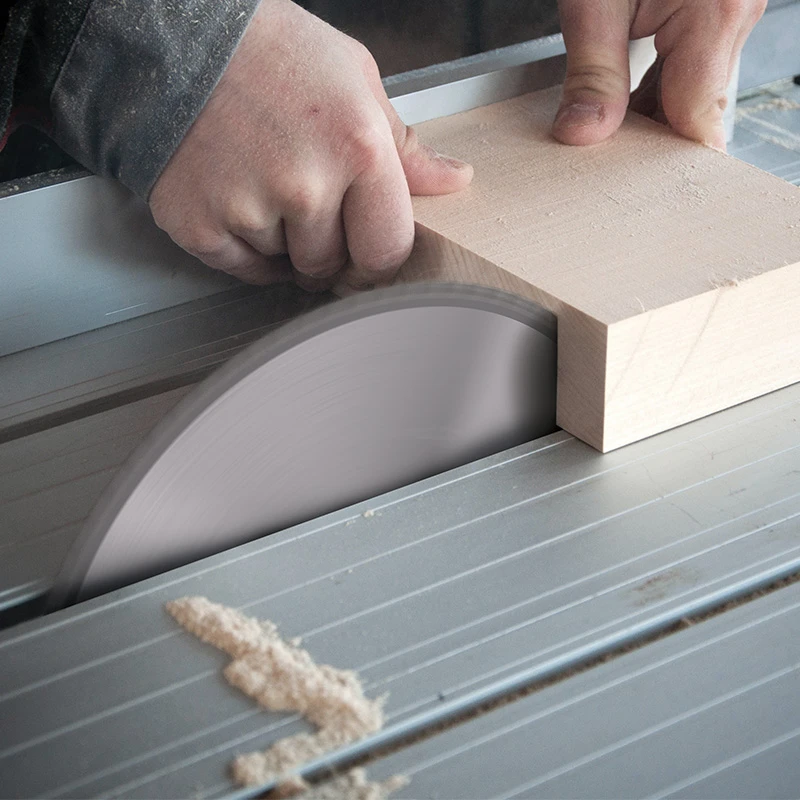
Tooth geometry is one of the key factors affecting cutting performance. Problems such as rough edges, tear-out, burning, and heavy feed resistance are not always caused by a dull blade. Very often, the tooth count, tooth shape, hook angle, and gullet space are simply not matched to the material.
FTG, or Flat Top Grind, is suitable for fast ripping. Its flat tooth top works efficiently along the grain and provides good chip clearance, but the cut surface is usually not as clean as with finish-cutting tooth designs.
ATB, or Alternate Top Bevel, is one of the most common tooth geometries for woodworking. The teeth are ground alternately left and right, allowing the blade to shear wood fibers more cleanly. ATB is often used for crosscutting, plywood, MDF, and general woodworking applications. Nakamura's Woodworking 24 Tooth TCT Blade uses an ATB/BC tooth design, making it suitable for users who need a balance between cutting speed and stable results.
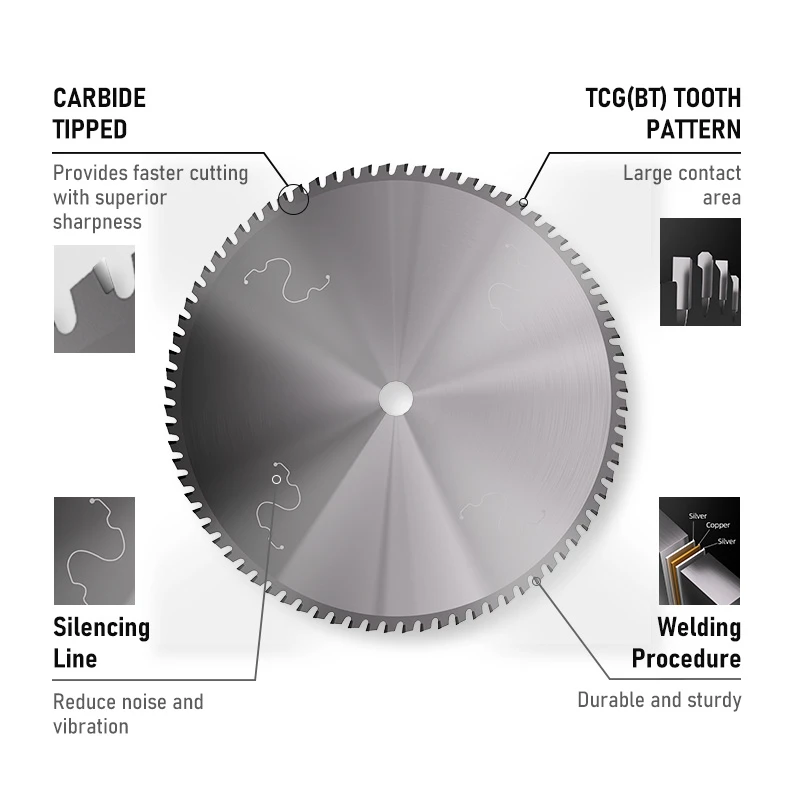
TCG, or Triple Chip Grind, is more often used for abrasive or chip-sensitive materials such as laminate, some composite boards, plastics, and non-ferrous metals. It combines a chamfered tooth with a lower flat raker tooth to share the cutting load and improve durability. TCG should not be confused with ATB. They cut in different ways and are used for different applications.
Tooth count should also be selected carefully. It is not correct to say that more teeth are always better, or that a larger blade must always have fewer teeth. Lower tooth counts usually cut faster and clear chips better, making them suitable for ripping and rough cutting. Higher tooth counts produce a finer edge, but require slower feed and better chip evacuation. The right choice depends on material thickness, cutting direction, saw speed, feed rate, and finish requirement.
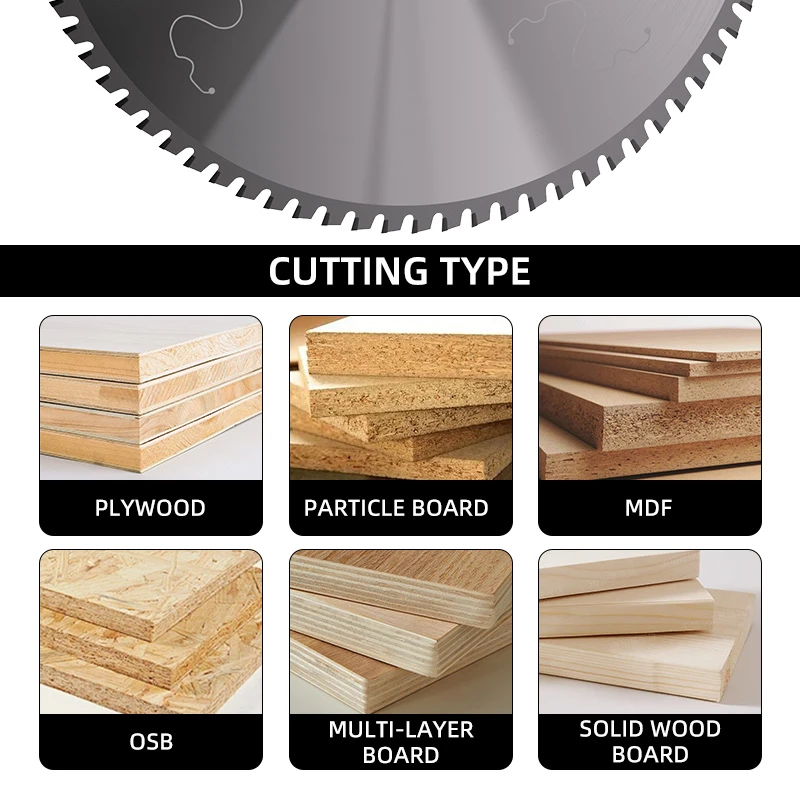
3. Manufacturing Quality Is About Stability, Not Just Big Claims
A high-quality wood saw blade usually goes through body forming, heat treatment, tensioning, tip brazing, precision grinding, surface treatment, and final inspection.
The blade body may be laser-cut or stamped, then heat-treated and flattened to reduce internal stress and deformation. For a high-speed circular saw blade, body flatness, roundness, and bore accuracy all affect running stability.
Carbide tips are commonly attached by high-frequency induction brazing or automated brazing. "Brazing" is the more accurate term here, rather than saying the tip and body are melted together. During brazing, the filler alloy melts under controlled temperature and fills the gap between the carbide tip and the steel body. Good brazing quality depends not only on bonding strength, but also on joint consistency, tip positioning, and remaining grinding allowance.
Grinding determines the final cutting condition of the blade. With CNC grinding machines and diamond wheels, the rake angle, clearance angle, side clearance, and tooth height can be controlled more consistently. For fine-cut blades with higher tooth counts, better edge consistency usually means less vibration and a smoother cut.
For users who care more about clean edges, such as cabinet panels, veneered boards, plywood, and MDF, Nakamura's 165mm 50T TCT Saw Blade Circular is a more suitable reference. This type of high-tooth-count, thin-kerf blade focuses on lower cutting resistance, stable edges, and reduced material loss.
4. Quality Control Should Be Measurable
The quality of an industrial saw blade should not be described only with words like "sharp" or "durable." It should be supported by measurable checks.
Common inspection items include appearance, carbide tip brazing condition, tooth height consistency, axial runout, radial runout, flatness, balance, bore accuracy, and trial cutting results. For mass production, batch consistency is especially important. Making one good blade is not difficult. Keeping every batch and every specification stable is the real challenge.
Trial cutting is also necessary. When cutting solid wood, users need to observe feed resistance, burning marks, and cut straightness. When cutting MDF, OSB, or plywood, edge chipping, burrs, dust evacuation, and tip wear are more important. Only when inspection data and real cutting results match can a blade be considered suitable for industrial use.
5. Industry Trend: More Specific, More Stable, and More Cost-Aware
The wood processing industry is moving toward automation, batch production, and higher consistency. This also pushes saw blades from general-purpose designs toward more application-specific solutions.
For furniture factories, reducing tear-out and secondary trimming may be more important than simply cutting faster. For construction timber, feed speed, impact resistance, and tool life matter more. For cordless power tool users, thin-kerf design can reduce cutting resistance, improve battery runtime, and make the tool easier to handle.
In the future, wood saw blade development will likely focus more on low-friction coatings, thin-kerf steel bodies, automated grinding consistency, noise and vibration reduction, and tooth designs tailored for MDF, OSB, plywood, solid wood, laminate, and other materials.
Conclusion
The value of an industrial wood saw blade is not about listing the highest possible specifications. It is about whether the blade can match real working conditions. Material selection, tooth geometry, blade body stability, brazing, grinding, and inspection all affect the final cut.
For wood processing companies, the best way to choose a blade is to start with the material, machine power, cutting direction, and required finish. Only then can users find the right balance between cutting efficiency, tool life, and total processing cost.