


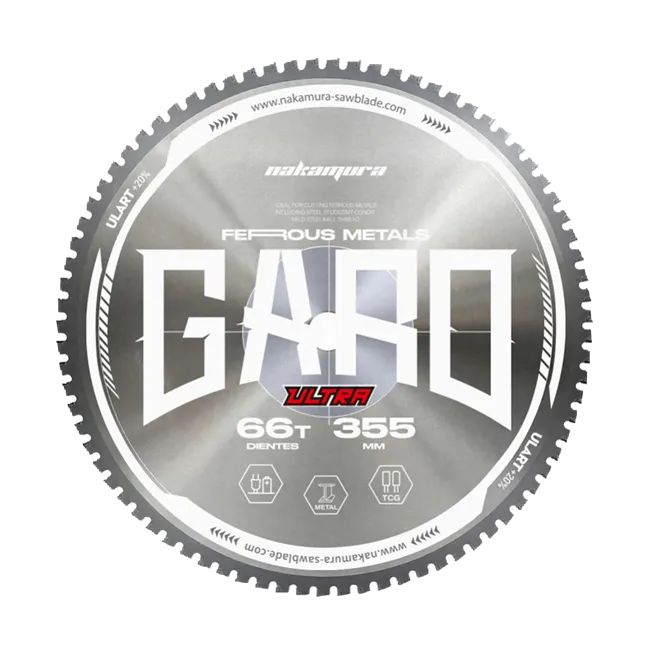
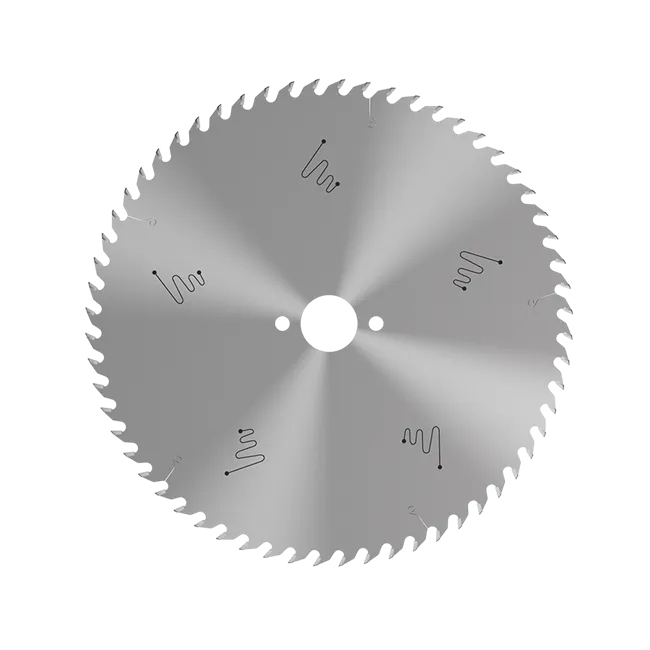



Circular saws, miter saws, and table saws all use circular saw blades, so they should all be the same, right? Unfortunately, it's not that simple. Some blades are specifically designed for particular types of saws, materials, and cutting directions. Using the wrong blade can result in poor cut quality, ruined wood, and severe safety hazards!
Choosing the most suitable circular saw blade for your tool is crucial. Before purchasing, you must evaluate the material to be cut, the desired direction of the cut, the power and RPM of your saw, and the manufacturer's guidelines.
Here are the key characteristics you need to master when shopping for a blade:
1. Blade Diameter
When choosing a blade, its diameter must never exceed the maximum limit specified by your saw's manufacturer. These specifications, along with the arbor size, tooth count, and kerf thickness, are typically printed on the blade's surface. Most modern saws feature physical guards that restrict the maximum diameter. Always ensure the blade's rated RPM meets or exceeds your saw's maximum speed; never spin a blade faster than its rated speed.
2. Arbor Size
The arbor hole is the central opening used to mount the blade onto the saw's spindle. The blade's arbor size must match the saw's spindle perfectly. If you purchase a blade with a slightly larger arbor hole, you must use a precision-machined adapter called a "reduction ring" (or bushing) to ensure a perfectly centered and secure lock. A misaligned blade will wobble violently, creating an extreme hazard.
3. Tooth Count & Cut Types
The number of teeth determines the cutting speed and finish quality. More teeth yield a smoother, finer finish, while fewer teeth cut faster but leave a rougher edge. For woodworking, blades are primarily divided into three categories based on tooth count and geometry:
- Rip Blades: Specifically engineered for fast material removal with the grain (parallel to the wood fibers). A standard 10-inch rip blade typically has only 24 to 30 teeth. Featuring Flat Top Grind (FTG) teeth and massive gullets, they breeze through thick hardwood without burning the material.
- Crosscut Blades: Designed for smooth cutting across the grain (perpendicular to the wood fibers), minimizing tear-out and splintering on the back of the workpiece. These blades have a high tooth count (e.g., 60 to 80 teeth on a 10-inch blade) and utilize Alternate Top Bevel (ATB) geometry to slice fibers like a knife. Because they make more individual cuts per revolution, the feed rate is slower.
- Combination Blades: Highly versatile all-rounders that handle both ripping and crosscutting. Typically configured as 10-inch 50-tooth or 12-inch 60-tooth, they feature a "4+1" layout (groups of four ATB teeth followed by one FTG tooth), with a large gullet behind each group. They are the most popular, cost-effective choice for general shop work.

4. Gullet Size
The gullet is the deep, curved space between adjacent teeth. During a rip cut, long, coarse wood fibers are sliced off, requiring massive gullets to clear the waste quickly. If the gullets are too small-such as when mistakenly using a high-tooth crosscut blade for ripping-sawdust will pack into the gaps, creating extreme friction that causes burned wood, blade binding, and dangerous kickbacks.
5. Blade Material and Construction
In 2026, traditional High-Speed Steel (HSS) circular saw blades have become largely obsolete in mainstream woodworking.
- Carbide-Tipped Blades: This is the modern industry standard. They feature a high-quality steel plate with industrial-grade carbide tips brazed to the teeth. They stay sharp up to dozens of times longer than standard steel.
- Expansion & Laser-Cut Slots: Premium blades feature laser-cut lines or circular holes in the plate. These expansion slots dissipate frictional heat, allowing the metal to expand and contract without warping or twisting out of a straight line.
- Specialty Blades: These include continuous-rim tile blades embedded with diamond particles for ceramics, and masonry blades (using diamond or abrasives) designed for cutting concrete and brick.
6. Plate and Kerf Thickness
- The blade plate is the steel core of the blade, measured by its thickness.
- The kerf is the actual width of the slot cut into the material, which is slightly wider than the plate itself.
- Thin-Kerf Blades: Remove less material, reduce waste, and require less power from the motor. They are ideal for cordless jobsite circular saws or low-horsepower table saws. However, they are more susceptible to heat and vibration, which can occasionally cause a slightly wavy finish during deep cuts.
- Full-Kerf Blades: The industrial standard thickness is 1/8 inch. They are highly rigid, absorb vibration well, resist thermal deflection, and are perfect for high-precision cutting on heavy-duty table saws.

7. Blade Angles & Tool Safety Matching
- Face Angle: The lateral tilt of the tooth face when viewed from above, affecting the scoring quality of the cut.
- Hook/Rake Angle (The Safety Crux): The angle of the tooth face relative to a radial line drawn from the blade center.
(1) Aggressive Positive Hook (+15° to +20°): The teeth lean forward sharply, pulling into the wood with a self-feeding action for rapid cuts. Perfect for table saw ripping.
(2) Negative or Low Hook (0° to -5°): The teeth lean backward, offering a gentle, scraping action. A negative-hook blade is mandatory for miter saws, sliding miter saws, and radial arm saws! Using a high-positive hook blade on a miter saw can cause the blade to abruptly "grab" and violently climb the workpiece, leading to shattered wood, ruined projects, or catastrophic kickback injuries.
- Top Bevel Angle: The tilt of the tooth's top surface when viewed from the front. Steeper angles score the outer edges cleaner, providing optimal tear-out prevention.