


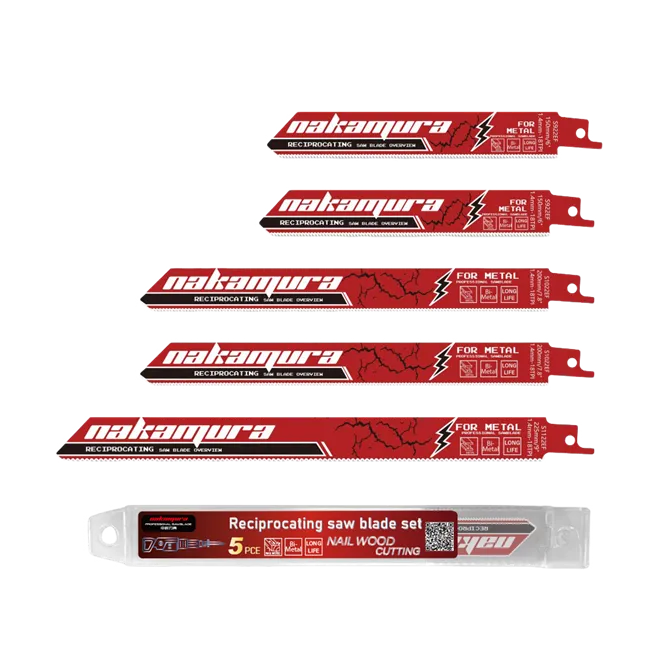
Choosing a reciprocating saw blade is not only about whether the blade is "carbide." In real cutting applications, performance depends on the material being cut, TPI, blade length, blade thickness, tooth geometry, and working conditions.
For professional users, wholesalers, and tool brands, choosing the right reciprocating saw blade can improve cutting speed, extend blade life, reduce downtime, and lower the real cost per cut.
1. Start with the Material You Need to Cut
Wood, Wet Wood, and Branches
For clean wood, wet wood, branches, and pruning work, a low-TPI blade with large teeth and deep gullets is usually the best choice. This design clears chips quickly and helps prevent clogging during fast cutting.
For pruning, garden maintenance, and wet wood applications, Nakamura Wood Pruning Reciprocating Saw Blades are a practical choice. These blades are designed for aggressive cutting and fast chip removal, making them suitable for rough cutting rather than fine finishing.
General Wood, Plywood, and Jobsite Cutting
For cutting lumber, plywood, framing timber, and general construction materials, a wood-purpose reciprocating saw blade offers better control and stability than a pruning blade.
Nakamura Saber Saw Blades For Wood are suitable for wood, wood with nails, metal, and other jobsite materials. They can be used as a basic product option for wholesalers, tool kits, and construction supply customers.

Demolition, Nail-Embedded Wood, and Mixed Materials
If the material may contain nails, screws, light metal parts, or old construction materials, a standard wood blade is not enough. HCS wood blades can dull quickly or lose teeth when they hit metal.
For demolition work, nail-embedded wood, old doors, frames, and mixed-material cutting, a bi-metal or carbide-tipped reciprocating saw blade is a better option. Nakamura 9inch Demolition Reciprocating Saw Blades are designed for heavy-duty applications where durability, rigidity, and impact resistance are important.
Metal Pipes, Angle Steel, and Sheet Metal
When cutting metal, bigger teeth are not always better. If the TPI is too low, the teeth may catch, jump, or chip.
As a general rule, 10–14 TPI blades are suitable for thicker metal, steel pipe, angle steel, and similar materials. For thin-wall tubing, conduit, and sheet metal, 18–24 TPI fine-tooth blades are usually more suitable. Metal cutting should be done with steady feed pressure instead of forcing the blade through the material.
PVC, Plastic, and Composite Materials
Plastic and PVC require a balanced tooth design. Teeth that are too coarse may cause chipping, while excessive friction can create melting at the cut edge. A medium-TPI blade with steady feed pressure is usually a safer choice.

2. TPI Is the Key Specification for Reciprocating Saw Blades
TPI means teeth per inch. For reciprocating saw blades, TPI is more important than total tooth count.
Low-TPI blades cut faster and clear chips more efficiently, but they leave a rougher edge. High-TPI blades cut more slowly but produce a smoother finish, especially on thin metal and tubing.
A practical selection guide is:
- 3–6 TPI: branches, wet wood, softwood, fast rough cutting
- 6–10 TPI: nail-embedded wood, demolition, framing timber
- 10–14 TPI: thick metal, PVC, pipe, angle steel
- 18–24 TPI: thin metal, conduit, thin-wall tubing, cleaner cuts
If the user needs to cut different materials during the same job, a variable-TPI blade can reduce blade changes and improve jobsite efficiency.
3. Carbide, Bi-Metal, or HCS: Which One Should You Choose?
HCS blades are flexible and cost-effective. They are suitable for wood, plastic, and softer materials, but they are not the best choice for frequent metal cutting or demolition work.
Bi-metal blades combine a flexible body with harder, more wear-resistant teeth. They are suitable for nail-embedded wood, metal pipe, demolition, and general jobsite use. For many professional users, bi-metal is the most practical all-around choice.
Carbide-tipped reciprocating saw blades are designed for demanding applications. They offer better wear resistance and longer life when cutting stainless steel, cast iron, thick metal, fiberglass, abrasive materials, and heavy demolition materials. Although the upfront price is higher, carbide-tipped blades can deliver a lower cost per cut in high-wear applications.
The key point is simple: not every job requires carbide. The right blade depends on the material and how often the blade will be used.
4. Blade Length, Width, and Thickness Matter
Common reciprocating saw blade lengths include 6 inches, 9 inches, and 12 inches.
Shorter blades are more rigid and easier to control. They are suitable for pipe cutting, controlled cuts, and tight spaces. Longer blades are better for deep cuts, demolition, pruning, and thick materials. However, a blade that is too long can wobble, increase vibration, slow down the cut, and bend more easily.
A good rule is to choose a blade that is 2–3 inches longer than the thickness of the material being cut.
Wider blades provide better stability for straight cuts and heavy demolition. Narrower blades offer more flexibility for curved cuts, flush cuts, and tight spaces. Thicker blades resist bending and vibration, making them better for heavy-duty work, while thinner blades are more flexible but less suitable for high feed pressure.

5. Think About Cost Per Cut, Not Only Blade Price
Low-cost blades may look attractive at first, but if they dull quickly, lose teeth, or bend easily, the real cost becomes higher. For contractors, maintenance teams, factories, and high-volume users, blade life and cutting efficiency are often more important than the lowest unit price.
A high-quality bi-metal or carbide-tipped blade can reduce blade changes, improve productivity, and lower downtime.
6. Maintenance and Use Tips
After use, clean the blade to remove wood chips, resin, metal particles, or plastic residue. Store the blade in a dry place to prevent rust.
When cutting metal or nail-embedded wood, avoid forcing the blade. Excessive pressure can cause overheating, tooth damage, and blade bending. If a carbide-tipped blade needs resharpening, it should be handled with professional equipment rather than by casual hand sharpening.
Conclusion
Choosing the right reciprocating saw blade is not about choosing carbide every time. It is about matching the blade to the material, TPI, length, thickness, tooth design, and working conditions.
For pruning and wet wood, choose a low-TPI blade with deep gullets. For general wood and jobsite cutting, use a wood-purpose reciprocating saw blade. For demolition, nail-embedded wood, and mixed materials, choose a heavy-duty bi-metal or carbide-tipped blade.
Nakamura provides reciprocating saw blade solutions for wholesalers, tool brands, and construction supply customers, with OEM/ODM support, bulk packaging, and customized specifications for different market needs.