


heat treatment
Circular saw blades are thin and rotate at high speed. Large-diameter and thin-kerf blades are especially sensitive to deformation during heat treatment.
If the process is not well controlled, a blade may suffer from uneven hardness, warping, vibration, excessive heat, or unstable cutting. These problems can reduce edge quality, shorten service life, and increase downtime for users.
Industry reports show that advanced manufacturers are using fast heating and rapid cooling processes to improve hardness consistency and support thinner, more stable blade designs. This shows that heat treatment is moving from experience-based processing toward more precise and data-driven manufacturing.

Nakamura focuses on balance, not hardness alone
A saw blade is not better simply because it is harder. If it is too hard, it may become brittle. If it is too soft, wear resistance may be reduced. A high-quality blade needs a balance of hardness, toughness, flatness, and cutting efficiency.
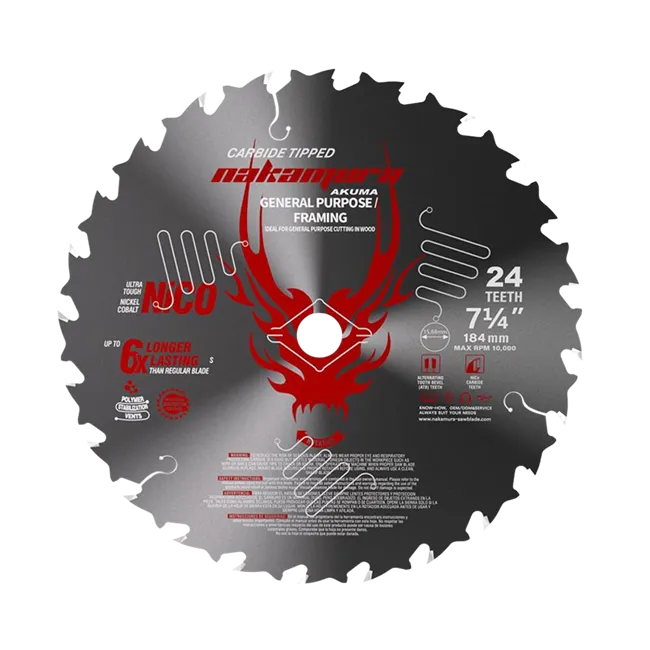
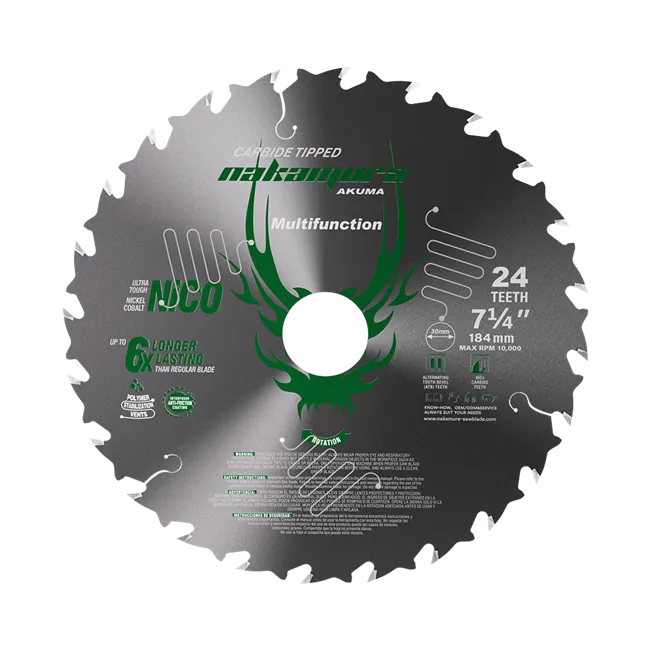
The 184mm TCT Saw Blade For Wood is designed for framing timber, OSB, MDF, plywood, and general woodworking materials. For this type of blade, body stability, tooth consistency, and chip evacuation all matter in jobsite and woodworking applications.
Nakamura focuses on the real requirements of different materials and applications, instead of relying on a single performance indicator.
Different materials require different blade designs
Wood cutting blades need sharpness, chip clearance, and clean cutting edges. Metal cutting blades require better heat control, wear resistance, and stronger tooth geometry.
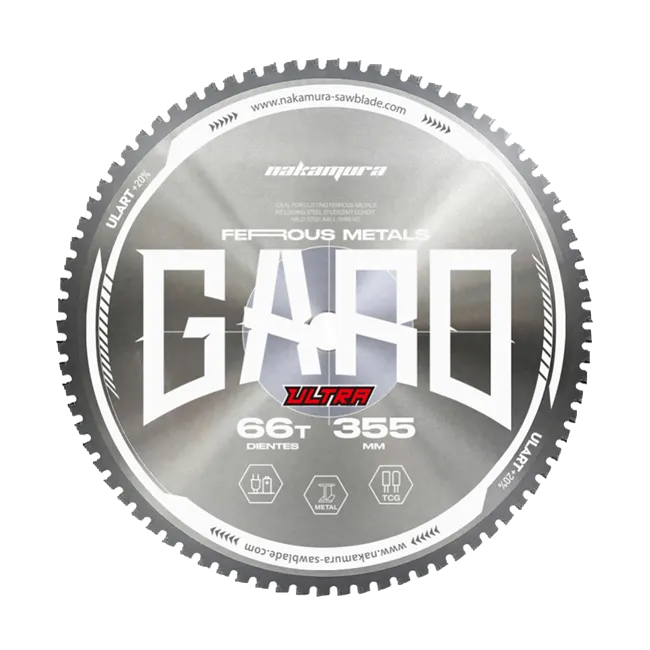
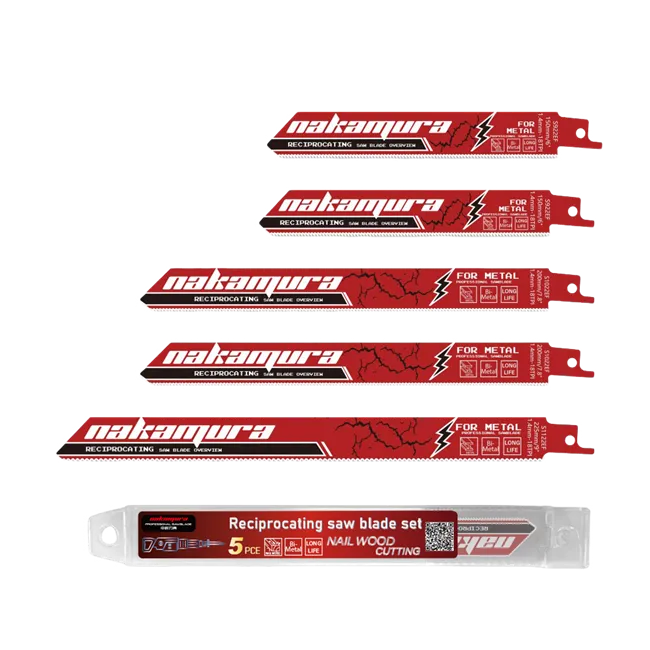
The Nakamura Metal Cutting Circular Blade is developed for metal and stainless steel cutting applications. It serves hardware processing, installation work, and industrial supply customers. For this category, blade body stability, brazing quality, and tooth design directly affect cutting quality and service life.
For abrasive materials, standard TCT blades are often not enough. PCD tips and dedicated tooth geometry become a better solution.
The Nakamura Fiber Cement Board Saw Blade is suitable for fiber cement board, gypsum-bonded panels, and other abrasive sheet materials. Its value lies in stronger wear resistance and more stable cutting performance.

Blade life means total cutting cost
Buyers do not only care about the price of one blade. They care about total cutting cost.
A stable blade can reduce blade changes, lower downtime, reduce chipping and rework, and make production more predictable. For factories, distributors, and OEM brand customers, consistent batch quality is often more valuable than a lower unit price.
Heat treatment is not just a technical term. It is a foundation of saw blade performance. Together with material selection, tensioning, tooth design, brazing quality, and inspection, it determines whether a blade can withstand real working conditions over time.
Nakamura will continue to improve product stability and application-based design for woodworking, metal cutting, PCD, and multi-purpose cutting applications, providing more reliable precision cutting solutions for global customers.
Nakamura makes every blade ready for real work, real materials, and long-term use.